Printed circuit board switches are widely used in electronic systems where precise control, compact layout, and long-term reliability are expected. The process of integrating these components is not limited to part selection—it extends across mechanical design, contact material choices, layout practices, signal behavior, and manufacturing compatibility.
This engineering guide presents a structured walkthrough of PCB switch technologies, from tactile and push-button switches to rotary and DIP types. It explains interface designs used in consumer electronics, automotive assemblies, and medical-grade devices. core layout topics include switch placement, trace clearance, actuation force, bounce mitigation, and strategies for managing crosstalk in multilayer or rigid-flex configurations.
You will also find detailed descriptions of surface mount and through-hole assembly techniques, quality inspection tools such as AOI and ICT, and typical fault scenarios like intermittent contact or overheating. To close the loop, the guide outlines rework practices, DIP switch configuration, and turnkey service models suited for engineers and original equipment manufacturers.
Understanding PCB Switch Technology, Function, and Applications
In modern electronics, PCB switches are integral components that help control and interact with electronic circuits. These switches, mounted directly onto a PCB, offer a streamlined design that improves device performance, simplifies assembly, and enhances user experience. Let’s explore their role, common uses, and how they contribute to various industries.
What Is a PCB Switch and Its Role in Circuit Design?
A PCB switch is a type of electromechanical component that is directly mounted onto a printed circuit board. When activated, it either completes or breaks an electrical circuit, controlling the flow of electricity. Unlike traditional switches that may be externally connected, PCB switches offer a more compact and reliable solution for modern electronic designs.
Key Features-
●Integration: PCB switches are built directly into the PCB, reducing the need for additional wiring and components, improving overall circuit efficiency.
●Variety: These switches are available in various forms such as tactile, push-button, slide, and rotary types. This range of options makes it easier to match a switch to the specific demands of each application.
●Customization: Switches can be configured with features like backlighting, varied actuation forces, and tactile feedback, giving more flexibility in crafting user-friendly interfaces across different projects.
Using PCB switches in circuit design can help reduce component count, improve reliability, and ensure that circuits are more streamlined, making them a staple in contemporary electronics.
Applications in IoT Devices, Automotive, Medical, and Consumer Electronics
PCB switches are found in a wide range of applications, from consumer electronics to highly specialized industries like automotive and medical technology. Here’s a look at how they are used:
1. IoT Devices-
●Smart Home Devices: Smart lights, thermostats, and home security systems often rely on PCB switches to handle user inputs. The switches provide a simple and effective way to control complex systems.
●Wearable Devices: Small, compact PCB switches are commonly used in wearables like fitness trackers and smartwatches, where limited space demands components that support multiple functions efficiently.
2. Automotive Industry-
●Dashboard Controls: From the control of air conditioning systems to the operation of infotainment systems, PCB switches are integrated into the dashboard and other areas of vehicles to manage various functions.
●Steering Wheel Controls: Many modern vehicles integrate PCB switches into the steering wheel to manage main systems like volume, cruise control, and hands-free communication.
3. Medical Equipment-
●Diagnostic Machines: In medical devices, such as blood analyzers and diagnostic equipment, PCB switches ensure smooth operation, offering precise control over machine functions.
●Patient Monitoring Devices: These devices often rely on PCB switches to allow healthcare professionals to adjust settings, ensuring accurate readings and adjustments.
4. Consumer Electronics-
●Television Remotes and Controllers: Reliable PCB switches are found in TV remotes and home entertainment systems, where long-lasting performance is necessary.
●Game Consoles and Controllers: In gaming devices, switches are a part of the user interface, helping to provide responsive and durable controls.
The broad range of applications highlights how PCB switches provide practical, efficient solutions for a variety of industries, meeting the specific needs of each sector.
Enhancing Human-Machine Interaction (HMI) with PCB Switches
Human-Machine Interaction (HMI) focuses on making devices more intuitive and responsive for the user. PCB switches play a reliable role in this by offering precise, tactile feedback and a streamlined way for users to interact with their devices. They are designed to be both functional and comfortable, improving how users control and experience their devices.
Advantages-
●Tactile Feedback: Many PCB switches include features that give users a clear, tactile response when activated. This feedback ensures that users know when their input has been registered, improving accuracy.
●Customizable Designs: These switches can be designed to match the device’s aesthetic, allowing manufacturers to create cohesive product designs that align with the overall look and feel of the device.
●Durability:PCB switches are built for durability, maintaining performance even in high-use environments. In both industrial settings and consumer electronics, these switches are designed to handle repeated operation.
Case Study Example:
For industrial control panels, PCB switches with integrated LEDs enhance visibility and reduce operator errors, especially in low-light environments. This design choice not only boosts functionality but also improves safety and efficiency in operations.
Comparison of PCB Switch Features:
Feature
Traditional Switches
PCB Switches
Mounting Style
External mounting
Direct PCB mounting
Size
Larger
Compact
Customization
Limited
High flexibility
Assembly Complexity
More complex
Streamlined
PCB switches provide several advantages over traditional types, such as easier integration, a smaller footprint, and customizable functionality. These traits help enhance both layout flexibility and user interaction in modern electronic products.
PCB Switch Types: Choosing the Right Switch for Your Circuit
When designing a PCB, selecting the right switch can shape the overall performance and functionality of your device. The type of switch used will directly impact the way users interact with your product, as well as how the circuit operates. Understanding the various types of PCB switches can help make the right decision based on the intended application, ensuring a smooth, efficient user experience and an optimized design.
Tactile Switches vs. Push Button Switches: Which to Use?
Tactile switches and push-button switches are both popular options, but they offer distinct features. Knowing how they differ helps in selecting the most fitting type for your specific design needs.
●Tactile Switches: These switches provide users with tactile feedback, such as a “click” when pressed. This response assures users that their action has been registered. Tactile switches are used in applications where precise user feedback is required, like remote controls or mobile device buttons. They are favored for their high reliability and the positive feedback they provide during operation.
●Push Button Switches: Push-button switches are simpler in design. They are typically used for basic on/off functionality and are often found in situations where feedback is not as critical, such as in power buttons for appliances. These switches are robust, straightforward, and usually cost-effective.
Which to Choose-
●Tactile switches are great for applications requiring clear user feedback, such as communication devices, control panels, and consumer electronics.
●Push-button switches work best in simpler devices that only require a basic toggle action, like turning a device on and off.
Slide, Toggle, Rotary, and DIP Switch Variants
PCB switches come in different styles, each suited for specific tasks or environments. Here’s a breakdown of the variants and what makes them unique:
●Slide Switches: Slide switches are compact and easy to use, making them suitable for small devices like toys, audio equipment, and medical devices. They offer simple on/off functionality and can be used in applications that require minimal switching action.
●Toggle Switches: Toggle switches provide a more tactile action with a flipping motion. These switches are commonly used in industrial applications where users need to operate heavy-duty equipment. They are easy to understand and provide a clear visual indicator of their position, making them better for control systems.
●Rotary Switches: Rotary switches allow users to select a range of settings by turning a dial. These are often used in devices like radios, mixers, and various control panels. The adjustable settings provide flexibility, allowing users to make fine adjustments.
●DIP (Dual In-line Package) Switches: DIP switches are small switches with multiple on/off positions and are commonly used in scenarios where space is limited but several different options need to be configured. They are frequently used in computer hardware, networking devices, and embedded systems.
Which to Choose-
●Slide switches are perfect for small devices with limited switching needs.
●Toggle switches are suitable for high-durability environments where visibility of the switch’s position is necessary.
●Rotary switches work well for adjusting multiple settings in audio or industrial equipment.
●DIP switches are great for compact devices requiring multiple switch configurations.
Hot-Swappable vs. Permanent Switch Types in PCBs
Selecting between hot-swappable and permanent switches affects both the device layout and how the interface behaves over time.
●Hot-Swappable Switches: These switches are designed to be replaced while the system is powered on, offering a convenient option for devices that require maintenance or upgrades without turning off the power. Hot-swappable switches are common in high-end electronics, like servers and modular systems, where minimal downtime is required.
●Permanent Switches: As the name suggests, permanent switches are meant to stay fixed throughout the life of the product. These switches are typically used in devices where the configuration doesn’t need to change once set up, such as home appliances, basic electronics, or non-upgradable systems.
Which to Choose-
●Hot-swappable switches are beneficial in systems that demand flexibility and quick maintenance, like in servers or computing systems.
●Permanent switches are more suitable for devices like kitchen appliances or simple consumer electronics, where no part of the circuit requires regular modification or updates.
Materials Used in PCB Switches: Conductivity, Durability, and Performanc
The materials chosen for PCB switches directly impact their functionality, longevity, and how well they handle the demands of their respective applications. With the right material, a PCB switch can offer reliable performance over time, even in challenging environments. Let’s explore the materials used in PCB switches and how they influence main factors such as conductivity, durability, and overall performance.
Contact Materials: Gold-Plated, Silver, and Carbon
The contact materials in PCB switches influence how reliably they conduct electricity when activated. Each material type brings its own characteristics, making certain options more compatible with specific environmental or usage conditions.
●Gold-Plated Contacts: Gold is one of choices for high-performance switches due to its excellent electrical conductivity and resistance to corrosion. It ensures that electrical connections are stable over long periods and remains reliable in environments where oxidation could be a problem. This makes gold-plated contacts ideal for high-end applications, such as in medical devices, aerospace equipment, and high-quality consumer electronics. While gold plating adds cost, it also delivers long-term stability.
●Silver Contacts: Silver is a conductive material frequently used in PCB switches, though it can tarnish over time when exposed to air. This surface change may impact the electrical path slightly, but silver remains a widely used option for general-use circuits. It often appears in consumer electronics and other devices where budget and function are balanced. While it doesn’t hold up as long as gold in some cases, it still provides steady conductivity in many routine applications.
●Carbon Contacts: Carbon-based contacts are more affordable than gold and silver, offering a practical solution for switches in lower-cost products. They are resistant to oxidation, making them a good option for environments where minimal wear is required. Carbon switches are typically used in devices like remote controls, simple appliances, and some consumer electronics. However, they don’t offer the same level of conductivity or lifespan as gold or silver contacts.
Choosing the Right Contact Material-
●Gold-plated contacts are a good fit for demanding applications where long-lasting, corrosion-free performance is necessary.
●Silver contacts are often chosen when a balance between cost and conductivity is needed.
●Carbon contacts work well for budget-conscious applications where durability isn’t a primary concern.
Dome, Membrane, and Mechanical Switch Construction
The construction of a switch affects both its tactile feedback and overall durability. Each switch construction type is designed for specific needs and environments. Let’s take a look at the different switch constructions commonly used in PCB designs.
●Dome Switches: Dome switches are frequently used in compact electronic devices, providing a satisfying tactile response when pressed. These switches feature a metal dome that compresses when pressed, creating a click that lets the user know their input has been registered. Dome switches are found in many consumer devices like calculators and remote controls, where space is limited, and a soft feedback is necessary. While they provide cost-effective performance, they can wear out faster compared to more durable switch types.
●Membrane Switches: Membrane switches are built from flexible layers, often using polyester or polycarbonate, with printed circuitry that responds to surface pressure. Their slim structure makes them suitable for setups that need sealed interfaces. These switches are frequently used in industrial equipment, medical tools, and kitchen devices due to their resistance to dust and moisture. With reliable durability and cost-friendly production, membrane switches fit well into many household and everyday electronic products.
●Mechanical Switches: Mechanical switches use individual moving parts like springs and metal contacts to register a press. These switches are known for their robust construction and are used in environments where precise, consistent feedback is necessary. Mechanical switches are found in products like gaming keyboards, industrial control panels, and automotive equipment, where user input needs to be clear and precise. These switches tend to last longer than dome and membrane switches, providing excellent tactile feedback over time.
Which Switch Construction to Choose-
●Dome switches are great for affordable and compact devices with simple, short-term use.
●Membrane switches are perfect for applications that require a sealed switch to prevent the ingress of dust or liquids.
●Mechanical switches should be selected when a precise, long-lasting feedback mechanism is necessary for high-use environments.
Environmental Resistance: IP Ratings, Temperature, and ESD Protection
PCB switches must perform in diverse conditions, from extreme temperatures to exposure to static electricity. Choosing the right switches with the necessary environmental resistance features will ensure reliability, no matter the conditions. Here’s an overview of the environmental factors to consider when selecting PCB switches.
●IP Ratings (Ingress Protection): IP ratings indicate how well a switch can resist dust and water. The first digit in the rating represents the level of protection against solid objects like dust, while the second digit indicates protection against liquids. For example, a switch with an IP67 rating is fully dustproof and can be immersed in water up to 1 meter deep. IP-rated switches are perfect for outdoor equipment, industrial machinery, or other applications where exposure to dirt and moisture is a concern.
●Temperature Resistance: Depending on the application, PCB switches must perform reliably within defined temperature ranges. Most standard models are designed to function between -20°C and +85°C. However, certain environments—like those found in automotive or aerospace systems—may demand units that can handle more extreme heat or cold. Selecting a switch with a temperature rating that matches the real-world conditions it will encounter helps ensure consistent performance.
●ESD Protection (Electrostatic Discharge):ESD protection is necessary for devices where static discharge could lead to malfunctions or damage to sensitive components. For products intended for environments prone to static buildup, opting for switches with built-in ESD protection is a practical choice. These switches are designed to release electrostatic charges, safeguarding both the switch and the device from potential harm.
Choosing the Right Environmental Features-
●IP-rated switches are best for devices used outdoors or in environments where exposure to dust and water is expected.
●Temperature-resistant switches should be chosen for devices that will face high or low-temperature conditions, such as automotive electronics or machinery.
●ESD-protected switches are a must in sensitive applications, such as medical devices or computers, where static discharge could cause failure.
PCB Switch Design Guidelines: Footprint, Clearance, and Routing
Designing PCB switches means balancing mechanics, electrical constraints, and layout techniques that follow established manufacturing logic. Component spacing, routing discipline, and contact behavior all shape how your PCB behaves during real-world use. This section takes a deeper dive into layout, mechanical switch dynamics, and signal behavior without relying on buzzwords.
H3:PCB Layout Best Practices for Switch Placement
When setting up your PCB layout, switch positioning can affect signal timing, tactile interaction, and EMI performance. The arrangement needs to support manufacturability and user-facing applications like HMI or input control.
●Group by Function: Align components in zones, separating logic signals from power lines. This practice keeps things cleaner and helps cut down on interference.
●Clearance and Edge Space: Keep at least 1.27mm (~50 mils) between the PCB edge and switch terminals. This gap allows space for enclosures, connectors, and automated tooling.
●Orientation: Maintain uniform alignment for switches and polarized components to support optical inspection and lower human error during assembly.
●Switch Access: Switches for testing or operation should stay accessible on the top layer, and not be tucked under displays, connectors, or shielding.
Routing traces should maintain minimum length while avoiding tight corners and high-angle bends. Copper pour zones near the switch can help stabilize voltage rails and reduce ground bounce.
H3:Actuation Force, Travel Distance, and Tactile Feedback Design
Mechanical properties of a switch affect how users experience your product. Different industries lean on different specs:
●Actuation Force: Light press options (under 60g) work well for portable devices, while industrial gear may require heavier forces (up to 200g).
●Travel Distance: Short throw designs offer faster response in consumer electronics, while long-travel switches give more defined feedback for control panels or machinery.
●Tactile Response: Snap domes or mechanical stems introduce a physical “bump” that signals contact closure without visual cues.
Property
Consumer Electronics
Industrial Applications
Actuation Force
Under 60g (light press)
Up to 200g (heavier press for durability)
Travel Distance
Short throw designs for quick response
Long travel switches for more tactile feedback
Tactile Response
Snap domes or mechanical stems for physical “bump”
Carbon-contact domes for durable feedback
Choosing the right actuation feel isn’t guesswork — it depends on environment, interface design, and the need for repetitive interaction without fatigue. You might go with scissor switches for wearables, or carbon-contact domes in sealed touchpads.
H3:Managing Electrical Noise, Crosstalk, and Bounce Issues
Noise, bounce, and coupling aren’t just high-frequency problems — they can affect simple switches too, especially when routing runs close together or lacks shielding.
●Minimize Crosstalk: Route switch signals perpendicular to nearby high-speed traces. If they’re too close and parallel, you could see voltage spikes on input pins.
●Keep Signals Quiet: Place series resistors near the switch terminals to suppress overshoot. Route signals over solid ground planes for stability.
●Address Bounce: Switch bounce can cause false triggering. Use capacitor filters, Schmitt triggers, or debounce firmware to smooth out the chatter.
Avoid excessive via stitching near switch pads, since that could create return path breaks or inductive loops. Also, keep traces short between the switch and microcontroller — no one wants ghost inputs when EMI kicks in.
H2:Switches in Rigid-Flex and Multilayer PCB Design
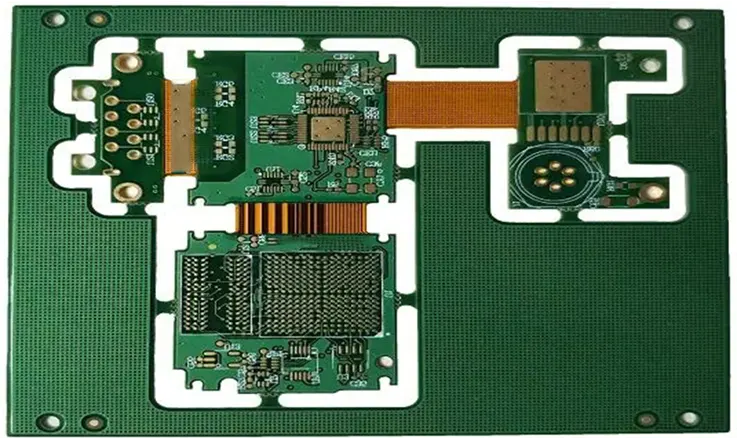
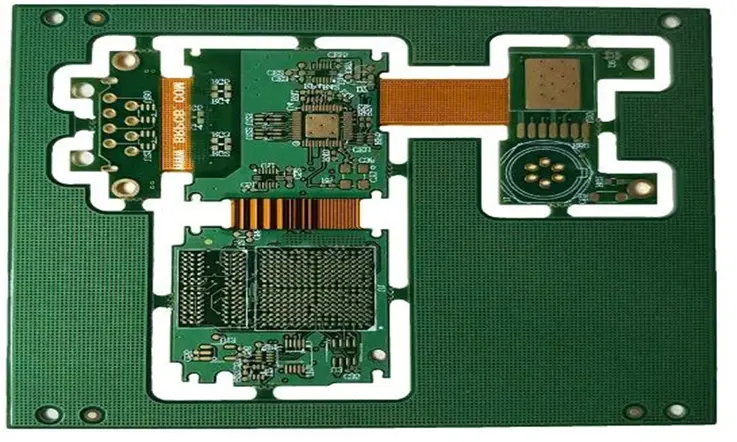
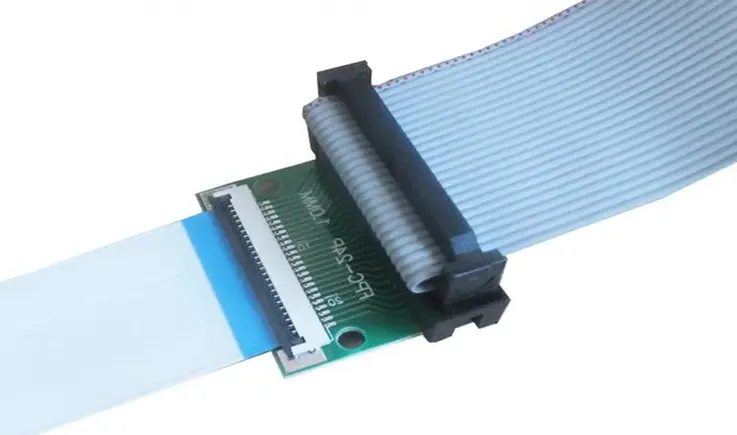
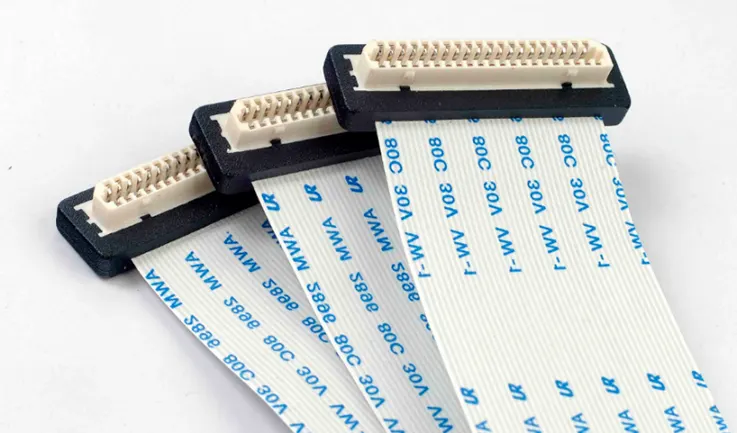
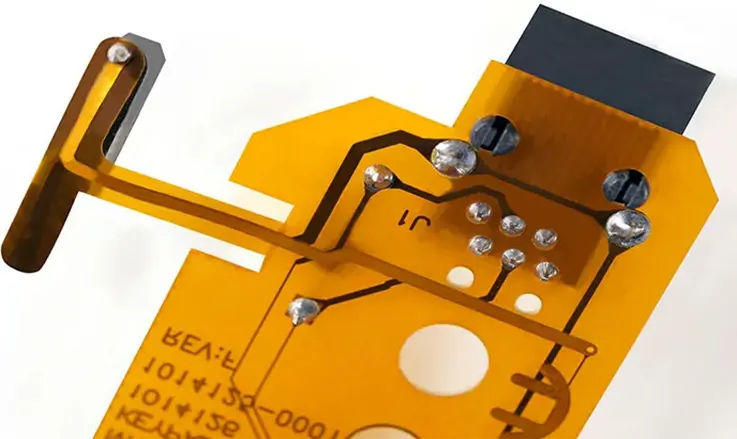
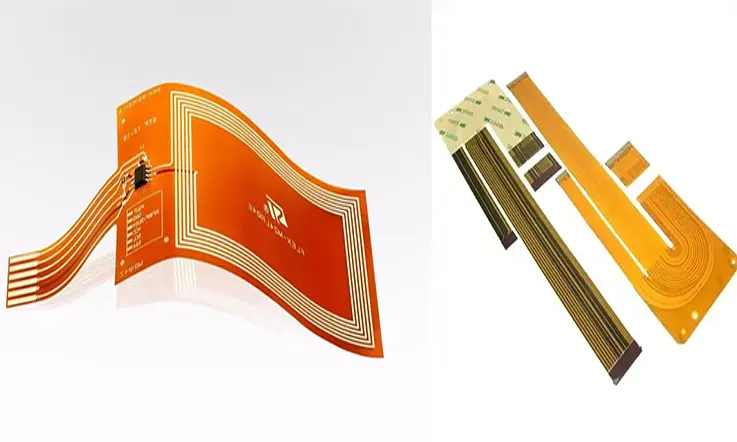
Designing switches into rigid-flex and multilayer PCBs is an intricate task that requires careful consideration of mechanical, electrical, and spatial constraints. Rigid-flex PCBs combine the advantages of both rigid and flexible circuit board designs, allowing for complex configurations while maintaining flexibility and space-saving potential. Multilayer PCBs offer a compact way to handle high-density designs, where switches must be integrated seamlessly into the layers. Let’s dive into the specifics of incorporating switches into these advanced PCB designs.
H3:Mechanical Constraints and Layer Stackup Strategy
When working with rigid-flex PCBs, one of the first things to keep in mind is the mechanical limitations. Flexible sections, which need to bend, must remain thin, yet strong enough to withstand the mechanical stress of repeated movement. Rigid areas, on the other hand, need more layers for supporting components and maintaining structure.
●Layer Stackup Design: In a rigid-flex PCB, the stackup should be divided so that the rigid sections can handle the most complex components while the flex sections stay flexible. A typical stackup might consist of two to four layers in the flex area, and up to six in the rigid parts. The flexible part should not exceed one or two conductive layers to maintain flexibility.
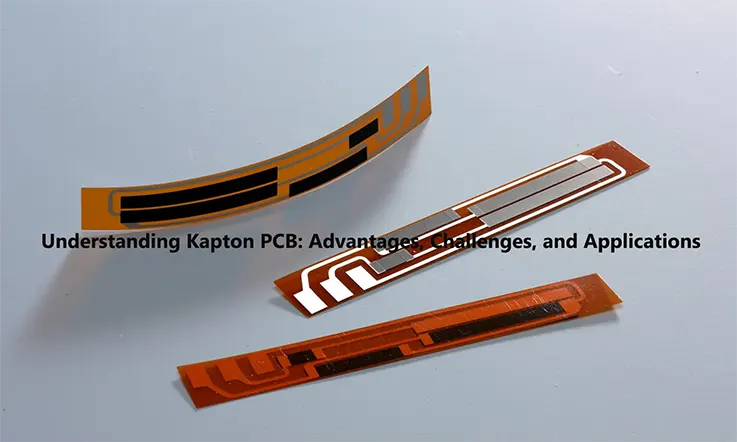
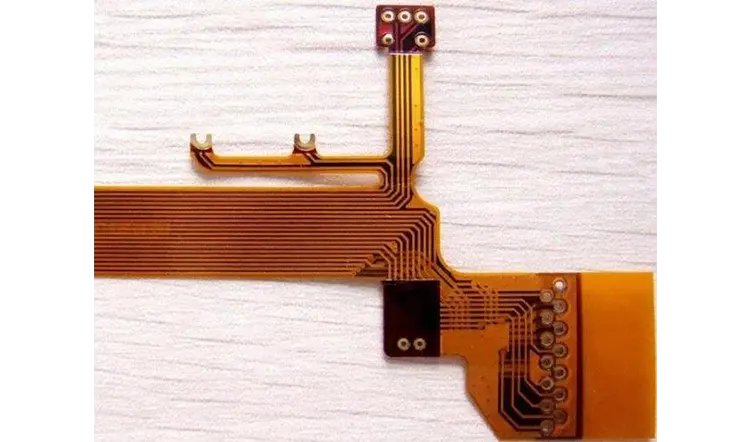
●Material Consideration: Polyimide is commonly chosen for the flexible part of the PCB due to its excellent flexibility, resistance to heat, and ability to handle a variety of environmental conditions. For the rigid sections, FR-4 or similar materials are often used, as they are capable of supporting more intricate designs and heavier components.
●Flexibility and Bend Radius:In rigid-flex PCBs, maintaining an appropriate bend radius is necessary to prevent stress-related failures. The flex sections typically require a minimum bend radius between six to ten times their thickness. When the radius is too tight, it can strain the conductor and compromise solder joints, leading to mechanical issues over time.
H3:Flexible Interface Solutions in Consumer Electronics
Flexible PCB designs are increasingly popular in consumer electronics due to their compact form and ability to handle mechanical stress. In smartphones, wearables, and other portable devices, flexible PCBs provide solutions that standard rigid boards cannot match. Here’s how switches can be incorporated into flexible PCBs for use in consumer products:
Design Aspect
Recommendation
Purpose
Switch Placement
On rigid sections only
Prevents damage from repeated bending
Routing Layout
Curved and optimized in low-stress zones
Reduces trace fatigue and electrical failure
Coverlay Material
Polyimide
Resists dust, moisture, and mechanical wear
Coverlay Thickness
25–50 µm
Balances flexibility with mechanical protection
Common Applications
Wearables, smartphones, handheld devices
Leverages space efficiency and durable switch integration
●Switch Placement:In flexible PCBs, switches should not be located in regions that undergo repeated bending. Such placement may strain the electrical joints or damage the mechanical structure of the switch itself. A more stable outcome can be achieved by mounting switches on the rigid zones of the board, where stress from flexing is minimal.
●Routing Strategies: Flex PCBs benefit from the ability to route traces in compact, curved layouts that would be difficult to achieve with rigid boards. Careful routing ensures that the traces do not experience stress and that the switch remains functional throughout the life of the device.
●Protective Coverlays: Coverlays, which are protective layers that cover the flexible parts of the PCB, prevent the circuit from damage while maintaining the flexibility of the design. These coverlays often include a layer of polyimide for protection against dust, moisture, and mechanical abrasion, which is especially beneficial in consumer electronics.
H3:Routing Switches on Dense Multilayer Boards
In multilayer PCBs, managing the routing of switches is often one of the most challenging tasks due to the dense nature of the design. Multilayer PCBs allow for high-density component packing, but they also introduce issues with signal integrity, cross-talk, and electromagnetic interference. Here’s how to successfully route switches in such designs:
Supports clean transmission for high-speed switch signals
●Layer Stackup: In multilayer boards, arranging signal and ground layers in an alternating pattern is a standard approach to support stable electrical performance. This configuration helps reduce unwanted interference and maintains cleaner signal paths, especially in high-frequency designs. When dedicated signal layers are used for switch routing, it becomes easier to manage spacing and limit the impact of cross-talk between nearby traces.
●Via Management: Vias should be strategically placed in areas where mechanical stress is less likely to occur. In flexible areas, vias should be avoided altogether to maintain the integrity of the flexible section. Additionally, it is essential to keep via sizes as small as possible to preserve space and minimize signal loss.
●Impedance Control: For high-speed signal paths, maintaining consistent impedance is necessary to support clean transmission and reduce signal issues like reflection or distortion. This can be managed by adjusting the trace width and controlling the spacing between signal and ground layers, especially when designing switch routing for circuits operating at higher frequencies.
PCB Switch Manufacturing Process
Manufacturing PCB switches is a meticulous process that requires precise attention to detail at every stage, from the prototype phase to mass production. Each phase in the manufacturing workflow must be executed with high standards to ensure quality, reliability, and efficiency. Let’s break down the entire journey of PCB switch manufacturing, detailing the steps involved, the inspection methods used to guarantee performance, and the specialized techniques for programming DIP switches.
Step-by-Step Switch Manufacturing Workflow
The manufacturing of PCB switches begins with a well-structured workflow, which ensures that each step is executed with precision and meets the required specifications. Here’s an overview of the typical process:
1.Design and Prototype: The first stage involves the creation of the PCB switch design. The design team collaborates with clients to define usage scenarios and performance expectations. After confirming the layout, a prototype is produced. This phase allows for checking mechanical alignment, electrical behavior, and how well different switch types—such as tactile, membrane, or DIP—work within the overall design.
2.Material Selection: After the design is confirmed, materials are carefully chosen. Contact materials like gold-plated or silver are selected based on their conductivity and durability. The flexible or rigid base materials (e.g., FR-4, polyimide) are also chosen at this stage, taking into account the intended environment and load conditions.
3.Layer Creation: For multilayer PCB designs, individual layers are fabricated, including the conductive traces and vias. Special care is taken during this phase to ensure that switches will be placed correctly without any electrical interference or physical stress.
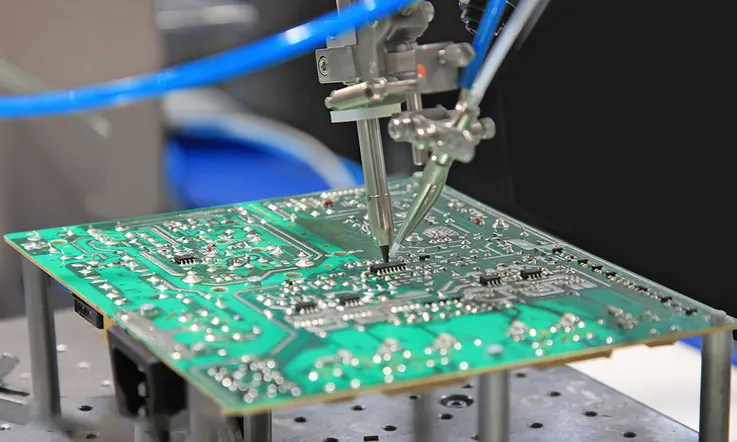
4.Switch Assembly: The switch components are then assembled onto the PCB. This involves automated placement of components like tactile switches, push-button switches, and DIP switches using high-precision pick-and-place machines. Some switches may also require manual soldering depending on their complexity or size.
5.Soldering and Bonding: The components are then soldered onto the PCB. Soldering methods such as wave soldering or reflow soldering are applied, depending on the type of switch and board design. For more specialized applications, manual soldering is used for quality assurance.
6.Encapsulation and Coating: The PCB switch is then encapsulated with protective coatings to prevent damage from moisture, dust, or other contaminants. This ensures that the switch will perform optimally throughout its lifecycle, particularly in harsh environments.
Inspection Methods: AOI, ICT, and Functional Testing
Once the switches are assembled, rigorous testing and inspection are performed to guarantee that each component functions as expected. Several inspection methods are used to detect potential issues before the PCB switches are delivered to clients:
●Automated Optical Inspection (AOI): AOI is a non-destructive testing method used to visually inspect the board for defects such as soldering issues, misaligned components, or trace problems. The system uses high-resolution cameras and software to detect anomalies, ensuring that the switches are mounted correctly and that there are no short circuits or open connections.
●In-Circuit Testing (ICT): ICT is a more detailed inspection process that checks the functionality of the switches and components while they are still on the PCB. This method involves sending electrical signals through the circuit to verify that each switch performs according to specifications. It helps identify issues like incorrect actuation or faulty electrical paths.
●Functional Testing: For more complex PCBs, functional testing is performed to simulate real-world conditions and ensure that the switches operate effectively in the final product. This test focuses on user interaction with the switch, testing for tactile feedback, travel distance, and actuation force.
DIP Switch Programming and Manual Configuration
DIP (Dual Inline Package) switches are often used in applications where manual configuration is required. These switches allow users to adjust settings such as address codes, configuration options, or other parameters in the circuit. The programming and manual configuration of DIP switches involves several steps:
●Manual Configuration: DIP switches often feature tiny switches that can be toggled individually. During the manufacturing process, our technicians ensure that these switches are correctly placed and easily accessible for the end-user. Depending on the application, DIP switches may be used to configure device settings, such as serial port addresses or system configurations.
●Programming DIP Switches: For more advanced configurations, PCB manufacturers may employ automatic programming methods. This process is suited to devices that require predefined settings, such as customized industrial control systems or telecom equipment. Automated machines can adjust each switch to its specified position before the final assembly stage.
●Testing the Configuration: After DIP switches are programmed, they are tested to ensure they function correctly. This may involve simulating various configuration scenarios to ensure the switches perform as expected. For systems that require specific settings, this step is necessary to guarantee that each device operates smoothly once it reaches the end-user.
Assembly and Mounting Methods for PCB Switch Integration
When integrating PCB switches into an electronic assembly, selecting the right mounting method ensures reliability and efficiency. This section outlines different techniques, including Surface Mount Technology (SMT), Through-Hole Technology (THT), and various soldering methods, with a focus on their respective benefits and challenges.
SMT vs. THT for PCB Switches
●Surface Mount Technology (SMT): This method involves mounting components directly onto the PCB surface, ideal for compact designs and high-density assembly. It’s faster and requires less space, but may not be suitable for all switch types, especially those needing high actuation force.
●Through-Hole Technology (THT): THT is used for switches that require more mechanical strength, such as toggle or DIP switches. It offers more robust connections but takes up more space on the PCB and is slower compared to SMT.
Pick-and-Place Compatibility and Reflow Constraints
●Pick-and-Place: This technique uses robotic machines to place components like switches on the PCB. While effective for standard components, some switches may not be compatible due to size or pin configuration.
●Reflow Constraints: Reflow soldering is used for SMT components but may not be suitable for heat-sensitive switches. Careful temperature control is necessary to prevent damage to sensitive parts during the soldering process.
Hand-Soldering vs. Automated DIP Insertion Techniques
●Hand-Soldering: This method is used for custom configurations or prototypes, providing greater control but is slower and more labor-intensive.
●Automated DIP Insertion: This technique automates the placement of DIP switches through the PCB holes, increasing speed and consistency during mass production.
PCB Switch Troubleshooting: Failure Modes and Design Corrections
Troubleshooting PCB switches is a fundamental aspect of PCB design, especially when dealing with reliability in circuit operations. Identifying the various types of issues that may occur — from poor contact to mechanical malfunctions — helps ensure the switch continues to perform well over time. This section highlights common problems, potential design flaws, and strategies for making the necessary adjustments.
Diagnosing Intermittent Contact or Stuck Switches
Intermittent contact in PCB switches is one of the common failures that can affect circuit performance. When the switch doesn’t respond as expected, it’s usually due to problems with the actuation mechanism or contact pads. For instance, switches may fail intermittently if the contacts are dirty, misaligned, or have a defective spring mechanism.
How to address intermittent contact-
●Inspect the switch for alignment issues: Ensure that the switch is properly aligned with the PCB pads.
●Check for dust or contaminants: Clean the switches or use switches with better sealing to protect against dirt.
●Upgrade materials: Using gold-plated contacts in place of cheaper alternatives can improve contact reliability by preventing oxidation.
When it comes to stuck switches, the problem could be related to over-actuation force or mechanical stress. A high level of pressure can cause the internal mechanism of the switch to jam. Review the PCB layout to verify that there are no obstructions that hinder the switch’s movement.
Common Design Mistakes: Trace Clearance, Overheating
Designing a PCB that properly accommodates switches involves more than just placing components. Mistakes in the layout, such as inadequate trace clearance or insufficient heat management, can lead to serious issues.
1.Trace Clearance: If the clearance between traces or the switch pads is too tight, it could cause short circuits, especially when traces are carrying current. For this, ensure that the traces are adequately spaced to avoid accidental connections or arcing.
2.Overheating: Switches, like other components on a PCB, are sensitive to temperature. Excessive heat can degrade both the switch’s performance and its lifespan. This issue often arises from the heat generated by nearby components. Solutions include:
●Improving thermal dissipation in the layout with vias and thermal pads.
●Using switches with higher thermal resistance for applications with significant heat output.
Rework Strategies and Pad Repair Techniques
PCB switches may occasionally fail during the assembly process or develop issues later. When a switch shows defects, having a structured rework approach helps resolve the situation effectively.
Rework Methods-
●Pad repair is often necessary when the pads have been damaged during initial assembly. In this case, the pads may need to be reflowed or manually repaired.
●Soldering and desoldering: Depending on the type of switch used, hand-soldering or automated soldering systems can be applied to repair or replace faulty switches.
●Reflow soldering: For SMD switches, reflow soldering can help reattach or replace the faulty parts.
After repairs, it is also wise to perform electrical continuity tests and inspect the switch’s mechanical actuation to verify its functionality before final deployment.
Why Choose Us: Manufacturer for PCB Switch Services – JarnisTech?
When selecting a partner for PCB switch services, JarnisTech offers a comprehensive suite of solutions tailored to meet diverse project needs. Our services encompass design, manufacturing, and assembly, ensuring a smooth experience from concept to completion.
End-to-End Support: Design, Manufacturing, and Assembly
At JarnisTech, we provide integrated services that cover every stage of PCB switch development. Our capabilities include handling various PCB types such as rigid, flexible, and rigid-flex boards, accommodating different project requirements. Our facilities are equipped to manage both Surface Mount Technology (SMT) and Through-Hole Technology (THT) assemblies, facilitating versatile production processes.
Data Table for PCB Types and Assembly Technologies:
Components mounted directly onto the surface of the PCB
High precision, automation, space-efficient
Can be difficult for large or bulky components
THT (Through-Hole Technology)
Components with leads inserted into holes drilled into the PCB
Stronger mechanical connection, suitable for larger components
Requires more space, lower automation
Fast Prototyping and Small Batch Services for Engineers
Understanding the need for rapid development cycles, JarnisTech offers expedited prototyping services. Our streamlined processes allow for quick turnaround times, enabling engineers to test and refine designs efficiently. This approach supports iterative development and accelerates time-to-market for new products.
Data Table for Prototyping and Small Batch Services:
Service Type
Description
Turnaround Time
Suitable Projects
Rapid Prototyping
Quick production of functional prototypes
3-7 days
Initial product design, concept testing
Small Batch Production
Low-volume manufacturing with flexibility for changes
2-3 weeks
Testing, small-volume product runs
Standard Prototyping
Production of prototypes based on initial design
1-2 weeks
Final design validation, pre-production
Full Turnkey Switch Integration for Global OEMs
For Original Equipment Manufacturers (OEMs) seeking comprehensive solutions, JarnisTech provides full turnkey services. Our offerings include component sourcing, PCB fabrication, assembly, and testing, all under one roof. This integrated approach simplifies supply chain management and ensures consistency across production batches. Our adherence to international standards such as ISO 9001:2015 and RoHS compliance underscores our commitment to quality and reliability.
Data Table for Turnkey Services:
Service Component
Description
Benefits
Component Sourcing
Procurement of all necessary components for PCB switches
Cost-efficient, reliable suppliers, quality control
PCB Fabrication
Manufacturing of PCB boards based on design specs
Fast turnaround, custom options available
Assembly
Full assembly of switch components and PCB
High precision, scalable production, quality assurance
Testing & Quality Control
Comprehensive testing of switches for performance and durability
Ensures compliance with industry standards
FAQs about PCB Switches
1.What is the typical lifespan of a PCB-mounted switch? Most switches rated for PCB mounting offer between 100,000 to over 1 million actuation cycles, depending on material and type.
2.Can PCB switches be used in high-vibration environments? Yes, but it is recommended to use low-profile switches with secure soldering and possibly add mechanical support or adhesive reinforcement.
3.How does switch debounce affect PCB designs? Debounce introduces signal instability; using hardware filters or software delay routines can reduce bounce-related input noise.
4.Are there low-noise switches for audio-grade PCB applications? Yes, some manufacturers offer silent tactile or reed-based switches designed for noise-sensitive circuits like audio or RF.
5.Can a switch be replaced without damaging the PCB? If designed with proper pad spacing and thermal relief, most switches can be desoldered and replaced using hot air or rework tools.
6.Is it possible to use capacitive sensing as an alternative to mechanical PCB switches? Yes, capacitive touch inputs are often used in consumer electronics to eliminate mechanical wear and improve aesthetics.
7.What packaging formats are common for automated switch assembly? Tape-and-reel and tube packaging are preferred for pick-and-place processes in high-speed SMT lines.
8.How do you prevent oxidation on switch contacts during storage? Store in anti-static sealed packaging with desiccants in a humidity-controlled environment to minimize corrosion.
9.Do all DIP switches need manual configuration during assembly? Not necessarily. Some DIP switch configurations can be preset before assembly or programmed via test pins after placement.
Universal PCB manufacturing focuses on adaptable circuit board platforms designed for low-volume, high-mix production. This guide provides a detailed look at each stage of the process—from fabrication and assembly to material selection, testing, and inspection.
It covers essential manufacturing steps like drilling, plating, soldering, and surface finishes, followed by assembly techniques like wave soldering and hand soldering. Material selection is explored through a comparison of FR-4, CEM-1, and ceramic substrates, with attention to thermal, electrical, and mechanical properties.
The guide also discusses stack-up design, signal integrity, and ground plane strategies for high-speed applications. For startups, it highlights BOM flexibility, rapid prototyping, and sourcing strategies. Thermal management and coatings are addressed to ensure long-term reliability.
What Is a Universal PCB?
If you’ve been involved in electronics for a while, you’ve likely come across Universal PCBs. These are not your standard, mass-produced circuit boards. Instead, they offer flexibility and adaptability that allow engineers to quickly and easily create prototypes or small-volume designs. A Universal PCB serves as a platform for experimenting with layout and component placement without committing to a specific, more complex configuration. From wearable devices to early-stage medical sensors, these boards provide the structural freedom required to streamline the development process.
In this section, let’s explore the details and functionality of Universal PCBs. We’ll break down how they are constructed, the various types available, and how they are used in different industries. By the end, you’ll have a solid understanding of how these boards can support your projects.
Understanding Universal PCB Architecture
A Universal PCB is often seen as a blank slate for circuit developers. It’s designed with a simple structure—essentially, it’s a board that has pre-drilled holes where components can be placed and connections manually routed. Unlike custom PCBs, which include predefined traces, the Universal PCB leaves the trace layout open for manual design and experimentation.
Most Universal PCBs follow a standard 2.54mm pitch for the holes, making them compatible with through-hole components such as resistors, capacitors, and header pins. While the simplicity of the design provides flexibility, it also means that the routing of electrical connections—using soldered wires, copper tape, or jumper wires—is left to the user handling the assembly and layout.
The architecture of Universal PCBs is built around providing flexibility and adaptability. Despite the open design, we must still pay attention to aspects like signal integrity, power handling, and heat dissipation, ensuring that the board can handle the requirements of their particular circuit without introducing issues down the road.
Common Types of Universal PCBs and Their Features
Let’s take a closer look at the various types of Universal PCBs you might encounter. Understanding these different formats will help you choose the most appropriate one for your needs.
Perfboard-
●Layout: Features individual copper pads for each hole, allowing you to place components freely.
●Use Case: Best for projects where flexibility in component placement is needed. Perfect for initial prototype circuits or testing where you might need to adjust the design frequently.
Stripboard-
●Layout: Copper strips that run along the length of the board with perforated holes, allowing for simple routing.
●Use Case: Works well for linear, simple designs like digital logic or analog circuits, where the circuit paths are straightforward.
Busboard-
●Layout: Includes pre-arranged power and ground buses, making it ideal for certain embedded systems.
●Use Case: Suitable for projects that require consistent power distribution across the board, especially in microcontroller-based designs.
Solderable Breadboards-
●Layout: Has copper pads that can be easily soldered to, useful for quick and cheap builds.
●Use Case: Great for low-cost prototyping or when building circuits for testing.
Choosing between these types depends on your project’s requirements. For example, if you need maximum routing flexibility, a perfboard might be the way to go. On the other hand, if you’re working with simple digital circuits, a stripboard could save you time by reducing manual wiring.
Real-World Applications in Prototyping and Embedded Systems
Where do Universal PCBs fit into real-world applications? From consumer electronics to medical devices and embedded systems, these boards support a range of practical use cases.
Consumer Electronics-
When you’re building prototypes for wearable devices like fitness trackers, smartwatches, or even Bluetooth speakers, Universal PCBs help test and evaluate different configurations quickly. The flexibility to modify layouts, test power routing, and add sensors without committing to a custom PCB design makes it easier to validate ideas early on.
Medical Devices-
For prototypes of biosensors, heart rate monitors, or temperature sensors, a Universal PCB provides the space to experiment with circuits before moving to a custom solution. In medical device development, fast prototyping allows design teams to adjust and adapt to changes without the pressure of large-scale manufacturing.
IoT Applications-
In the rapidly expanding Internet of Things (IoT) industry, quick prototyping is a must. When developing IoT sensors, Bluetooth, or Wi-Fi devices, a Universal PCB offers flexibility in testing components like microcontrollers, sensors, and communication modules. These boards make it possible to adjust configurations and modify designs swiftly based on practical testing results.
Automotive & Embedded Systems-
Designing a smart sensor for vehicles or working on embedded systems for automotive electronics, a Universal PCB provides a straightforward testing ground. Early iterations of power systems or communication buses are easier to build on a Universal PCB, where the layout can be adjusted as needed.
Universal PCB Design Guidelines for Manufacturability and Performance
Designing a Universal PCB requires more than just placing components on a board. It involves aligning your design with manufacturing constraints and performance goals to ensure that the board functions as intended, is easy to assemble, and can be tested effectively. In this section, we’ll explore how to design Universal PCBs with manufacturability and performance in mind. We’ll cover three main principles: optimizing for assembly and testing, managing component placement and layout, and addressing signal integrity issues.
Design for Assembly (DFA) and Design for Test (DFT)
Design for Assembly (DFA) and Design for Test (DFT) are key approaches that ensure your Universal PCB is not only functional but also straightforward to assemble and test during production. The goal is to design the board so that it can be efficiently assembled and quickly tested, minimizing errors and delays in the process.
Key Design for Assembly (DFA) Principles-
Design Principle
Best Practice
Component Orientation
Align all polarized components (e.g., diodes, capacitors) in the same direction for easy assembly.
Silkscreen Labeling
Clearly mark component values and identifiers on the silkscreen layer to avoid confusion during assembly.
Component Grouping
Position similar components, such as capacitors and resistors, together to simplify soldering and placement.
Thermal Management
Ensure heat-sensitive components are placed away from high-heat areas, and use thermal relief pads when necessary.
Design for Test (DFT) Considerations-
●Test Points: Include accessible test points for voltage or continuity checks, making it easy to verify the performance of core signals.
●Probing Areas: Avoid placing components or connectors over test points to ensure they are accessible during testing.
●Separate Analog and Digital: Isolate analog and digital sections to avoid interference, especially in precision or high-speed applications.
By considering DFA and DFT during the design phase, you’ll reduce the likelihood of rework and create a Universal PCB that’s easier to assemble and debug.
Component Placement, Hole Sizing, and Pad Layout
Component placement is one of the most influential factors in PCB performance and manufacturability. Universal PCBs can accommodate a wide range of components, but their arrangement must be carefully considered to ensure proper function, ease of assembly, and compliance with manufacturing standards.
Tips for Component Placement:
●Functional Grouping: Group components by their function—such as separating power components from sensitive signal processing ICs—to minimize interference and optimize performance.
●Proximity of Passive Components: Place passive components (e.g., resistors, capacitors) as close as possible to the active components they support to minimize parasitic inductance and capacitance.
●Clearance for Heat Dissipation: Ensure sufficient spacing around components that generate heat, such as voltage regulators or power transistors, to avoid overheating.
Hole Sizing and Pad Layout:
Component Lead Diameter
Recommended Hole Size
0.6 mm (standard)
0.9 mm
0.8 mm (typical header)
1.1 mm
1.0 mm (larger components)
1.4 mm
Choosing the correct hole size ensures reliable connections during assembly and soldering. The pad layout should also accommodate the component leads, allowing for effective soldering and reducing the likelihood of cold joints.
Pad Layout Recommendations:
●Standard Pad Sizes: Stick to standardized pad sizes, such as 1.5 mm diameter for most passive components, to ensure uniformity and ease of production.
●Avoid Narrow Pads: Avoid excessively narrow pads between traces, as these can be difficult to etch and may lead to manufacturing defects.
●Minimize Trace Lengths: When placing components, keep signal trace lengths as short as possible to reduce resistance and signal loss.
Avoiding Signal Integrity and Crosstalk Issues
Signal integrity and crosstalk are concerns in Universal PCB design, especially when handling high-speed digital or analog signals. Improper routing of signals or inadequate grounding can lead to signal degradation, noise, and interference, affecting the functionality of the board.
Increase trace separation or use ground planes to isolate signals
Reflections
Impedance mismatch due to trace length
Match impedance with appropriate trace widths and lengths
Electromagnetic Interference (EMI)
Poor grounding and long ground return paths
Use continuous ground planes and avoid running high-speed traces near power lines
Best Practices for Improving Signal Integrity:
●Use Ground Planes: A solid ground plane minimizes the effect of noise and provides a low-resistance path for current return.
●Separate Analog and Digital Sections: By physically separating analog and digital circuits, you reduce the chances of noise coupling.
●Controlled Impedance: For high-speed signals, ensure that trace widths and materials are selected to control the impedance and prevent signal reflection.
Exploring Universal PCB Manufacturing Processes: From Prototyping to Production
When it comes to building Universal PCBs, the process from prototyping to production is fundamental to creating a functional and manufacturable board. Each stage of the process, from fabrication to assembly and testing, impacts the overall quality and reliability of the finished product. This section breaks down the entire process, helping you understand how Universal PCBs are created and what steps must be taken to ensure they are ready for real-world applications.
We will cover the core stages of Universal PCB manufacturing, starting with PCB fabrication, including drilling, plating, and etching. Then, we will explore assembly techniques like wave soldering and hand soldering, before discussing the inspection and testing methods, such as Automated Optical Inspection (AOI), Functional Testing, and In-Circuit Testing (ICT).
PCB Fabrication: Drilling, Plating, and Etching
The PCB fabrication process involves several detailed steps that convert raw materials into the conductive pathways that allow the Universal PCB to function. This stage includes drilling, plating, and etching, all of which are necessary to build a sturdy and functional Universal PCB. Let’s take a look at what each process entails.
Drilling-
In the drilling phase, holes are created in the PCB to make space for through-hole components, vias, and mounting pins. This step is carried out using high-precision CNC machines to ensure exact hole placement and size. The size of the holes varies depending on the type of component and the board’s design requirements.
Hole Type
Typical Application
Hole Size Range
Through-Hole
Component leads and vias
0.2mm – 1.5mm
Blind Via
Internal connections
0.2mm – 1.0mm
Buried Via
Hidden layer connections
0.2mm – 0.8mm
Tip: The diameter of the holes influences the overall design, so it is must to consider component leads and the number of layers when selecting hole sizes.
Plating-
Once the holes are drilled, plating is used to coat the inner walls of these holes with copper, ensuring that the electrical pathways connect the various layers of the PCB. The plating process is what allows the board to support multi-layer designs and ensures electrical continuity between different sections of the PCB.
Etching-
After plating, the excess copper is removed through the etching process. A chemical bath or laser technology is used to remove copper from unwanted areas, leaving behind the desired electrical traces. This process defines the circuit paths that connect different components on the Universal PCB.
Assembly Techniques: Wave Soldering and Hand Soldering
Once the PCB is fabricated, it’s time for assembly. There are different techniques used to attach the components to the Universal PCB, with wave soldering and hand soldering being two of the most common. Let’s examine both processes and when each is appropriate.
Wave Soldering-
Wave soldering is a well-established method used to solder through-hole components onto a PCB. In this process, the board moves over a wave of molten solder, which connects the component leads to the PCB pads. It’s a very efficient method for bulk soldering, as it can solder multiple components at once. This technique is especially useful for larger production runs of Universal PCBs.
Hand Soldering-
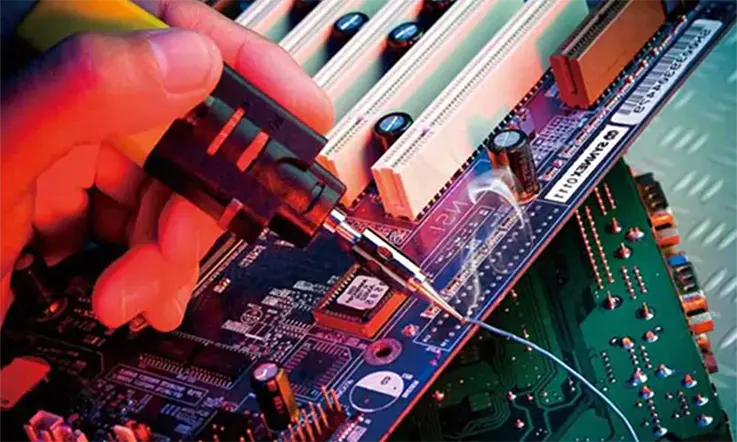
While wave soldering works well for high-volume production, hand soldering is often employed for smaller production runs or for specialized components. With hand soldering, an operator uses a soldering iron to manually attach component leads to the pads on the PCB. This method provides more precision, especially for small components or components that are difficult to reach with wave soldering.
Hand soldering also offers flexibility in situations where modifications or repairs need to be made to the board. It’s a slower process compared to wave soldering but remains an essential technique for certain scenarios.
Inspection and Testing: AOI, Functional Test, ICT
Once assembly is complete, it is necessary to verify the Universal PCB’s performance and quality. Several methods are used for inspection and testing, including Automated Optical Inspection (AOI), Functional Testing, and In-Circuit Testing (ICT). These processes help identify any issues that may have occurred during fabrication or assembly.
Automated Optical Inspection (AOI)-
AOI is a visual inspection process where high-resolution cameras and computer software scan the PCB for defects such as missing or misplaced components, soldering issues, or incorrect component orientations. This is particularly useful in high-volume production runs of Universal PCBs, as it enables quick, automated detection of problems before the board is shipped.
The AOI system compares the real-time image of the Universal PCB to a reference image based on the design specifications. This process helps ensure that any defects are identified early and resolved quickly.
Functional Testing-
Functional testing checks whether the Universal PCB performs its intended functions. This test goes beyond simply looking for physical defects and examines how the board operates within a larger system. In consumer electronics, for example, functional testing might involve powering up the board to simulate its use, checking whether all signals are correctly processed and if the board performs according to the specifications.
In-Circuit Testing (ICT)-
ICT is used to check the electrical properties of the Universal PCB after assembly. It involves testing each individual circuit and component on the board to confirm they are connected properly and functioning as they should. This type of testing helps detect issues like open circuits, short circuits, and improper connections. ICT is often used for high-density designs where manual inspection would be difficult.
Universal PCB Materials and Laminates: Choosing the Right Substrate
When designing a Universal PCB, selecting the right base material shapes everything from thermal performance to signal behavior and mechanical handling. Engineers working with consumer electronics, wearable devices, and embedded systems often rely on substrate characteristics to match project requirements and production tolerances. This section breaks down three widely used substrate materials and examines how they influence electrical, thermal, and structural attributes—while also addressing compliance aspects tied to flame resistance and environmental standards.
Comparing FR-4, CEM-1, and Ceramic Substrates
Universal PCBs can be built using a range of substrates, each suited for specific assembly techniques and performance conditions:
●FR-4: A fiberglass-reinforced epoxy laminate known for consistent dielectric behavior. It’s well-suited for multilayer designs and supports both through-hole and surface-mount components, making it suitable for wearable electronics, communication modules, and automotive prototypes.
●CEM-1: A composite made from woven glass and paper-based laminate, commonly applied in single-sided PCB production. Its moderate strength and lower cost make it appealing for lighting devices and household electronics.
●Ceramic Substrates: Typically built with aluminum oxide or aluminum nitride, these offer strong thermal conductivity and electrical insulation. They’re often used in power electronics, LED lighting, and high-frequency RF systems, where heat dissipation and signal stability are essential. However, ceramic boards require extra care during handling and assembly to avoid material fracture.
Each option serves specific use cases within the Universal PCB manufacturing space, and selecting between them should involve a careful review of electrical specs, heat constraints, and mechanical limits.
How Material Impacts Thermal, Electrical, and Mechanical Properties?
Base materials affect how a Universal PCB handles temperature changes, signal transmission, and physical stress. Here are the main property categories to consider:
●Thermal Behavior: FR-4 typically offers a thermal conductivity around 0.3 W/m·K, which is manageable for low-power designs. Ceramic substrates—especially aluminum nitride—can exceed 20 W/m·K, offering stronger thermal performance in high-power applications.
●Electrical Behavior: FR-4 maintains stable dielectric constants, helping with impedance control in multilayer circuits. CEM-1 may fall short under high-speed or RF signal conditions due to higher dielectric losses.
●Mechanical Strength: While ceramic boards offer rigidity, they’re more prone to cracking under vibration or mechanical shock. FR-4 is better suited for flex and bend tolerance during manufacturing and daily operation.
Engineers should balance these properties based on the target device’s thermal footprint, signal frequency, and expected stress profile across its lifecycle.
Flame Resistance and RoHS Compliance Considerations
Universal PCBs must meet safety and regulatory benchmarks, especially when used in healthcare equipment, consumer products, or systems intended for international markets. Here’s what to keep in mind:
●Flame Rating: FR-4 materials usually comply with UL94V-0 standards, offering self-extinguishing behavior under controlled lab conditions. Ceramics are naturally flame-resistant due to their inorganic composition, but their use must align with appropriate soldering and sealing techniques.
●Environmental Compliance: Universal PCB substrates should meet RoHS (Restriction of Hazardous Substances) directives, limiting exposure to substances like lead, cadmium, and mercury. Procurement processes should include verification of compliance certificates from laminate and solder paste suppliers.
●Packaging and Process Compatibility: Flame-resistant resin layers and halogen-free bonding materials can help meet environmental safety expectations. Ensuring that all stack-up materials conform to these thresholds helps avoid costly redesigns or export restrictions down the line.
To minimize delays or compliance concerns, consider reviewing flame resistance and RoHS compatibility during the material selection phase—not just at final inspection.
Advanced Stack-up and Layer Design in Universal PCBs
Layer configuration and stack-up planning in Universal PCBs directly influence electrical performance, manufacturability, and signal behavior. Applications such as wearable electronics, industrial control systems, and compact instrumentation often require designs that manage high-frequency signals, power integrity, and dense routing. A systematic approach to stack-up structure ensures consistent impedance control, controlled return paths, and practical routing space allocation. The following sections outline foundational techniques in signal handling, layer distribution, and grounding for Universal PCB projects.
Signal Integrity in High-Speed Applications
Maintaining signal quality in Universal PCBs requires attention to high-frequency signal propagation, impedance matching, and noise suppression.
Core practices include:
●Controlled Impedance Design: Define precise trace widths, spacing, and dielectric thickness based on calculated impedance targets, especially for differential pairs and RF paths.
●Dielectric Material Management: Use low-loss laminates such as high-Tg FR-4 or polyimide for better propagation characteristics and reduced signal attenuation.
●Via Stub Reduction: Shortening via stubs through back-drilling or employing blind vias helps reduce reflection and resonance in high-speed paths.
●Consistent Return Paths: Ensure uninterrupted reference planes below signal traces to reduce loop inductance and improve signal return quality.
High-speed signal quality is influenced not just by trace width, but by the electromagnetic environment created through layer design and dielectric consistency.
Layer Count and Via Type Optimization
Optimizing the number of layers and the types of vias used improves routing efficiency and electrical performance, especially in compact or high-density boards.
Recommended strategies:
●4- and 6-Layer Configurations: Provide effective separation of signal, power, and ground layers for controlled impedance and reduced EMI.
●Via Selection by Function: Use through-hole vias for simple interconnects, blind/buried vias for HDI layouts, and microvias for fine-pitch BGA components.
●Copper Distribution Balancing: Maintain symmetrical copper coverage across layers to prevent warping during lamination and soldering.
When planning for manufacturability, layer stack-ups must also account for press-out thicknesses and drill aspect ratios in the fabrication process.
Ground Plane and Power Distribution Strategies
Ground and power layout affects voltage consistency, noise margins, and electromagnetic compatibility. Proper implementation helps stabilize circuit operation and simplifies compliance during system testing.
Implementation guidelines:
●Dedicated Power and Ground Planes: Use full copper layers rather than isolated pours to reduce impedance and support decoupling performance.
●Capacitor Placement: Position decoupling capacitors close to power pins and distribute them evenly across the board to minimize local noise.
●Analog-Digital Isolation: Segment analog and digital grounds and rejoin at a single reference point to reduce signal coupling across domains.
Clean separation of return paths and proper decoupling can prevent voltage fluctuations and support steady operation across all active components.
Universal PCBs for Low-Volume and High-Mix Manufacturing
In sectors such as industrial instrumentation, medical diagnostics, and specialized consumer devices, demand for diverse PCB variants in limited production runs continues to grow. Universal PCBs support this shift by offering layout compatibility across multiple use cases without redesigning core infrastructure. These configurations simplify board revisions and accelerate delivery for pilot builds and limited production schedules.
The following sections outline how turnkey assembly support, flexible BOM handling, and rapid prototyping workflows enable more responsive product iterations in low-volume, high-mix settings.
Niche OEM Production with Turnkey PCB Assembly
Turnkey assembly streamlines operations by integrating fabrication, component sourcing, and final assembly into a single service pipeline. For niche OEMs or custom device builders, this approach minimizes lead times and limits logistical overhead.
Implementation practices include:
●Shared Universal PCB Platforms: Using a single base layout across variants reduces engineering cost per product line.
●SMT and THT Mixed Processes: Supporting both mounting methods accommodates legacy components and specialty parts without custom redesign.
●Single-Vendor Coordination: Turnkey models centralize responsibility for quality, documentation, and delivery schedules.
OEMs pursuing small batch manufacturing often favor providers with integrated ERP tracking, reflow and wave soldering capabilities, and test fixture development options. These service combinations maintain consistency across revisions while simplifying quality control.
Rapid Prototyping for Startups and Hardware Incubators
Startups and engineering incubators frequently rely on rapid iteration to meet investor milestones or refine proof-of-concept units. Universal PCBs support quick adaptation through reusable layouts and DFM-verified stack-ups.
Applied approaches include:
●Modular Footprint Planning: Reserve headers or configurable zones for testing pinouts, sensor swaps, or microcontroller upgrades.
●Quick-Turn Fabrication: Partner with fabs offering 2–5 day lead times with material preset options (e.g., FR-4, TG170) for reliable electrical behavior.
●Test Point Integration: Design for easy oscilloscope or multimeter access during firmware debugging.
Hardware teams often favor universal footprints that support footprint-compatible components such as ATmega328P vs. STM32F103 or ESP32-WROOM vs. ESP32-C3 to allow flexibility at the firmware level without routing changes.
BOM Optimization and Component Sourcing for Flexibility
Component availability directly affects production planning in low-volume environments. Universal PCBs that accept a broader range of alternate parts avoid delays caused by single-source shortages.
Execution strategies include:
●Dual Footprint Pads: Design pads compatible with both SOT-23 and SC-70 for voltage regulators or analog switches.
●Tolerance-Based Passive Selection: Use wide-tolerance resistors (e.g., 1% vs. 5%) where function permits, increasing sourcing options.
●Pre-Approved Substitutes in ERP: Maintain alternate part numbers in the bill of materials to enable on-the-fly procurement.
Suppliers such as Mouser, Digi-Key, and LCSC now support real-time API connections for BOM checking, which helps avoid manual sourcing delays and flags lifecycle concerns early in the project.
Thermal Management and Reliability Engineering on Universal PCBs
Universal PCBs used in power-dense or long-cycle applications must be designed to handle thermal stress and maintain mechanical and electrical stability over time. As operating currents increase or duty cycles grow longer, thermal buildup becomes a performance limiter. By applying deliberate design measures—such as copper pouring, proper thermal relief, and process-specific coatings— many manufacturers can mitigate risks tied to overheating and aging-related degradation. The following sections break down thermal pathways, heavy-current design approaches, and material-based reinforcement techniques for long-term durability.
Heat Dissipation Using Copper Pours and Thermal Pads
To avoid excessive thermal gradients across the board, passive heat control elements are frequently integrated directly into the layout. These techniques support efficient temperature distribution and help prevent localized stress.
●Copper pours — Broad copper areas on internal or outer layers provide heat-spreading zones, reducing hot spots under active components. Ground pours often double as thermal mass in power systems.
●Thermal vias — Vias placed beneath heat sources transfer thermal energy to internal copper planes or the opposite PCB surface. Filling or plating these vias with conductive material enhances the conduction path.
●Thermal relief patterns — For components with high dissipation, thermal pads under QFNs or regulators must be isolated with carefully spaced copper fingers to avoid excessive reflow dwell time.
●Component spacing — Increasing the clearance between high-power parts helps reduce heat interference, particularly in enclosures lacking airflow.
Example Table: Heat Dissipation Methods
Thermal Control Technique
Function
Typical Application
Design Consideration
Copper Pours
Heat spreading and electrical grounding
Power delivery zones, RF shielding
Connect to ground plane to dissipate heat evenly
Thermal Vias
Vertical heat transfer to inner layers
Underneath QFNs, power ICs
Fill or plate with conductive paste for efficiency
Thermal Relief Patterns
Prevents overheating during soldering
QFN pads, regulator footprints
Maintain thermal isolation around component pad
Component Spacing
Reduces heat accumulation
Multi-power IC layouts
Use 2–3 mm spacing to allow thermal breathing
High-Current Applications with Universal Boards
Universal PCBs used in motor drivers, battery chargers, and lighting systems often carry elevated current levels, which require special design measures beyond standard trace rules.
●Trace width and thickness— Following IPC-2221 current capacity guidelines, traces are widened and copper thickness may be raised to 2 oz or more on power planes.
●Heavy copper integration — When continuous operation above 10 amps is expected, heavy copper routing or bus bar additions may be considered.
●Board stack-up— Symmetrical layering helps offset warpage from uneven heating, especially where power layers are placed near surface routing.
●Fuse integration and test pads — Inline fuses or jumper pads aid protection and testing during production and post-assembly validation.
Implementing these steps early in layout minimizes the need for rework or thermal shielding in final assembly.
Example Table: High-Current Design Parameters
Parameter
Standard Value (1 oz Cu)
Enhanced Value (2 oz Cu)
Application Example
Max Trace Current (1 mm width)
~2.3 A (internal layer)
~3.5 A (external layer)
Battery management PCB
Heavy Copper Routing
Not used
≥3 oz copper
Motor controller board
Recommended Trace Width for 10A
2.5 mm (min)
1.3 mm (with 3 oz copper)
Automotive lighting PCB
Fuse Rating Range
0.5 A – 30 A
Configurable via design
Integrated inline test pads
Ensuring Long-Term Performance with Coatings and Pre-bake
Moisture absorption and oxidation can degrade electrical integrity and solder bond quality over time. Applying material protections during pre-assembly and post-assembly processing helps maintain dimensional and electrical stability.
●Pre-baking prior to reflow — Boards stored in uncontrolled environments may absorb moisture, which can cause delamination or blistering during solder reflow. Pre-bake steps remove absorbed moisture before assembly.
●Conformal coatings — Acrylic, polyurethane, or silicone coatings shield circuits from chemical vapors, salt spray, and surface tracking during field deployment.
●Edge masking and selective protection — Areas not covered by coating—such as connectors or thermal pads—should be masked during application to preserve conductivity and bonding.
●Surface finish stability — ENIG and immersion silver finishes resist oxidation better than HASL for extended shelf-life and solderability.
Applying these practices not only supports environmental endurance but also meets manufacturing requirements in consumer, industrial, and automotive contexts.
Example Table: Protective Measures for Long-Term Durability
Testing, Inspection, and Quality Control in Universal PCB Manufacturing
Maintaining consistency in Universal PCB production requires a structured testing and inspection framework that addresses every phase—from bare board verification to post-assembly diagnostics. For small-batch and high-mix scenarios, we must to prioritize flexible inspection methods and adaptable test routines. This section provides technical coverage of standard practices used to verify structural, electrical, and functional conformance without resorting to rigid inspection templates.
Visual and Automated Optical Inspection
This phase focuses on identifying surface anomalies before moving forward with functional testing. Both manual and automated methods are used to examine solder joints, component alignment, and mounting precision.
●Manual visual inspection: Operators examine PCBs under magnification to detect solder bridging, cold joints, missing parts, and polarity mismatches.
●2D automated optical inspection (AOI): Scans PCB surfaces for placement deviations and solder coverage inconsistencies after initial SMT processes.
●3D AOI systems: Capture solder volume and height data post-reflow to evaluate joint structure and shape consistency.
●Reference-based defect detection: AOI software compares boards against golden images to flag deviations from predefined tolerances.
●Advanced illumination techniques: Variable-angle lighting enhances detection of lifted leads and tombstoned components.
Testing Methods for Manual and Machine Assembly
Thorough electrical testing confirms circuit continuity, signal behavior, and functional reliability across production batches. Selection of test method depends on complexity, layout density, and production scale.
●Flying probe testing: Suitable for small lots and prototypes; enables pin-to-net verification without custom fixtures.
●In-circuit testing (ICT): Applies fixed probes to confirm correct values, polarity, and component placement on mass-produced boards.
●Boundary scan techniques: Used when physical access to test nodes is restricted; applicable to high-density ICs and BGA packages.
●Functional testing: Involves simulation of end-use scenarios with controlled power and signal inputs.
●Manual probing: Performed by technicians using multimeters or oscilloscopes, primarily during engineering validation or troubleshooting.
Defect Prevention in Small Batch Production
In small-quantity manufacturing, the relative impact of a defect is higher, requiring early-stage controls and traceability practices.
●First article inspection (FAI): A full inspection of the first assembled unit, with documentation for traceable compliance before further production.
●Solder paste inspection (SPI): Evaluates stencil printing accuracy to reduce solder bridging and open connections.
●Design-for-test (DFT) integration: Encourages inclusion of test points, consistent pad access, and test fixture compatibility at the design level.
●Standardized operator guidance: Clear assembly instructions and visual references reduce manual errors on small production lines.
●Closed-loop feedback: Quality data is recorded and reviewed to inform layout improvements and process tuning in future revisions.
FAQ: Universal PCB
Q1: What challenges exist in Universal PCB design for low-volume production? A1: Challenges include higher setup costs, limited component availability, and the need for rapid prototyping while balancing cost-efficiency with customization.
Q2: How does temperature affect the lifespan of Universal PCBs? A2: Temperature fluctuations can lead to delamination or brittleness in PCBs. Proper thermal management techniques, like copper pours, help maintain stability.
Q3: How does multi-layer PCB technology apply to Universal PCB design? A5: Multi-layer PCBs allow for compact designs and complex circuits, improving performance without increasing size, but require optimized layer stacking and signal integrity.
Q4: How does component packaging affect Universal PCB design? A8: The choice of packaging impacts pad sizes, via types, and spacing, influencing the overall design and performance of the PCB.
Wireless PCBs are integral to various industries like telecommunications, smart infrastructure, and consumer electronics. They are designed to support high-frequency signals, antenna integration, and electromagnetic compliance. This guide will help you understand the types of wireless PCBs, design influences, materials, and assembly processes that impact performance.
The fabrication process involves steps like etching, lamination, and laser drilling, with materials such as PTFE and high-speed laminates used to ensure signal integrity. Many manufacturers offer services from schematic design to final layout, often including RF simulation and support for custom designs.
SMT is commonly used for smaller RF modules, while DIP suits larger boards. After assembly, testing ensures the functionality and quality of the final product. For more complex applications like 5G or IoT, custom stackups and routing are employed to meet specific demands.
This guide provides detailed insights into wireless PCB design and manufacturing for professionals looking to optimize their projects.
What is a Wireless PCB and Why Is It Essential?
In today’s connected world, wireless PCBs (Printed Circuit Boards) form the backbone of devices that communicate wirelessly. These boards are specifically engineered to handle signals in high-frequency ranges, enabling smooth and reliable data transmission across various devices without physical connections.
Definition and Core Functions of Wireless PCBs
A wireless PCB is a specialized circuit board that supports wireless communication standards such as Wi-Fi, Bluetooth, and RF (Radio Frequency). Unlike traditional PCBs, these wireless boards are designed to integrate critical components such as antennas, transceivers, and filters that facilitate seamless wireless communication.
Main Functions-
●Signal Transmission: Enables high-frequency signal transmission with minimal loss.
●Impedance Matching: Ensures that signal pathways match the impedance of connected loads to ensure smooth power transfer and reduce signal distortion.
●Electromagnetic Compatibility (EMC): Minimizes electromagnetic interference, ensuring the board works reliably in various settings.
Example: Consider a wireless Bluetooth mouse. The wireless PCB inside the device transmits user inputs via Bluetooth to the computer, ensuring smooth and responsive communication without the need for physical cables.
Role of Wireless PCB Design in Modern Electronics
The design of a wireless PCB directly affects how a device functions by guiding the communication between components efficiently. Several design elements must be considered to support stable and reliable performance, including signal routing, material selection, antenna placement, and impedance control.
●Material Selection: Materials such as Rogers or FR-4 are selected for their low dielectric constant, which allows reliable high-frequency communication.
●Layer Stack-Up: Multi-layer designs separate signal layers to reduce the risk of interference, providing a clean signal path.
●Component Placement: Efficient placement of components reduces signal path lengths and avoids interference, promoting smooth data transfer.
Example: In the case of a smartphone, a wireless PCB facilitates communication between Bluetooth, Wi-Fi, and other wireless modules. The design ensures that signals do not interfere, maintaining stable connectivity during use.
Industries Served by Top Wireless PCB Manufacturers
Wireless PCBs are used across a broad spectrum of industries, each with unique demands and requirements:
Industry
Applications
Wireless PCB Requirements
Medical Devices
Wearable health monitors, implantable devices
Miniaturized designs, durability, high reliability
Consumer Electronics
Smartphones, wireless earbuds, gaming consoles
Compact design, efficient high-frequency handling
Aerospace and Defense
Navigation systems, communication devices
Reliability in extreme conditions, signal integrity
Example: In the automotive industry, wireless PCBs are integral to systems like keyless entry and wireless charging, providing both functionality and convenience in modern vehicles.
What Are the Types of Wireless PCBs Available Today?
Wireless PCBs are in high demand across telecommunications, industrial control, medical monitoring, and aerospace sectors. Each area requires its own approach to signal transmission, structural layout, and space limitations. Industry experts and production teams tackle these demands by offering a range of board types, each designed for particular application needs. This section outlines the primary classes of wireless PCBs in today’s electronic product development and their performance characteristics.
Single-Sided vs. Multilayer Wireless PCBs
Choosing the appropriate PCB configuration often starts with assessing the circuit’s complexity, component density, and routing needs. Two widely used categories in wireless PCB design are single-sided and multilayer formats.
Single-Sided Wireless PCBs-
These boards have a single layer of conductive copper and are commonly built from FR4, CEM-1, or similar substrates. This configuration often suits devices with minimal circuitry or basic wireless modules. Its straightforward layout and assembly process support efficient production, particularly for consumer-grade items or prototype runs.
Multilayer Wireless PCBs-
When signal density increases or controlled impedance is required, multilayer boards offer a more scalable approach. These PCBs integrate multiple conductive layers separated by dielectric material and allow for complex routing between components. Wireless PCB fabrication techniques such as sequential lamination and via-in-pad processing are common for multilayer applications.
Design Factors in Wireless PCB Fabrication-
Human’s engineers take into account material dielectric constant, copper thickness, signal loss, and thermal performance during the design process. Multilayer wireless PCB manufacturing also involves blind and buried vias to preserve board real estate and enhance signal flow efficiency.
Flexible and Rigid-Flex Wireless PCB Configurations
Modern device architecture increasingly relies on form factor versatility and reduced interconnect complexity. Flexible and rigid-flex wireless PCBs are widely used when circuit boards must conform to non-linear geometries or dynamic movements.
Flexible Wireless PCBs-
Built on substrates like polyimide or LCP (liquid crystal polymer), these PCBs allow for bending and shaping. Their wireless connectivity components are typically surface-mounted, requiring precise alignment and soldering during wireless PCB assembly. These configurations are often found in wearables, implantable medical electronics, and compact handheld devices.
Rigid-Flex Wireless PCBs-
Combining rigid sections for structural stability with flexible layers for inter-module connections, rigid-flex layouts remove the need for external cables and connectors. This approach is commonly used to lower mechanical failure points and shrink overall device size.
Process Notes from Wireless PCB Manufacturing Services-
Rigid-flex fabrication requires accurate material alignment, controlled impedance zones, and specialized lamination. During wireless PCB assembly, careful thermal profiling ensures integrity at the interface between rigid and flexible regions.
HDI, RF, and Bluetooth-Enabled PCB Types
Specific applications require unique characteristics in performance, density, or signal behavior. For these cases, wireless PCB design expands into advanced categories such as HDI, RF, and integrated Bluetooth layouts.
HDI Wireless PCBs (High-Density Interconnect)-
These PCBs feature microvias, ultra-thin dielectric layers, and stacked vias for compact, high-performance layouts. Production facilities employ laser drilling and sequential build-up (SBU) techniques to achieve greater density and tighter tolerances. HDI layouts are common in miniaturized communication devices and high-frequency systems.
RF Wireless PCBs-
Used for transmitting and receiving high-frequency signals, RF wireless PCBs are fabricated with low-loss materials such as PTFE or ceramic-filled laminates. Wireless PCB fabrication includes impedance matching, signal shielding, and simulation testing at frequencies ranging from MHz to GHz.
Bluetooth Wireless PCBs-
These are designed to support short-range wireless protocols, typically embedding certified Bluetooth modules into the board layout. Engineers working on wireless PCB design must focus on antenna placement, EMI control, and compliance with international wireless transmission standards. Assembly processes follow strict guidelines for solder joint inspection and layout integrity.
How Does Wireless PCB Design Impact Performance?
Wireless PCB design influences how signal quality, stability, and electromagnetic behavior align with product specifications across industries such as telecommunications, consumer electronics, and defense. With the increasing use of high-frequency signals, integration of antennas, and compact form factors, the performance of a wireless-enabled circuit board relies on a wide range of design parameters. Each stage of design and fabrication requires attention to layout geometry, materials, and signal flow.
High-Frequency Layout Considerations for RF Signals
For wireless PCBs that transmit or receive RF signals, the physical layout must manage factors like impedance, signal loss, and trace coupling. Common layout techniques aim to stabilize frequency behavior and minimize disruptions during operation:
●Controlled Impedance Routing helps maintain consistent transmission by aligning trace width, copper thickness, and dielectric constants.
●Short Trace Paths help lower signal delay and phase errors, benefitting Bluetooth-enabled and RF-based PCBs.
●Layered Ground Planes provide a return path that reduces signal radiation and promotes cleaner transitions at high speed.
Wireless PCB design experts also account for component spacing to reduce parasitic capacitance, while wireless PCB manufacturers often offer guidelines for stack-up configurations tailored for specific frequency targets.
Antenna Placement and EMI Shielding Strategies
Antenna efficiency in wireless PCBs depends on isolation from noise, placement relative to ground planes, and physical proximity to active components. During the wireless PCB assembly process, board shape and material finish also influence how radiation patterns behave.
Typical strategies include:
●Edge Positioning: Antennas are placed at the perimeter of the PCB to avoid interference from dense routing zones.
●EMI Shielding Layouts: Ground fences, via stitching, and dedicated shielding layers can contain electromagnetic noise.
●Matching Networks: Passive component tuning matches antenna impedance to system impedance, enhancing transmission accuracy.
Material Compatibility During PCB Design Stages
The electrical and mechanical properties of base materials shape how RF and wireless signals behave. Each material option presents trade-offs between signal retention, manufacturability, and thermal stability during reflow or assembly.
When selecting materials for wireless PCB fabrication, we usually consider:
●Dielectric Constant (Dk): This parameter influences trace dimensioning and is used in impedance calculations. Lower values typically offer more predictable signal paths.
●Dissipation Factor (Df): Affects how much signal is lost as heat across the board—lower values are preferred for maintaining signal integrity.
●Thermal Expansion: A mismatch in expansion between copper layers and substrate may cause delamination or stress during soldering.
Wireless PCB materials such as PTFE composites, ceramic-filled hydrocarbon laminates, and high-Tg FR-4 alternatives are frequently used based on the application’s thermal and frequency requirements.
What Materials Are Used in Wireless PCB Manufacturing?
In the production of wireless PCBs, choosing the right materials is a determining factor for the efficiency, performance, and durability of the final product. The materials used in wireless PCB manufacturing not only impact the electrical properties of the board but also influence other factors such as production costs, ease of assembly, and overall reliability. Below is an exploration of the commonly used materials in wireless PCB manufacturing.
PTFE, Rogers, and High-Speed Dielectric Laminates
For high-frequency applications like RF (Radio Frequency), choosing the right dielectric material makes a noticeable difference. PTFE (Polytetrafluoroethylene) and Rogers laminates are common choices, thanks to their low signal loss and stable performance across a wide range of frequencies.
PTFE-
PTFE is known for its low signal loss and high thermal resistance. These properties make it suitable for high-frequency applications such as satellite communications, radar systems, and high-speed digital circuits. PTFE ensures that the signal transmission remains clear even over long distances and high frequencies, without significant degradation.
Rogers-
Rogers materials, designed for high-frequency applications, provide a range of dielectric laminates that maintain signal integrity across multiple frequencies. Some commonly used Rogers laminates are:
Rogers laminates have been optimized to ensure that signal strength is maintained even under varying temperature and environmental conditions, ensuring that the wireless device performs consistently.
Conductive Layers and Copper Weight Guidelines
The copper layers used in a wireless PCB play a core role in determining the electrical performance and durability of the board. The thickness of the copper and the weight of the copper in the PCB affects parameters such as current handling capacity, heat dissipation, and signal integrity.
Here are some general guidelines for selecting copper weight in PCB manufacturing:
●Light Copper (1 oz/ft²): Common in low-power devices, providing adequate conductivity for basic wireless applications.
●Medium Copper (2 oz/ft²): Often used for mid-range RF applications, where more current handling is needed.
●Heavy Copper (3 oz/ft² or more): Typically found in high-power applications that demand improved heat dissipation and increased current capacity to support overall system operation.
Copper Weight
Application Area
Typical Frequency Range
1 oz/ft²
Basic wireless devices
Up to 1 GHz
2 oz/ft²
Mid-range RF applications
1 GHz – 6 GHz
3 oz/ft²
High-power RF systems
6 GHz and above
The copper weight selected will depend on the specific needs of the wireless PCB, such as power requirements and signal transmission frequency.
Thermal Stability and Signal Loss Considerations
Thermal stability and signal loss are closely linked in wireless PCB manufacturing. The material used must perform consistently even under different temperature conditions and maintain a strong signal without excessive loss.
Thermal Stability-
High-performance wireless PCBs are typically made from high-Tg FR4 or ceramic-filled composites. These materials offer stability under thermal stress and can withstand the heat generated during the soldering process without affecting the structure of the PCB. This ensures that the device continues to function as expected under varying environmental conditions.
Signal Loss-
Signal loss can be influenced by the dissipation factor (Df) of the material. A higher Df leads to more signal degradation, which can affect the performance of wireless systems. Materials like Rogers RO3003 and PTFE offer low Df values, which minimize signal loss and ensure clearer and more efficient signal transmission.
Here is a breakdown of common PCB materials and their respective electrical characteristics:
Material
Dielectric Constant (Dk)
Dissipation Factor (Df)
Typical Applications
RO3003
3.0
0.003
5G, high-speed RF
PTFE
2.2
0.0003
Satellite systems
FR4 (High Tg)
4.2
0.02
General consumer devices
Choosing a material with a low Df helps lower signal loss, especially in high-speed or high-frequency applications.
What Services Do Wireless PCB Manufacturers Provide?
Wireless PCB manufacturers offer a wide range of services designed to support the creation, testing, and production of printed circuit boards used in wireless communication devices. These services encompass every phase of development, from the initial design to the final product, and are customized to meet the specific requirements of various wireless applications. Let’s take a closer look at the core services that these manufacturers offer.
From Schematic Design to Final PCB Layout
Creating a functional and reliable wireless PCB begins with detailed schematic design, which defines the electrical connections and functional layout of the circuit. Wireless PCB manufacturers assist in the creation of these schematic designs, ensuring all design parameters, including frequency, signal integrity, and power efficiency, are met. After the schematic is finalized, the next step is converting it into a physical layout.
●Schematic Design: This process defines the circuit’s functionality and ensures all electrical connections are correct. The schematic design helps ensure that the selected components will deliver the required performance for wireless communication.
●Final PCB Layout: The layout phase involves arranging the components on the board and routing the connections. This step requires attention to detail, such as trace widths and component placements, to optimize performance and reduce potential issues related to signal loss or interference.
During this stage, PCB manufacturers often use simulation tools to predict the performance of the design before the physical production starts. This helps identify potential problems early on, minimizing the risk of costly revisions during later stages.
RF Simulation and Signal Optimization Services
RF signals used in wireless communication devices require careful handling to maintain signal strength and integrity. Without proper attention, signal degradation or interference can significantly affect the performance of the device. Wireless PCB manufacturers offer RF simulation services to ensure that the final design meets the required standards for signal quality.
Signal Integrity-
Some of manufacturers use RF simulations to test how the PCB will handle various frequencies. The goal is to maintain a high level of signal integrity, which is especially important for high-frequency applications like Bluetooth, Wi-Fi, and 5G. The simulation tools analyze the PCB layout and predict any potential issues related to signal loss or distortion.
Electromagnetic Interference (EMI) Mitigation-
Another major aspect of RF simulation involves controlling electromagnetic interference (EMI).Poor management of EMI can lead to performance issues or disrupt nearby electronic devices. Manufacturers use simulation tools to assess and optimize the design, ensuring that the PCB minimizes EMI and maintains strong signal quality in diverse operating environments.
These simulation and signal optimization services help ensure wireless devices perform optimally, even in challenging environments with higher levels of interference.
PCB Supplier Support for Custom Projects
Custom wireless projects receive dedicated assistance that aligns with each design’s exact requirements. From choosing advanced substrates and defining multilayer arrangements to sourcing niche components, these services ensure every PCB adheres to its intended specifications.
●Material Selection: Custom wireless PCBs often require materials that cater to high-frequency signals, such as PTFE, Rogers, or specialized FR4 variants. Manufacturers assist in selecting the appropriate materials to ensure performance and signal integrity.
●Layer Configurations: Custom PCBs may require multiple layers or specific stacking arrangements to meet space constraints and performance demands. Manufacturers offer configurations that fit the particular needs of the project, ensuring the PCB performs as expected.
●Prototyping Services: Before proceeding with full-scale production, manufacturers offer prototyping services to test the design in real-world conditions. Prototypes allow designers to verify the performance of the wireless PCB and make adjustments before committing to large production runs.
These support services ensure that each custom wireless PCB meets the specific performance requirements, avoiding unnecessary delays and ensuring a high-quality final product.
How Is a Wireless PCB Fabricated from Start to Finish?
The fabrication process of a wireless PCB involves several specialized stages, each directly impacting the performance of the final product. For wireless applications, ensuring that each phase is executed with precision is a foundational element in achieving high-quality signal transmission. The journey of making a wireless PCB begins with design and continues through to final assembly and inspection. In this section, we will walk through the steps, providing a clear view of how a reliable wireless PCB is manufactured from the ground up.
Key Fabrication Steps for RF-Grade PCBs
The manufacturing of RF-grade PCBs includes several steps that require high precision to ensure the final product supports high-frequency and high-speed signal transmission. The main steps include design, material selection, etching, lamination, and soldering:
1.Design and Schematic Creation: Every wireless PCB manufacturing process starts with designing and creating a schematic. During the design phase, parameters such as frequency and impedance need to be considered carefully to ensure the board supports the required signal transmission characteristics.
2.Material Selection: Choosing the right PCB material is fundamental. For RF-grade PCBs, high-frequency materials like PTFE and Rogers are often selected because they provide minimal signal loss for high-speed transmissions.
3.Lamination and Etching: After material selection, the PCB enters the lamination stage, where multiple layers of material are fused together using heat and pressure. Afterward, the board goes through an etching process to precisely form the circuit pathways and minimize signal interference.
4.Drilling and Plating: Drilling is essential to create vias, which connect the different layers of the PCB. Plating ensures a reliable electrical connection through these vias.
These steps help ensure that RF-grade PCBs perform well in wireless communication environments, minimizing signal loss or distortion.
Etching, Lamination, and Laser Drilling Explained
Etching, lamination, and laser drilling are main steps in the fabrication of wireless PCBs. Each of these stages plays a role in shaping the precision and performance of the final product.
1.Etching: Etching removes excess copper from the PCB and defines the exact circuit pathways. In wireless applications, this step demands high precision, since small deviations may cause signal loss or reduced performance.
2.Lamination: During lamination, PCB layers bond under heat and pressure. High-grade laminates like Rogers 4003C are chosen for their low-loss properties at high frequencies.
3.Laser Drilling:Laser drilling creates vias that connect the PCB’s multiple layers. This technology produces precise holes, supporting high-density interconnect (HDI) layouts.
These steps help ensure the PCB can handle electrical and thermal loads, maintaining reliability over time, and is suited for high-frequency signal transmission.
Final Surface Finish and Quality Inspection
After the basic fabrication of the PCB is completed, surface finishing is the final step. Proper surface treatment not only enhances the PCB’s durability but also ensures excellent solderability. Common surface treatments include:
●Gold Plating (ENIG): Provides excellent solderability and corrosion resistance, making it suitable for high-frequency applications.
●OSP (Organic Solderability Preservative): Often used for cost-sensitive projects, though it might not offer the same durability as gold plating in long-term use.
●HASL (Hot Air Solder Leveling): Commonly used for standard PCBs but is less suitable for high-frequency wireless applications due to its rough surface.
After surface finishing, the PCB moves to the final inspection phase. This includes:
●Electrical Testing: Verifying that the circuits work as intended and meet the performance requirements for wireless applications.
●Visual Inspection: Checking for physical defects such as cracks or misalignment.
●Thermal Cycling Test: Ensuring the PCB can withstand temperature variations that might occur during both production and operation.
The goal of these inspections is to confirm the reliability and long-term stability of the wireless PCB.
How Are Wireless PCBs Assembled with SMT & DIP?
The assembly process of wireless printed circuit boards demands precise coordination between layout planning and component integration. Surface Mount Technology (SMT) is generally applied to compact, high-frequency modules, while Dual In-line Package (DIP) techniques support larger, through-hole components. Each step contributes to electrical consistency, thermal stability, and structural alignment.
SMT Processes for RF Components and Modules
SMT enables dense component placement, particularly useful for high-frequency wireless designs where impedance control and signal routing precision are mandatory.
●Accurate component placement: Automated pick-and-place machines install passive and active RF parts on solder-pasted pads.
●Controlled reflow soldering: A temperature-controlled profile ensures solder melts uniformly and solidifies without thermal shock.
●Stencil design alignment: Proper aperture size and layout reduce solder bridging and optimize wetting on fine-pitch RF leads.
●Voiding control under ground pads: For QFN and LGA packages, vacuum reflow or via-in-pad techniques help minimize signal disruption from voids.
These steps ensure the RF signal path maintains consistency and minimizes electromagnetic reflection or attenuation.
SMT Process Parameters-
Parameter
Typical Target
Notes
Pick-and-Place Accuracy
±25 µm
Ensures correct placement of RF modules
Reflow Profile Peak Temperature
245–250 °C
Melts solder uniformly without damaging substrates
Solder Paste Volume Variation
±10%
Controlled via stencil aperture design
Void Percentage Under QFN Pads
<10%
Measured via X-ray inspection
DIP Techniques for Larger Wireless PCB Boards
DIP assembly supports through-hole components that may require added mechanical strength, voltage isolation, or thermal dissipation.
●Preforming of leads: Leads are cut and shaped before insertion to match the board’s drilled hole dimensions.
●Wave soldering operation: The board is passed over a molten solder wave that forms uniform joints across the entire bottom surface.
●Use of alignment jigs: Fixtures help stabilize heavy or multi-lead components during insertion and soldering phases.
Through-hole methods are often selected for RF power amplifiers, antenna connectors, and large-value inductors.
DIP Process Parameters-
Parameter
Typical Target
Notes
Lead Diameter Tolerance
±0.05 mm
Matches hole diameter for reliable solder joints
Wave Solder Temperature
250–260 °C
Provides good wetting without overheating components
Conveyor Speed
1.0–1.5 m/min
Balances throughput and solder joint quality
Fixture Alignment Accuracy
±0.1 mm
Ensures proper seating of heavy or large components
Post-Assembly Testing and Functional Validation
After assembly, multiple verification layers are applied to ensure the assembled PCB matches the design intent and maintains operational consistency under various conditions.
●Automated Optical Inspection (AOI): Cameras and recognition algorithms detect offset, polarity reversal, or tombstoning.
●In-Circuit Testing (ICT): Verifies resistance, capacitance, and continuity values directly through contact probes.
●RF performance checks: Measurements such as S-parameters, insertion loss, and radiation patterns validate high-frequency behavior.
●Environmental stress testing: Thermal cycling and humidity exposure simulate long-term field use.
Testing Parameters-
Test Method
Typical Range / Spec
Purpose
AOI Resolution
10–20 µm
Detects misalignment and solder defects
ICT Test Points
>98% coverage
Confirms correct electrical connections
VNA Frequency Range
100 MHz–40 GHz
Measures S-parameters and insertion loss
Thermal Cycle
−40 °C to +85 °C, 500 cycles
Assesses durability under temperature swings
How Do Wireless PCB Manufacturing Services Support Innovation?
Modern wireless systems—from autonomous drones to machine-to-machine IoT networks—demand printed circuit boards that meet high-frequency, low-latency, and multi-layer routing requirements. Manufacturers in this space offer tailored workflows, adaptive tooling, and engineering support that align with emerging tech demands. These services help developers shift from early concepts to tested, manufacturable hardware without compromising design precision or RF reliability.
From enabling high-frequency handling to supporting iterative design cycles and rapid production, wireless PCB service providers act as technical collaborators across various applications. The following sections describe how this support unfolds through each phase of innovation.
Enabling 5G, IoT, and AI-Driven Devices
Designs involving high-frequency signals—particularly above 3 GHz—require the use of low-Dk, low-loss dielectric substrates, and extremely tight process control. Manufacturers that serve this segment frequently integrate PTFE, ceramic-filled laminates, or hydrocarbon-based cores, all of which maintain stable dielectric performance across wide temperature and humidity ranges.
Multilayer boards used in AI devices often include embedded antennas, controlled-impedance transmission lines, and high-density interconnects (HDI). These boards rely on simulation-backed layout design, where tools such as Ansys HFSS or Keysight ADS are used to validate signal propagation and return loss before fabrication begins. For example, a 6-layer board for a 5G module might feature microstrip and stripline routing across different planes to minimize radiation and crosstalk.
Additionally, manufacturers may provide impedance coupon testing and S-parameter validation to support compliance in mmWave applications, such as automotive radar or edge AI sensors.
Scalable Production for Startups and OEMs
Manufacturers support innovation not only through technical capability but also through production scalability. Early-stage development may require just 5–50 units for evaluation, while full-scale deployment may call for tens of thousands of boards monthly. To manage this variation, flexible production models are implemented.
For instance, manufacturers often provide multi-panel layout optimization and serialized tracking using manufacturing execution systems (MES), which are especially relevant in medical and industrial sectors. This enables consistency in both prototype and mass production, reducing variability between lots.
Engineering support teams often assist with component lifecycle review and alternate sourcing strategies. This is particularly helpful when dealing with supply chain disruptions or when transitioning a prototype BOM to one suited for large-scale, RoHS-compliant builds.
Smart Prototyping with Rapid Turnaround
Prototyping services now extend far beyond simple fabrication. Many providers offer integrated DFM (Design for Manufacturability) checks, real-time layout adjustments, and RF simulation services in-house. This streamlines the process of converting Gerber files into functioning PCBs, often with turnaround times of 3 to 7 working days for multilayer RF designs.
Technologies such as laser direct imaging (LDI), sequential lamination, and via-in-pad structures allow for the compact layouts often required in IoT edge modules and wearable devices. Post-processing includes X-ray inspection, AOI (automated optical inspection), and functional testing based on customer-supplied test jigs or firmware.
These capabilities support rapid iteration, which is especially useful in environments where regulatory testing or field validation must begin early in the product development cycle.
What Makes a Wireless PCB Design Truly Custom?
Custom wireless PCB design refers to more than just meeting size or frequency constraints—it’s about matching application-specific mechanical, RF, and manufacturing needs in a way that general-purpose boards simply cannot support. These tailored designs often incorporate advanced materials, non-standard stackups, and features like integrated antennas or specialized routing methods. The process requires close coordination between designers, fabrication engineers, and end-use requirements, particularly when the device integrates wireless protocols such as BLE, Wi-Fi 6, Zigbee, or mmWave 5G.
Below, we explore the technical decisions that shape a fully customized wireless PCB.
Integrating Embedded Antennas and Custom Form Factors
When wireless communication is built into a device, antenna integration becomes a primary design constraint. Instead of relying on external antenna modules, embedded designs often use structures such as meandered lines, IFA (inverted-F antennas), or fractal geometries within the PCB itself.
●These designs demand consistent impedance and careful isolation between radiating elements and active components. Manufacturers often use specific substrate materials like Rogers 4350B or Taconic RF-35 to preserve signal quality.
●Non-rectangular board shapes may be required to conform to wearable devices, compact industrial enclosures, or medical-grade equipment housings. In such cases, laser routing and depth-controlled milling are applied to achieve the required dimensions without affecting signal paths.
●Simulation tools like CST Microwave Studio or HFSS are used to validate antenna performance prior to production.
For example, a GPS module integrated into a curved smartwatch enclosure might require an embedded ceramic chip antenna placed on a ground-cleared region of the board with a direct feed from a matching network—custom-tuned to the wrist’s reflective body characteristics.
DFM (Design for Manufacturability) and Cost Reduction
While design goals often focus on RF performance, manufacturability must also be addressed. DFM practices are applied to minimize fabrication issues, reduce lead time, and control costs.
●Manufacturing tolerances must align with trace width/spacing, via diameter, and copper-to-edge clearance values defined by the fabrication house.
●Boards are often evaluated using Gerber checks, IPC-2221 guidelines, and stackup verification to avoid warpage, poor lamination, or unexpected layer shift.
●Cost drivers such as layer count, HDI via usage, and finish type (ENIG vs. ENEPIG) are analyzed and optimized in collaboration with the supplier.
For instance, moving from a 10-layer stackup with via-in-pad and laser vias to an 8-layer alternative with staggered microvias and standard press-fit connectors may reduce production costs by up to 25%, depending on volume and board complexity.
Customer-Specific PCB Stackup and Routing
Tailored stackups allow us to control impedance, reduce EMI, and support specific signaling architectures, especially in RF systems with mixed analog/digital paths. Stackups are usually determined by a mix of simulation outcomes and material performance.
●Common wireless applications may require buried shielding layers, isolated ground planes, and differential pair routing for high-speed interfaces like USB 3.0 or PCIe.
●Trace width and spacing are selected based on target impedance—often 50 ohms for single-ended RF and 100 ohms for differential signals.
●Routing constraints are also influenced by connector placement, antenna tuning circuits, and component clearance rules defined by enclosure dimensions.
Example: A 6-layer custom PCB used in a drone telemetry system might reserve layer 2 for RF ground, layer 3 for signal distribution, and implement cavity-backed structures for antenna modules on the top layer. This level of customization supports low loss transmission and optimized phase alignment across communication channels.
Wireless PCB Custom Design Parameters: A Comparison Table
Printed circuit boards are available in rigid, flex, and rigid-flex formats, each designed to meet specific mechanical, electrical, and assembly needs. Rigid PCBs offer structural stability, flex PCBs provide mechanical adaptability, and rigid-flex PCBs combine both features for complex, space-constrained applications.
This article presents a structured technical overview of the differences between these three PCB types. The content examines their materials, mechanical constraints, electrical behavior, manufacturing parameters, and industry-specific applications.
Introduction to PCB Technologies: Rigid, Flex, and Rigid-Flex PCBs
PCBs (Printed Circuit Boards) are used to connect electronic components in a wide range of devices, including smartphones, medical devices, and aerospace systems. The choice of PCB—Rigid, Flex, or Rigid-Flex—determines the form factor, performance, and durability of the product.
In this section, we will examine the differences between these PCB types and their role in electronics manufacturing.
What is a PCB and How It Powers Modern Electronics?
A PCB serves as the base for electrical connections between components like resistors, capacitors, and microchips.
●Structure: PCBs can have multiple layers based on the required complexity.
●Materials: The materials selected, such as fiberglass for rigid boards or polyimide for flexible ones, affect the board’s robustness and heat resistance.
●Manufacturing Process: Fabrication involves processes like etching, drilling, and plating.
PCBs are found in devices ranging from smartphones to industrial systems, enabling them to function smoothly and reliably.
Evolution of Rigid, Flex, and Rigid-Flex PCBs in Manufacturing
The demand for more compact and efficient devices has influenced the development of different PCB types. Initially, Rigid PCBs were used extensively for their reliability in larger devices. Later, Flex PCBs came into play, offering flexibility for smaller, more versatile devices.
●Rigid PCBs: Primarily used in stable electronic devices where flexibility is not needed.
●Flex PCBs: These flexible boards cater to products requiring compact design and the ability to bend or fold.
●Rigid-Flex PCBs: These boards combine the benefits of both rigid and flexible PCBs to meet complex product requirements.
This development highlights how evolving design needs shape the choices for PCB types.
Key Differences Between Rigid, Flex, and Rigid-Flex Circuit Boards
Each type of PCB serves distinct purposes, and understanding these differences helps in selecting the right option for various applications.
●Rigid PCBs: Provide a solid base for components, often used in larger products.
Example: Desktop computers, power systems, automotive electronics.
●Flex PCBs: Offer flexibility, making them good for devices that require compactness and movement.
Example: Wearables, medical devices, and portable gadgets.
●Rigid-Flex PCBs: A hybrid design that incorporates both rigid and flexible sections to offer reliability with flexibility.
Example: Aerospace, military tech, advanced consumer electronics.
The choice between these options affects design, space utilization, and functionality in the final product.
Rigid PCB Technology: Core Features and Applications
Rigid PCBs are the workhorses of electronic hardware. Their sturdy form, standardized fabrication processes, and compatibility with both through-hole and surface-mount technologies make them a reliable pick for a range of industrial and consumer electronics. From the factory floor to your pocket device, rigid PCBs bring a solid structure that allows for dependable assembly, consistent signal performance, and long-term durability. Now, let’s peel back the layers and dig into the materials, design parameters, and where they’re popping up in real-world applications.
Materials Used in Rigid PCB Manufacturing
Selecting the right material for rigid PCBs sets the tone for thermal endurance, signal behavior, and long-term mechanical integrity. Here’s a breakdown of some go-to materials used across the industry:
FR4 (Flame Retardant Glass Epoxy)-
Most commonly used in 2-layer to multilayer rigid PCBs. Known for solid insulation resistance and mechanical stability. Ideal for consumer electronics and general-purpose boards.
Rogers High-Frequency Laminate-
Preferred in RF and microwave designs due to lower dielectric loss. More stable than FR4 at higher frequencies. Often used in aerospace communication systems and 5G modules.
Aluminum Core PCBs-
Excellent for heat dissipation; widely used in LED lighting modules. Combines metal substrate with dielectric insulation for robust performance. Especially helpful in industrial and automotive applications with high power output.
Pro tip: When you’re building for high-speed or high-power systems, don’t skimp on substrate selection — the wrong material could throw a wrench in your whole setup.
Design Considerations for Rigid PCBs
Even the most solid PCB base can go sideways if the layout and stack-up aren’t dialed in. Rigid PCB design isn’t just about slapping on copper and calling it a day — here’s what engineers really focus on:
Layer Stack-Up-
Determines impedance control, crosstalk, and EMI mitigation. Multilayer boards often use symmetrical stack-ups to minimize warping. High-layer-count PCBs support better power and ground plane isolation.
Via Types (Through-Hole, Blind, Buried, Microvias)-
Through-hole vias remain standard, but blind and buried vias help shrink form factors. Microvias are now common in HDI (High Density Interconnect) rigid PCBs. Via fill and copper plating thickness impact current handling and signal speed.
Signal Integrity-
Rigid boards require well-managed trace width and spacing, especially in high-speed apps. Impedance mismatch can lead to ringing, reflection, and EMI issues. Controlled impedance traces, differential pair routing, and ground stitching are common techniques.
Don’t cut corners: Rigid PCB design is where electrical theory meets real-world production — and your product’s performance hinges on getting those specs just right.
Industries Benefiting from Rigid PCBs
Rigid PCBs are the old-school dependable choice for a whole roster of industries. From dashboards to data centers, these boards keep tech rolling in demanding settings.
Automotive Sector-
Used in engine control units, sensor modules, infotainment systems. Must handle high-temp environments and vibration stress. Increasing use in EV battery management systems.
Consumer Electronics-
Found in smartphones, laptops, gaming consoles, wearables. Enables compact layout with solid mechanical support. Volume manufacturing keeps costs manageable.
Industrial Control and Automation-
Deployed in PLCs, HMI systems, and motor controllers. Needs robust solder joints and PCB mounting to withstand factory conditions. Often includes thicker copper layers for high-current traces.
Real-life scenario: A rigid PCB in an industrial motor controller with a 2oz copper layer offers steady current flow and tolerates long-term mechanical stress without flex-related fatigue.
H2: Flex PCB: Flexibility in Design and Manufacturing
As electronics continue to shift toward compact, lightweight, and more mechanically adaptive form factors, flex PCBs have become widely adopted across industries. These circuits allow our engineer designers to create layouts that conform to three-dimensional shapes while maintaining reliable electrical connections. From medical implants to foldable consumer electronics, flexible printed circuit boards offer a structure that supports space-limited and mechanically active environments.
This section explores the major types of flex circuits, essential design parameters, and common use cases across technical sectors.
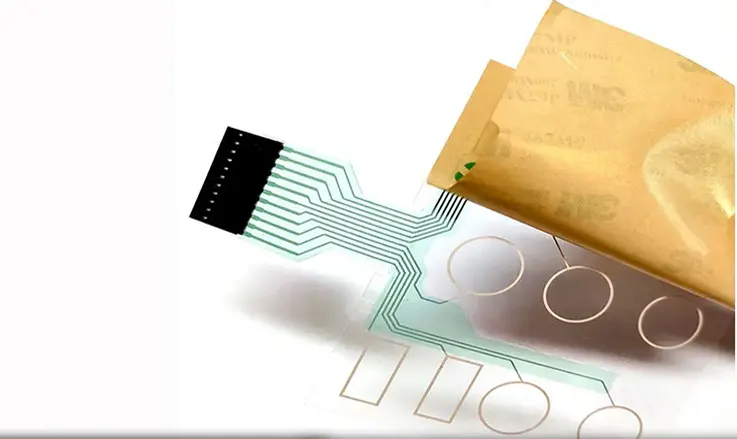
Types of Flex PCBs
Different applications require different flex configurations. Understanding the construction of each type helps engineers select the right structure for a given electrical and mechanical task.
Single-Sided Flex PCBs-
These circuits contain one conductive copper layer laminated to a flexible polyimide film. They are commonly used in static applications such as digital cameras, printers, or basic display modules. Their streamlined structure supports compact, low-density routing with minimal cost.
Double-Sided Flex PCBs-
With copper layers on both sides of the base film and plated through-holes to connect them, double-sided flex circuits increase routing capabilities. This structure is used in control panels, industrial sensors, and devices where moderate signal complexity is present.
Multilayer Flex PCBs-
When designs demand increased I/O density, power delivery layers, or shielding, multilayer flex circuits are preferred. These are often found in aerospace controls, surgical imaging equipment, and ruggedized military systems. The combination of multiple signal and plane layers on a flexible substrate provides routing freedom without mechanical constraints.
Material Note: The most commonly used base film is polyimide, valued for its high thermal stability and flexibility. Copper thickness and adhesive types vary depending on the required bend cycles and impedance control.
Practical Design Guidelines for Flex PCB Layout
Designing for flex circuitry involves both electrical performance and mechanical longevity. Poor layout can lead to premature failure during repeated movement or thermal cycling.
Bend Radius Control-
Maintain a minimum bend radius of 10x the material thickness for static bends and 20x or more for dynamic applications. This reduces copper fatigue and delamination risk.
Avoid Stress Concentration-
Keep plated-through vias and sharp corners away from active bend zones. Use curved trace routes and tear-drops at pad intersections to spread mechanical stress evenly.
Reinforcement at Transition Areas-
Add FR4 or polyimide stiffeners where the flex section meets connectors or rigid components. Proper support in these regions prevents mechanical peeling and ensures consistent mating in assembly.
Tip: Ground and power planes in dynamic zones should use cross-hatched fills to increase flexibility and reduce metal fatigue.
Application Sectors Utilizing Flex PCBs
Flex circuits are adopted across sectors where size reduction, reliability, and mechanical flexibility are required. Here is a structured overview of typical usage:
Industry
Application Examples
Why Flex is Applied
Medical Electronics
Diagnostic sensors, implants, surgical tools
Withstands sterilization, fits limited spaces
Consumer Electronics
Foldable phones, laptops, display modules
Enables thin profiles and tight internal routing
Automotive Systems
Driver displays, ADAS sensors, lighting controls
Handles vibration and form-fit enclosure designs
Aerospace & Defense
Satellite modules, guided systems, avionics
Lightweight, reliable under mechanical stress
Each of these use cases shows how flex PCBs provide connectivity in mechanically complex environments while supporting multi-axis folding and bending.
Rigid-Flex PCB: Combining Flexibility and Stability in One Board
As electronic assemblies continue to evolve into more integrated and compact architectures, rigid-flex PCBs have gained wide usage in applications requiring a blend of structural strength and bendable interconnects. These hybrid boards merge the solid platform of rigid PCBs with the pliability of flex circuits, enabling streamlined circuit layouts, minimized connector interfaces, and increased design freedom within tight mechanical envelopes.
What is Rigid-Flex PCB and How It Works?
Rigid-flex PCBs are constructed by laminating flexible polyimide layers with rigid FR4 or similar substrate materials into a unified, interconnected structure. These boards incorporate multiple layers—some of which may be exclusively rigid, exclusively flexible, or a combination of both.
Core technical characteristics:
● Material Integration: Typical builds involve flexible substrates like polyimide combined with rigid materials such as FR4, CEM-3, or high-Tg laminates.
● Layer Interconnect: Through-hole or blind/buried vias link flexible and rigid sections. Adhesiveless copper-clad laminates improve mechanical integrity across transitions.
● Design Flow: The flexible portions act as dynamic or static interconnects, allowing mechanical movement or tight folding within enclosures.
This board type is particularly suited for compact, multi-layered configurations where space constraints make traditional wiring or connectors inefficient.
Advantages of Rigid-Flex PCBs in Complex Systems
Rigid-flex PCBs enable a consolidated PCB architecture that reduces weight, simplifies assembly, and enhances electrical performance in dense or mobile environments.
Key engineering advantages:
●Interconnect Minimization: Fewer solder joints and connectors lower the probability of electrical failures due to mechanical stress or vibration.
●Signal Integrity: Direct routing across rigid and flex layers can minimize impedance discontinuities and parasitic capacitance.
●Compact Assembly: Space savings are achieved by replacing ribbon cables and connectors, and by folding flex sections to accommodate mechanical constraints.
In systems like wearable electronics or handheld instrumentation, this structure can reduce overall volume and streamline the mechanical envelope.
Common Applications of Rigid-Flex PCBs
Rigid-flex circuit boards are frequently chosen for industries that demand dense packaging, stable connectivity, and tolerance to movement or repeated stress.
Main industrial uses include:
●Aerospace: Avionics modules, cockpit electronics, and communication devices where vibration-resistance and space efficiency are high priorities.
●Medical Devices: Surgical instruments, diagnostic imaging systems, and implantable devices that require compact design with consistent performance.
●Military Electronics: Radar systems, communication gear, and unmanned systems where robust structure and mechanical endurance are necessary.
Application Sector
Typical Product Examples
Design Requirements
Aerospace
Navigation controls, sensors
Vibration-resistant, lightweight
Medical
Endoscopic probes, imaging tools
Biocompatibility, compact structure
Military
Tactical radios, defense control panels
Durability, environmental resilience
For manufacturers aiming to reduce interconnect complexity while achieving electrical reliability and spatial efficiency, rigid-flex PCB technology presents a viable pathway.
Rigid vs Flex vs Rigid-Flex PCB: Choosing the Right Technology
When designing electronic systems, selecting the right PCB technology—rigid, flexible, or rigid-flex—directly affects assembly processes, product performance, and cost-efficiency. Each PCB type offers distinct advantages based on the application environment, manufacturing limitations, and functional demands of the final product. Understanding the core differences among Rigid, Flex, and Rigid-Flex PCBs helps us make informed decisions aligned with design objectives and real-world use cases.
Performance, Cost, and Design Complexity: A Comparative Analysis
Each of the PCB technologies presents unique trade-offs in terms of performance, design complexity, and production costs. We need to assess these parameters carefully to align the board configuration with application needs and project constraints.
Rigid PCB-
●Performance: Rigid PCBs are stable in their mechanical structure, ideal for applications where vibration resistance is not critical. They support complex multi-layer designs and can handle high-frequency circuits effectively.
●Manufacturing Cost: Rigid PCBs are generally less expensive due to their straightforward manufacturing processes and the availability of standardized materials like FR4. This makes them a cost-effective solution for large-scale production.
●Design Complexity: While the design of Rigid PCBs is relatively simple, involving the use of rigid substrates and standard vias, modifications to the design can be complex and costly, especially when multiple layers are involved.
Flex PCB-
●Performance: Flex PCBs offer better adaptability in dynamic environments, such as wearable technology or applications requiring bending. However, they are not as robust in high-stress environments compared to Rigid PCBs.
●Manufacturing Cost: The initial cost of designing and producing Flex PCBs is higher, primarily due to the use of specialized materials (like polyimide) and more intricate design and fabrication processes. However, the savings in assembly and wiring can offset these costs in certain applications.
●Design Complexity: Flex PCBs require more sophisticated design considerations, such as proper bend radius, flexibility, and routing, making their design more complex than Rigid PCBs. The dynamic nature of Flex PCBs demands higher precision during manufacturing to avoid issues such as cracking or delamination.
Rigid-Flex PCB-
●Performance: Rigid-Flex PCBs combine the best features of both rigid and flexible boards. They are perfect for applications where the flexibility of a Flex PCB is required in certain areas, but rigid sections are necessary for components that must be securely mounted. This allows for compact, lightweight designs while maintaining a high level of reliability.
●Manufacturing Cost: Rigid-Flex PCBs are generally more expensive due to the complexity of their design and manufacturing processes, involving both rigid and flexible materials. The cost can increase with the number of layers and transitions required.
●Design Complexity: Designing Rigid-Flex PCBs is the most complex of the three. We must carefully plan the transitions between flexible and rigid sections, ensuring that the materials bond correctly and that there is no interference between the flexible and rigid areas.
Use Cases and Applications: What to Choose for Your Product
Each PCB type has been developed to suit specific design requirements and operational environments. Understanding the distinct applications for Rigid, Flex, and Rigid-Flex PCBs allows us to select the best option based on the product’s functionality, size constraints, and durability requirements.
Rigid PCB Applications-
●Consumer Electronics: Rigid PCBs are commonly used in devices like smartphones, laptops, and home appliances. The structure’s durability and cost-effectiveness make it suitable for products that do not require flexible components.
●Automotive Electronics: Rigid PCBs are frequently used in control systems, navigation systems, and sensors within vehicles. Their stable structure and thermal endurance allow them to perform consistently under the mechanical and environmental conditions found in automotive applications.
●Industrial Equipment: Industrial control systems, power supplies, and robotics benefit from the robustness and versatility of Rigid PCBs, which can handle high-power loads and multi-functional components.
Flex PCB Applications-
●Wearable Technology: Flex PCBs are perfect for wearables, such as fitness trackers and smartwatches, due to their ability to conform to curved surfaces and operate under constant movement.
●Medical Devices: For medical instruments that require flexible, lightweight, and compact designs, such as heart monitors or implantable devices, Flex PCBs are ideal. They can be integrated into small spaces and bend without compromising performance.
●Consumer Electronics:In devices with limited internal space and high mobility demands, such as foldable phones or wireless earphones, Flex PCBs support compact layouts by enabling tight bending and adaptable geometry within the enclosure.
Rigid-Flex PCB Applications-
●Aerospace: Rigid-Flex PCBs are used in aerospace applications where both flexibility and rigidity are required in a single system, such as in flight control systems or satellite communication devices. The ruggedness and lightweight nature of Rigid-Flex PCBs make them better for harsh environments.
●Medical Devices: In advanced medical technologies like imaging systems or wearable diagnostic tools, Rigid-Flex PCBs combine compactness with the necessary rigidity for sensitive components.
●Military Electronics: Rigid-Flex PCBs are well-suited for military-grade devices that require high reliability, space optimization, and resistance to extreme conditions, such as military communication systems and weaponry control panels.
Advantages and Disadvantages of Rigid, Flex, and Rigid-Flex Designs
Choosing the right PCB technology requires a clear understanding of the specific advantages and trade-offs for each type.
Rigid PCB Advantages and Disadvantages-
Advantages:
●Well-suited for high-volume, cost-sensitive applications.
●Offers excellent mechanical stability for components that need to be mounted securely.
●Widely compatible with automated assembly processes.
Disadvantages:
●Lack of flexibility makes it unsuitable for applications requiring dynamic movement or deformation.
●Requires more space and connectors for complex designs.
Flex PCB Advantages and Disadvantages-
Advantages:
●Provides high flexibility, ideal for compact spaces and dynamic applications.
●Reduces the need for wiring and connectors, leading to smaller, lighter products.
●Can be bent to fit various shapes, making it perfect for curved surfaces.
Disadvantages:
●Higher production costs due to the specialized materials and manufacturing techniques.
●Greater risk of damage during handling, especially at bending points.
Rigid-Flex PCB Advantages and Disadvantages-
Advantages:
●Combines the advantages of both rigid and flexible PCBs, allowing for highly compact and integrated designs.
●Reduces the need for separate connectors and cables, increasing system reliability.
●Reliable for products that need to fit into tight spaces while maintaining structural integrity.
Disadvantages:
●The most expensive PCB option due to the complex manufacturing process.
●Design and fabrication require a longer lead time and more precise engineering.
Materials in Rigid, Flex, and Rigid-Flex PCBs
The choice of base materials in PCB manufacturing heavily influences product reliability, thermal performance, and electrical behavior across different environments. For rigid, flex, and rigid-flex PCBs, substrate selection isn’t just a design checkbox—it’s a foundational step that shapes how the board handles real-world use in industries like aerospace, defense, medical systems, and industrial automation. Below, we explore how specific materials meet the physical and mechanical demands of diverse PCB formats.
Choosing the Right Substrate for Rigid and Flex PCBs
Selecting substrates for rigid and flex PCBs involves weighing trade-offs in dielectric strength, thermal conductivity, flexibility, and cost efficiency. For rigid PCBs, FR-4 epoxy laminate remains the standard due to its stable electrical insulation properties and mechanical strength. When high-frequency signal transmission is required—particularly in RF and microwave applications—Rogers laminates such as RO4003C and RO4350B offer more controlled impedance and lower dielectric loss than FR-4.
Flex PCBs typically use polyimide film substrates such as Kapton or Apical due to their capacity to endure repeated mechanical bending and elevated thermal exposure. These materials provide stable dimensional characteristics and maintain electrical and mechanical reliability during prolonged thermal cycling, which supports consistent function in dynamic-flex applications like consumer wearables and medical probes.
●Polyimide (Flex): Thin, heat-resistant base for dynamic flex applications.
Common substrate comparison:
Material
Dielectric Constant (Dk)
Loss Tangent
Flexibility
Thermal Stability (°C)
FR-4
4.50
0.0200
Low
130
Rogers RO4003C
3.38
0.0027
Low
260
Rogers RO4350B
3.48
0.0037
Low
260
Polyimide (Kapton)
3.50
0.0020
High
400
Polyimide (Apical)
3.40
0.0020
High
400
Material decisions should align with the end-use case, mechanical stress level, and thermal budget of the final assembly.
Thermal Management and Material Selection in Rigid-Flex
Rigid-flex PCBs combine rigid and flex layers in one unified structure. The thermal dynamics across rigid and flex zones require careful coordination, especially in high-density interconnect (HDI) designs and multi-layer stacks. In rigid zones, aluminum or copper-core substrates can improve thermal dissipation when placed near high-power ICs or power converters. These are often paired with thermally conductive prepregs and low-CTE laminates to maintain layer stability during solder reflow.
In flex zones, maintaining material pliability while managing localized heating from flexing traces is a balancing act. High-temperature polyimide with low outgassing characteristics is typically used here, especially in aerospace-grade designs.
Design recommendations:
●Use low-Z-axis expansion laminates to prevent via failure.
High-Thermal Conductivity Materials for Flex and Rigid-Flex Applications
In demanding sectors like automotive radar systems or medical imaging equipment, where thermal stress is a design constraint, selecting materials with high thermal conductivity is a must. For flex circuits, ceramic-filled polyimide films or thermally enhanced adhesives can be applied to move heat efficiently across tight geometries.
For rigid-flex builds, IMS (Insulated Metal Substrate) cores may be integrated into the rigid regions to improve thermal transfer beneath surface-mount power components. These systems often combine polyimide films, copper foils, and thermally conductive prepregs to maintain system stability during load fluctuations.
To reduce failure rates in harsh environments, the synergy between thermal management and material layering cannot be overlooked during design and lamination.
Examples of thermally engineered materials:
Material
Thermal Conductivity (W/m·K)
Typical Use
Structure
Max Operating Temp (°C)
Thermagon T-preg
3.00
Power electronics
Prepreg
200
RT/duroid 6035HTC
1.44
RF Power Circuits
Laminated PTFE
200
Ceramic Epoxy Hybrid
2.50
Medical Imaging
Resin Composite
180
Aluminum-Backed Polyimide
1.00
Automotive Flex Circuits
Laminated Film
150
Material selection is not just about conductivity—it also affects assembly temperature tolerance, bonding compatibility, and dimensional control throughout the product lifecycle.
Industry Standards and Best Practices for Rigid, Flex, and Rigid-Flex PCBs
In circuit board manufacturing, consistent adherence to industry-defined standards helps ensure predictable performance, manufacturing reliability, and end-product compatibility. For rigid PCBs, flex PCBs, and rigid-flex designs, international guidelines—such as those provided by IPC—form the basis for fabrication and inspection across multiple sectors including aerospace, consumer electronics, medical technology, and military hardware.
Each PCB type—rigid, flex, and rigid-flex—requires distinct process controls, materials handling, and inspection routines. These boards are subject to environmental stress, mechanical flex, and miniaturization demands that push our engineers and production teams to closely align with standardized design and quality benchmarks.
IPC Standards for Rigid, Flex, and Rigid-Flex PCBs
The IPC (Association Connecting Electronics Industries) issues a wide range of specifications that guide layout, fabrication, testing, and acceptance.
Common IPC documents applied across board types:
●IPC-2221/2223: These documents define generic design requirements and flex-specific design guidelines, respectively. IPC-2223, for instance, provides detailed insight on bend radius, coverlay placement, and conductor routing in flex and rigid-flex layouts.
●IPC-6012 & IPC-6013: IPC-6012 addresses performance requirements for rigid PCBs, while IPC-6013 covers the flex and rigid-flex categories. Both standards dictate visual inspection criteria, dielectric integrity, and interconnect testing.
●IPC-A-600 & IPC-A-610: Visual acceptability criteria, including laminate voids, conductor spacing, and hole quality, are governed under these visual inspection guidelines. IPC-A-610 is especially useful for contract manufacturers and assembly houses evaluating product quality from incoming inspection through final assembly.
Manufacturers working across consumer, aerospace, or defense sectors often adopt Class 2 or Class 3 designations from IPC, depending on how much reliability and extended performance the product must deliver. Class 3 compliance (high-reliability electronics) is common in avionics and surgical instrumentation, where failures are not easily tolerated.
Design Guidelines for Signal Integrity and Impedance Control
Effective signal integrity starts with intentional stack-up planning, particularly when using mixed rigid-flex configurations. Flex layers are typically thinner, making them more susceptible to impedance drift, dielectric inconsistencies, or cross-talk if not designed correctly.
Areas manufacturers and layout engineers monitor:
●Controlled Impedance: Impedance is calculated based on conductor width, spacing, and dielectric thickness. Rigid-flex PCBs often require tight trace width tolerances and uniform prepreg material properties, especially in differential signal pairs.
●Return Path Continuity: Maintaining a low-inductance ground path, particularly in flex-to-rigid transitions, is necessary to reduce electromagnetic interference. Therefore, some designers often implement stitched ground planes or shielding layers on flex segments.
●Bend Area Considerations: Traces are routed orthogonally across bend areas to reduce signal reflection or fatigue cracking. High-speed lines should avoid sharp corners or transitions near bends.
For RF, medical, and telecom designs, simulation tools such as Ansys SIwave or Keysight ADS are used in the design phase to validate signal paths before prototyping. Maintaining signal behavior across rigid and flex sections can reduce time-consuming rework during fabrication.
Quality Control and Testing Methods for Rigid-Flex and Flex PCBs
Quality control in rigid-flex and flex PCB production goes far beyond visual inspection. These circuits must meet stringent mechanical and electrical benchmarks while also withstanding bending and vibration during assembly or operation.
Testing methodologies include:
●Automated Optical Inspection (AOI): Used post-etch and post-solder to catch shorts, opens, or conductor defects.
●Flying Probe and Electrical Testing: Ensures open/short resistance checks across multiple layers, especially important where rigid and flex materials interface.
●Flex Cycle Testing: Rigid-flex PCBs often undergo flex life testing, where the flex region is repeatedly bent to confirm durability under dynamic use. This is common in automotive and medical products with movable joints.
●X-ray and Microsection Analysis: Confirms plated through-hole (PTH) integrity, layer registration, and resin flow characteristics. Especially useful for high-layer-count or hybrid rigid-flex assemblies.
In addition, traceability systems such as QR-coded boards, material lot tracking, and IPC compliance documentation are standard practices among OEM suppliers serving aerospace, defense, and regulated industries. These ensure transparency and accountability throughout the fabrication lifecycle.
How Selecting the Optimal PCB for Your Application?
As electronic product designs become more specialized across sectors like automotive, aerospace, and medical technology, selecting a suitable PCB technology—rigid, flex, or rigid-flex—requires a thorough understanding of electrical performance, mechanical constraints, material compatibility, and manufacturing process alignment. Each PCB structure supports specific mechanical and electronic functions based on use-case environments, signal requirements, and design geometry. The sections below outline the practical aspects of decision-making, fabrication partnership, and industry trends, with a focus on actionable parameters and performance-based engineering logic.
Rigid, Flex, and Rigid-Flex PCBs: Which One to Choose?
Selecting between rigid, flex, and rigid-flex PCBs depends on a blend of design mechanics, thermal behavior, and expected lifecycle stresses. Consider the following when evaluating:
Mechanical Requirements-
●Rigid PCBs offer strong dimensional stability and are best suited for static assemblies. Flex circuits support movement and conformability, while rigid-flex bridges rigid and flexible segments for compact, folding designs.
Environmental Conditions-
●Flex and rigid-flex PCBs tolerate vibration and flex cycles better due to their polyimide-based substrates. Applications involving wearable electronics, folding devices, or aerospace sensor arms often leverage these designs.
Signal Routing and Density-
●Rigid and rigid-flex structures support higher layer counts and controlled impedance better than single-layer flex boards. Use these for dense digital and mixed-signal routing.
Manufacturing Considerations-
●Rigid PCBs generally involve fewer process steps, making them suitable for high-yield production. Flex and rigid-flex require precision lamination and drilling alignment, particularly during ZIF connector zone preparation and layer transition fabrication.
For example, in automotive rear-view camera systems, rigid-flex PCBs are commonly used to combine a compact control module with a flexible tail for positioning the camera housing.
Partnering with a Trusted PCB Manufacturer for Optimal Results
Working with a reliable PCB fabrication partner brings process stability and technical alignment from prototyping through production. Engineering teams should evaluate partners based on:
Material Sourcing Capabilities-
●The manufacturer should support a range of UL-rated laminates, polyimide films, and high-temperature adhesives required for thermal resilience and dielectric control.
Certification and Compliance-
●IPC Class 2 and Class 3 compliance, UL certifications, and ITAR registration (for defense and aerospace sectors) reflect adherence to quality frameworks relevant to specific sectors.
DFM and Stack-Up Simulation Services-
●Experienced partners provide Design for Manufacturability (DFM) reviews, impedance modeling, and signal integrity validation prior to CAM programming. This is particularly valuable in rigid-flex designs with buried or staggered vias across rigid-to-flex transitions.
Volume Capabilities and Lead Times-
●For consumer product timelines, ensure the partner can accommodate both prototype runs and full production with consistent trace widths, dielectric tolerances, and soldermask registration.
Before moving into fabrication, request detailed build-up stackups, via fill options, and thermal stress simulation results to align with your electrical and mechanical objectives.
Future Trends in PCB Manufacturing and Design
PCB technology is evolving in response to materials research, assembly automation, and high-frequency application requirements. Forward-looking considerations include:
Embedded Component Integration-
●To reduce height and enable signal integrity improvements, embedded passive elements (resistors, capacitors) are being designed directly into rigid or flex substrates.
Advanced Material Usage-
●Low-Dk, low-loss laminates such as Rogers 3000 series are increasingly used in RF systems, while copper-invar-copper cores support dimensional control in HDI multilayer constructions.
Miniaturization and Multi-Axis Folding-
●Next-gen flex and rigid-flex designs support bendable modules with curved traces, commonly used in wearables, endoscopy tools, and compact radar systems.
Laser Drilling and Semi-Additive Processing-
●Fine-line processing is shifting toward mSAP (modified semi-additive process) with laser via drilling and sputtering methods for sub-50 µm trace/space applications in 5G infrastructure and IC substrates.
FAQ: Rigid, Flex, and Rigid-Flex PCBs
1.Are Flex PCBs suitable for high-speed signal transmission? Yes, with proper impedance control and trace design, flex circuits can support high-speed digital and RF signals.
2.What’s the typical bend radius for a Flex PCB? A general guideline is a minimum bend radius of 6 to 10 times the thickness of the flex material.
3.Are there limitations on the number of layers in a Flex PCB? While flex boards can support multiple layers, design complexity and manufacturing cost increase with layer count.
4.How are Rigid-Flex PCBs assembled? They typically undergo a combination of SMT and through-hole assembly processes, depending on the component layout.
5.What’s the standard copper thickness used in Flex PCBs? Common thicknesses are 0.5 oz, 1 oz, or 2 oz per square foot, depending on current requirements and bend performance.
6.Can Rigid PCBs be partially flexible? No, unless integrated as part of a rigid-flex design. Rigid PCBs do not allow mechanical flexing.
A GPS PCB is a specialized circuit board designed to integrate GPS functionality into electronic devices. It helps receive and process signals from GPS satellites, allowing for location tracking, navigation, and other location-based services.
Effective GPS PCB design involves optimizing signal integrity, minimizing power consumption, and managing environmental factors like thermal effects. This guide will explore the main aspects of GPS PCB design, including antenna integration, signal testing, and best practices for routing and layout. By understanding these factors, you can design a GPS-enabled system that meets the demands of modern applications.
What Is a GPS PCB and How Does It Work?
A GPS PCB is a specialized printed circuit board built to handle satellite signal reception, amplification, filtering, and geolocation processing. From tracking a long-haul truck making its way across the interstate to managing navigation systems in electric vehicles, this type of board keeps everything locked onto satellite data with precision. The structure, component layout, and routing strategies on this board make all the difference. Let’s pop the hood and dig into the engine room of these boards to see how they get the job done.
Understanding the Basics of GPS PCB Design
Creating a GPS PCB takes more than just wiring up a few modules. It requires an understanding of RF behavior, impedance control, and electromagnetic compatibility (EMC). During layout, we must to pay close attention to antenna placement, transmission line tuning, and multi-layer grounding.
Table 1: Design Factors That Influence GPS PCB Performance
A slip-up in stack-up design or impedance tuning might throw off your signal, leading to poor GPS lock times or unstable operation. That’s not the kind of problem you want showing up during a product field test.
Core Components of a GPS PCB: Antenna, LNA, and Filter
For a GPS PCB to function properly, it must include specific RF components that work in tandem to pull in clean satellite data. Let’s look at three core components that drive performance:
1.GPS Antenna: Responsible for receiving L-band signals from satellites, this component varies based on application. You’ll find ceramic patch antennas in vehicle trackers and chip or helix antennas in wearables. Active antennas include onboard amplification, while passive ones require external signal boost.
2.Low-Noise Amplifier (LNA): Located directly after the antenna in the RF chain, the LNA amplifies faint signals without adding excess noise. Using an external LNA can improve reception in weak-signal zones like tunnels, underground garages, or heavily shielded areas.
3.SAW Filter: Placed between the LNA and GPS module, this filter blocks unwanted RF bands (such as GSM or LTE) that may otherwise bleed into the GPS signal. The result is cleaner input to the GPS baseband processor.
●Tip: Always keep the antenna-to-LNA trace length short, straight, and well-matched to 50-ohm impedance. Any detour or mismatch could sap your signal quality.
How GPS PCBs Receive and Process Satellite Signals?
1.Satellite Signal Reception: The GPS antenna picks up RF signals from at least four satellites, broadcasting at around 1575 MHz or 1176 MHz, depending on the system (e.g., GPS, GLONASS, Galileo).
2.Amplification and Cleaning: The signal is then sent through an LNA, followed by a filter that knocks out noise from adjacent bands. These steps are what make the data usable for baseband processing.
3.Data Calculation: The GPS module performs triangulation using timing data from each satellite. Through this, it calculates latitude, longitude, altitude, and speed — all processed in real time.
●Industry Example: In a smart logistics system, GPS PCBs like these allow fleet managers to monitor driver routes, idle time, and delivery checkpoints with real-time geofencing capabilities.
●Quick Insight: Satellite signals that arrive at Earth are incredibly weak — around -130 dBm. That’s less power than background noise inside most electronics labs. It takes proper filtering and amplification to make those signals usable.
The Core Functions of GPS PCBs in Electronic Devices
In many electronic systems, the GPS PCB plays a supporting role in enabling location tracking and precise timing functionality. Its architecture is designed to facilitate reliable interaction with satellites and maintain consistency across various applications, from navigation systems to industrial control platforms. The following sections explore how GPS PCBs manage signal communication and maintain positioning accuracy in modern electronic devices.
Providing Location and Timing Data in GPS Devices
GPS PCBs support global positioning functionality by capturing signals from satellite constellations and translating them into geographic and time-based data. These signals, transmitted at specific frequencies, are received by the GPS antenna and routed through the circuit for processing.
Core Process in GPS Timing and Location Conversion-
Stage
Function Description
Antenna Reception
Captures satellite signals at designated GNSS frequencies
LNA Amplification
Amplifies weak satellite signals with minimal noise addition
Filtering Stage
Removes out-of-band noise and interference
Satellite Signal Sync
Matches signal timestamps with satellite atomic clocks
Data Interpretation
Converts satellite data into real-time location and timing output
This mechanism ensures compatibility with systems such as GPS, GLONASS, Galileo, and BeiDou. Devices using GPS PCBs can perform timing synchronization and route planning with consistent performance, depending on the design precision and environmental noise control.
How GPS PCB Enhances Device Accuracy and Reliability?
The structural and electrical integrity of a GPS PCB affects signal clarity, timing precision, and system stability. A well-designed board minimizes signal loss and electromagnetic interference.
Core factors that influence performance include:
●Impedance Control: Prevents signal reflections and maintains waveform integrity across RF transmission lines.
●PCB Stack-Up Design: Isolates power, ground, analog, and digital layers to control cross-talk and minimize coupling.
●Component Layout: Ensures short signal paths between the antenna, LNA, filter, and GPS module.
●EMI Management: Ground planes, shielding, and decoupling capacitors reduce external and internal noise sources.
For example, in automotive applications, GPS PCBs integrated into infotainment and advanced navigation modules are typically designed with RF shielding, precise trace width control, and multi-frequency support to maintain positioning accuracy under challenging conditions.
GPS PCB’s Role in Signal Transmission and Reception
To maintain usable signal quality, GPS PCBs are structured to optimize the entire transmission-reception chain, from antenna interface to digital processing. These signals, originating from satellites thousands of kilometers away, are inherently weak and must be handled with care.
Transmission and Reception Techniques-
●High-Performance Filters: Surface Acoustic Wave (SAW) or dielectric filters are applied to restrict input to desired GNSS frequency bands.
●Low-Noise Amplifiers (LNA): Selected based on gain, noise figure, and input matching for maximum signal strength.
●RF Trace Design: Uses techniques such as microstrip or grounded coplanar waveguide to manage signal integrity.
Environmental and mechanical factors, such as antenna placement, ground plane size, and enclosure materials, also influence reception quality. Devices intended for metal casings or embedded installations often require matched antennas or custom tuning to maintain consistent connectivity.
The Importance of Signal Integrity in GPS PCB Design
In GPS PCB applications, signal accuracy is not something to leave to chance. While many design teams focus on antenna placement or module selection, the electrical pathways that carry satellite signals through the circuit demand just as much care. Even minor impedance mismatches, reflection points, or unshielded segments can lead to degraded performance across navigation, tracking, and timing systems. So, let’s walk through some of the engineering considerations that influence signal integrity inside GPS PCB layouts.
Impedance Matching in GPS PCB Design
Impedance matching isn’t just a theoretical concept — it has very real consequences on GPS circuit behavior. When RF traces on the PCB don’t match the characteristic impedance (typically 50 ohms for GPS signal paths), part of the signal energy reflects back toward the source. That results in reduced signal strength at the receiver and lower signal-to-noise ratio.
Key Methods Used in Impedance Control:
Technique
Description
Microstrip / Coplanar Design
Controlled-width traces routed over a ground plane to stabilize impedance
Dielectric Constant Selection
PCB substrate (like FR4, Rogers, or Teflon) affects trace impedance
Layer Stack Optimization
Signal layers and ground planes spaced to balance field propagation
Termination Techniques
Series or parallel resistors placed to absorb reflected signals
Using impedance calculators, RF layout engineers can simulate trace geometries and tune the layout accordingly before manufacturing even begins. Matching connectors, cable interfaces, and module inputs must all be part of this same design review.
Minimizing Signal Loss and Noise in GPS Circuits
Satellite signals arrive at the earth’s surface with extremely low power, often below –130 dBm. That means even the smallest interference or path loss on the PCB can jeopardize the device’s ability to maintain a stable fix. GPS circuits must be engineered to support low-noise amplification, shielded routing, and power filtering to keep that noise floor down.
Strategies Commonly Applied-
●LNA Placement: The low-noise amplifier should be as close as possible to the GPS antenna, ideally within 10–15 mm.
●Via Optimization: Reducing via count along the RF signal path limits signal discontinuities.
●Guard Traces: Grounded copper traces around RF lines block crosstalk from nearby signals.
●Power Supply Decoupling: Capacitor arrays placed near active ICs help reject ripple and transient spikes.
In one commercial GPS tracking product, moving the LNA 5 mm closer to the antenna resulted in a 2 dB improvement in carrier-to-noise ratio (C/N₀), significantly helping acquisition under canopy or in dense environments.
Ensuring Accurate GPS Data Transmission
Once a GPS signal is filtered, amplified, and digitized, it must reach the host system without degradation. Data lines carrying GPS NMEA or binary output — typically via UART, SPI, or I2C — also require care in routing and signal conditioning. Though slower than RF paths, they are just as sensitive to board layout.
Design Areas to Watch-
●Line Routing Symmetry: Differential pairs (e.g., UART TX/RX) benefit from equal trace length and spacing.
●Isolation from RF Paths: Keep digital lines away from the RF front end to avoid coupling.
●Timing Considerations: For time-pulse or 1PPS output, trace length and matching must be controlled to maintain nanosecond-level timing offsets.
GPS PCBs used in high-precision applications like GNSS timing modules or autonomous navigation rely on tight timing alignment. For instance, a deviation of just 10 ns can shift a location estimate by 3 meters.
Choosing the Right Materials for Your GPS PCB
Selecting suitable materials during the early design stages of a GPS PCB can directly influence signal clarity, durability under environmental stress, and the stability of frequency-related performance. For industries like automotive electronics, aerospace GPS modules, and mobile tracking systems, this is not just a matter of preference—it shapes real-world usage outcomes. Let’s explore some of the main technical considerations that guide material selection.
Best Substrate Materials for GPS PCBs
GPS systems rely on consistent electromagnetic behavior, which is directly influenced by the base material of the PCB. Common substrate choices include:
●FR-4 is economical but comes with variability in dielectric properties, which may lead to slight signal deviations in precision-demanding setups.
●Rogers materials offer more predictable electrical characteristics, making them a solid choice for applications where consistent GPS timing and accuracy are needed.
●Teflon-based substrates, often used in aerospace and satellite-linked GPS modules, allow high-frequency signals to propagate with minimal loss.
These materials can be tailored based on environmental resistance (such as temperature variation), signal frequency, and cost limitations. If you’re designing for rugged environments—say fleet GPS tracking across multiple climates—your substrate choice can’t be overlooked.
The Role of Dielectric Constants in GPS Performance
The dielectric constant (Dk) of a PCB material affects how quickly electromagnetic waves can travel through it. In GPS modules, where frequencies often fall in the 1.575 GHz band (L1), maintaining a stable Dk across temperature and humidity changes helps ensure accurate signal timing.
Lower Dk values allow for faster signal propagation and reduced phase delay, while higher Dk values can compact the design at the cost of potentially increasing signal delay. We need to weigh layout compactness against timing performance.
Frequency
Material Type
Expected Delay (ns/inch)
1.575 GHz
FR-4
6.0
1.575 GHz
Rogers 4350B
5.2
1.575 GHz
Teflon/PTFE
4.0
In applications like GPS timing synchronization for telecom base stations, even nanosecond-level delays can stack up, so understanding Dk isn’t optional—it’s part of staying in sync with global positioning networks.
How Material Choice Affects Signal Propagation?
Material loss characteristics, such as loss tangent and surface roughness, influence how GPS signals are handled on the PCB layer. Signal attenuation can lead to degraded satellite link performance and unstable navigation readouts.
Here’s what affects signal behavior:
●Loss Tangent: Higher values indicate more signal loss as it travels through the PCB. Low-loss materials like PTFE help retain signal power over longer trace lengths.
●Surface Roughness: Rough copper interfaces scatter high-frequency waves more than smooth surfaces. For GPS frequencies, smoother copper (e.g., rolled annealed) helps maintain clarity.
If your design involves multiple GPS channels or MIMO configurations, controlling losses helps each signal path perform consistently.
How Integrating GPS Functionality into Your PCB Design?
Integrating GPS capabilities into a PCB structure demands detailed attention to signal integrity, material selection, and layout strategy. For manufacturers of communication hardware, GPS device OEMs, automotive system developers, and PCB engineers alike, aligning physical design with RF performance can reduce development challenges and support consistent positioning accuracy across multiple environments. Below, we explore how this integration process can be managed step-by-step.
GPS Antenna Integration for Efficient Signal Reception
The antenna is a critical interface in GPS PCBs, acting as the first touchpoint for satellite signals. In PCB design, patch antennas or ceramic chip antennas are commonly used. A major consideration is positioning the antenna to minimize obstructions and interference. Keeping a clear line of sight and isolating it from noisy digital components can make a measurable difference in signal acquisition time and signal-to-noise ratio (SNR).
Comparison of Common Antenna Types for GPS PCB-
Antenna Type
Size
Gain Level
Application Suitability
Patch Antenna
Medium
Moderate
Automotive, Drones, Wearables
Chip Antenna
Small
Low
Ultra-compact GPS devices
Active Antenna
Medium to Large
High
Outdoor or high-sensitivity use
Layout best practices include:
●Maintaining a ground-free zone under the antenna.
●Avoiding vias in the RF trace to reduce loss.
●Using a matching network to ensure impedance alignment.
How to Embed GPS Modules into PCBs for Seamless Operation?
GPS modules are available as shielded, surface-mounted units that include the RF frontend, processor, and often an embedded antenna. To achieve integration, we can typically embed these modules into multilayer PCBs while maintaining a clear understanding of stackup and trace impedance.
Best Practices:
●Use controlled impedance routing for RF lines.
●Ensure clear separation between analog and digital ground planes.
●Keep trace lengths between the GPS module and microcontroller short and consistent.
Application: In vehicle tracking systems, our designers often isolate GPS modules on a dedicated RF layer in a 6-layer PCB to avoid cross-interference from CAN Bus or GSM signal lines.
Minimizing Power Consumption in GPS Integration
GPS modules may consume substantial power, especially during signal acquisition. Efficient power management is necessary for battery-powered GPS applications such as IoT sensors and personal navigation devices.
Design Tips for Lower Power Usage-
●Implement a power control IC to toggle the GPS module on/off as needed.
●Use backup batteries or supercapacitors to maintain RTC time without full module power.
●Apply low-dropout (LDO) regulators with efficient thermal properties to reduce waste.
Table: Power Profiles of Common GPS Modules
Module Name
Average Power Use (mW)
Sleep Mode Support
Fix Update Rate
u-blox NEO-6M
36
Yes
1Hz – 5Hz
Quectel L76
25
Yes
1Hz
MediaTek MT3339
30
Yes
1Hz
GPS power optimization is often achieved by combining efficient circuitry with firmware-controlled sleep strategies. Engineers working with wearable GPS products should assess power budget early in the design process to align with real-world usage profiles.
How to Address Common GPS PCB Design Challenges?
Designing a GPS-enabled PCB involves dealing with multiple engineering constraints. These include signal path integrity, thermal behavior, electromagnetic compatibility, and durability under variable environmental conditions. Each of these elements influences how reliably the device functions under real-world operational loads. This section outlines several methods to address practical challenges often encountered in GPS PCB development.
Avoiding GPS Signal Interference and Crosstalk
Interference and crosstalk are common issues that degrade satellite signal quality. Effective design strategies must include layout techniques and isolation methods that reduce electromagnetic disruptions in the GPS signal path.
●Separate high-frequency traces from low-speed signal lines to reduce coupling and unintended signal pickup. ●Implement a dedicated, continuous ground plane beneath RF traces to maintain return path consistency. ●Integrate band-specific filters between the GPS antenna and LNA (low-noise amplifier) to block out-of-band interference. ●Use shielding enclosures to isolate sensitive GPS circuitry from external radiation sources.
Managing Thermal Effects in GPS PCB Designs
Thermal variation can influence signal frequency, compromise solder joint integrity, and distort PCB shape. Proper thermal management helps maintain consistent performance, particularly in high-temperature or high-power applications.
●Select substrates with high thermal conductivity, such as ceramic-filled PTFE, to help distribute and dissipate heat efficiently. ●Use thermal vias beneath components with high power density to connect directly to internal copper layers. ●Separate power management ICs from RF components in the layout to minimize localized hotspots. ●Choose component packages such as QFN (Quad Flat No-lead) that offer better thermal efficiency under comparable power loads.
Enhancing Long-Term Reliability in Harsh Environments
GPS PCBs often operate in conditions such as high humidity, mechanical vibration, or temperature extremes—common in automotive, aerospace, and industrial equipment. Long-term reliability requires structural, electrical, and material-based approaches.
●Apply conformal coatings on the PCB surface to protect against moisture and chemical contaminants. ●Use solder alloys with high mechanical endurance, such as SnAgCu, to improve fatigue resistance under thermal cycling. ●Widen current-carrying traces and reinforce via structures to handle physical stress and vibration. ●Choose substrates like Rogers RO4003C that offer low water absorption and minimal dielectric drift under environmental changes.
Best Practices for GPS PCB Layout and Routing
Designing a GPS PCB involves careful consideration of routing and layout to achieve effective performance. This section will outline practical strategies for PCB design, focusing on reducing signal loss and enhancing the overall GPS system.
Optimizing Trace Routing for Low Loss and High Fidelity
Trace routing plays a significant role in ensuring minimal signal degradation and maintaining the accuracy of GPS data. Below are some practical guidelines:
●Trace Length: Keeping traces as short as possible helps reduce signal degradation. Longer traces introduce additional resistance and capacitance, weakening the GPS signal. Reducing trace length improves signal quality and reduces noise interference.
●Trace Width: Selecting an appropriate trace width based on impedance specifications ensures that the signals maintain their integrity while traveling through the PCB. This minimizes the potential for signal loss.
●Controlled Impedance: Maintaining consistent impedance across traces helps prevent signal reflections and loss. Accounting for the characteristic impedance (typically 50 ohms) when routing signal lines ensures that mismatches are avoided.
●Via Usage: Limit the use of through-hole vias, as they can add unwanted inductance and capacitance to the signal path. Blind and buried vias are more appropriate for high-frequency signals like those in GPS systems, as they maintain cleaner signal routing.
Using Ground and Power Planes Effectively in GPS PCBs
Ground and power planes are central to maintaining the reliability of GPS signals. Using them effectively can help reduce noise and improve the overall signal performance.
●Ground Planes: A continuous ground plane offers a shield against external electromagnetic interference (EMI) and ensures stable operation of GPS modules by providing a consistent reference point for the signals.
●Power Planes: A clean and noise-free power plane ensures that the GPS module receives a steady and clean power supply. Proper design of the power plane helps reduce power-related noise and improves the quality of the GPS signal.
●Decoupling Capacitors: Decoupling capacitors placed close to the power pins of the GPS module help filter out high-frequency noise, providing a more stable power supply for the GPS system.
Managing PCB Layer Stackup for GPS Signal Integrity
The layer stackup of a GPS PCB has an impact on signal propagation and integrity. Proper stackup design ensures that GPS signals are not degraded by noise or interference.
●Multi-Layer Stackup: A multi-layer stackup, typically consisting of signal, ground, and power layers, helps isolate noise and supports more efficient routing of GPS signals. This type of stackup reduces interference and provides a better environment for high-frequency signals.
●Layer Allocation: Placing signal traces on inner layers helps shield them from external noise. This results in improved signal integrity and less disruption to GPS data transmission.
●Via Placement: Avoid placing vias directly under sensitive components. Instead, use techniques such as via-in-pad or via-backplane to minimize their impact on the GPS signal and ensure a cleaner path for signal transmission.
Testing and Validation of GPS PCBs
The design and production of a GPS PCB do not end with the physical layout and assembly. The next critical phase is testing and validation. To ensure that your GPS module operates correctly, it’s necessary to perform various tests. This stage guarantees that the PCB functions efficiently under different operating conditions, providing the necessary accuracy and reliability. Let’s dive into the essential steps involved in testing and validation, offering insights into methodologies for verifying performance and avoiding common pitfalls.
Signal Testing: Ensuring GPS Data Accuracy
Signal testing helps verify the accuracy of GPS data processed by the PCB. With high-precision demands, these tests ensure that the GPS module delivers precise location information.
●Frequency Analysis: Utilize spectrum analyzers to inspect the signal at different frequencies. This allows you to check for any interference or degradation in signal quality that could impact the GPS data.
●Signal Strength: Measure the strength of the GPS signal using a signal generator to ensure that the module can receive data from satellites without disruption. Low signal strength can lead to inaccurate positioning, and testing ensures that it meets the required thresholds for accurate reception.
●Simulating GPS Satellites: One of the most effective ways to verify data accuracy is by using a GPS signal simulator to emulate satellite signals. This helps verify the functionality of the GPS system in a controlled environment before real-world testing. By simulating various satellite constellations, we can confirm the GPS module’s ability to lock onto signals from multiple satellites and provide accurate location data.
●Data Output Comparison: Compare the GPS data output to known accurate data or benchmark sources. This can help identify if the PCB is processing and outputting GPS information correctly and promptly.
Thermal and Environmental Testing for GPS PCB Reliability
GPS PCBs must function effectively in various environmental conditions, from extreme temperatures to humidity. Proper testing under these conditions guarantees reliable performance over the product’s lifecycle.
●Thermal Testing: The GPS PCB should undergo thermal cycling tests to simulate both hot and cold conditions. This will help verify that the components do not fail under temperature extremes, which could lead to signal instability. Thermal chambers can simulate temperatures ranging from -40°C to +85°C, the standard range for GPS devices.
●Humidity and Corrosion Testing: Humidity can adversely affect PCB performance, leading to component corrosion and signal degradation. Environmental chambers that control temperature and humidity help simulate long-term exposure to these elements. This ensures that the PCB maintains its signal quality and operates optimally even in harsh weather conditions.
●Vibration Testing: GPS systems in devices like drones, cars, and industrial equipment are often exposed to vibrations. Subjecting the PCB to vibration testing ensures that the device performs accurately even under mechanical stress. This test is essential for devices that will experience constant motion or shocks.
Common Pitfalls in GPS PCB Testing and How to Avoid Them?
Testing GPS PCBs involves multiple steps, but common pitfalls can lead to inaccurate results or missed issues. Understanding these challenges can save time and prevent costly mistakes.
●Overlooking Interference Sources: External electromagnetic interference (EMI) can significantly affect GPS signal quality. Failing to account for sources of EMI, such as nearby electronics, can lead to faulty signal readings during testing. Shielding the PCB with a Faraday cage or similar methods can reduce this issue during tests.
●Neglecting to Test All Operating Conditions:Testing GPS PCBs only under ideal conditions may lead to inaccurate performance assessments. Real-world use often involves fast movement, limited satellite access, and urban environments with signal reflection or blockage. Validation should include these scenarios to ensure consistent signal behavior and data accuracy after deployment.
●Not Performing Long-Term Reliability Tests: Short-term testing provides a snapshot of the PCB’s performance, but long-term testing is necessary to assess how the PCB will hold up over time. Accelerated aging tests can simulate long-term use and help identify potential failure points that might arise months or years after deployment.
●Ignoring Signal Integrity Issues During Production: Poor PCB design practices or poor soldering quality can affect the integrity of GPS signals. Small issues, such as improper trace width or via placement, can lead to signal loss that may not be noticeable in initial tests but will manifest in real-world use. Ensuring signal integrity during production can help avoid this pitfall.
The Future of GPS PCBs
The evolution of GPS PCBs is closely linked with the expansion of embedded systems and multi-protocol connectivity. As design parameters become more demanding—requiring compact size, low power, high-frequency operation, and environmental resilience—the future direction of GPS integration calls for more predictive engineering and multi-domain optimization. This section outlines how AI, miniaturization, 5G, and IoT are contributing to changes in design methodologies and layout considerations.
How AI and Machine Learning Are Shaping GPS PCB Design?
Artificial intelligence and machine learning are being adopted in advanced EDA workflows to assist in GPS PCB design. These tools can analyze complex signal pathways, automatically detect impedance mismatches, and predict electromagnetic interference risks before fabrication. We can gain the benefit of predictive layout optimization and quicker iterations through data-driven modeling.
Comparison Table: Conventional vs. AI-Assisted GPS PCB Design-
Feature
Traditional Workflow
AI/ML-Assisted Workflow
Trace routing optimization
Manual routing based on experience
Algorithm-based dynamic optimization
EMI prediction
Post-layout simulations
Pre-layout prediction via model training
Stack-up configuration
Static, manually defined
Adaptive to signal integrity predictions
Iteration count
4–6 revisions per project
Often reduced to 2–3
Tip: Platforms such as Altium Designer and Cadence Allegro are already incorporating these AI modules for predictive layout assistance.
Upcoming Trends in Miniaturization and Multi-Function GPS PCBs
The trend toward smaller, multifunctional devices has introduced more integrated GPS PCB modules that combine multiple RF systems such as Bluetooth, Wi-Fi, cellular, and sensors in a single design. This calls for tighter routing strategies, enhanced power efficiency, and stronger shielding against cross-domain interference.
Miniaturized GPS Module Specifications-
Module Model
Size (mm)
Protocols Supported
Package Type
Power Consumption (Active)
u-blox NEO-M9N
12.2 × 16.0
GPS / GLONASS / Galileo / BeiDou
LCC
29 mA
Quectel L76K
10.1 × 9.7
GPS / QZSS
Embedded Antenna
21 mA
Sony CXD5610GF
6.0 × 6.0
GPS + Sensor Fusion
SiP
15 mA
Recommendation: For applications requiring compact enclosures, consider LCC or SiP modules with built-in antennas to reduce component overhead.
How 5G and IoT Are Driving the Future of GPS PCB Integration?
The adoption of 5G and the proliferation of IoT devices require GPS modules to interact efficiently with multi-band radios, advanced power regulators, and shared timing resources. This integration often includes shared TCXOs, cross-domain frequency planning, and coordinated signal routing within the same stack-up.
5G and GPS Co-Integration Technical Overview-
Parameter
Standalone GPS Module
Co-integrated GPS + 5G/IoT Module
Antenna isolation
Single-band requirements
Multi-band with enhanced filtering
Clock source management
Dedicated clock
Shared TCXO or VCXO for synchronization
Positioning precision
2–5 meters
<1 meter with assisted GPS
Power regulation
Isolated LDO per module
Shared PMICs across subsystems
Design Insight: For precision navigation or synchronized network applications, select chipsets that support LTE OTDOA or 5G NR-PRS for auxiliary location services.
GPS PCB Frequently Asked Questions (FAQ)
1.What is the typical operating frequency range for GPS PCBs? Most GPS PCBs operate at L1 (1575.42 MHz), but multi-band systems may also use L2 and L5.
2.Can GPS PCBs be used indoors? Standard GPS PCBs struggle with indoor signal acquisition. Assisted GPS or GNSS repeaters are often required.
3.What’s the minimum PCB layer count recommended for GPS applications? At least 4 layers are recommended to support controlled impedance, power integrity, and grounding.
4.Do GPS PCBs require shielding? Yes, especially in mixed-signal environments. Shield cans or EMI absorbing materials are often used.
5.What software is commonly used to simulate GPS PCB layouts? Tools like HFSS, CST Studio, and ADS are used for high-frequency and antenna simulation.
6.How accurate is a GPS PCB without an external antenna? Onboard antennas can deliver 3–10 meters accuracy in open areas, but performance drops significantly in dense environments.
Printed Circuit Board (PCB) engineering and Computer-Aided Manufacturing (CAM) are like the bread and butter of modern electronics production. Every gadget, from smartphones to aerospace control systems, depends on PCBs that are precisely designed and flawlessly manufactured. But here’s the catch—getting a PCB from design to reality isn’t just about placing components on a board. The process demands a seamless transition between PCB engineering and PCB CAM to avoid costly errors, manufacturing delays, and functional mishaps.
In addition, as electronic devices become more advanced, PCB engineering faces increasing demands in signal integrity, power efficiency, thermal management, and miniaturization. From high-density interconnect (HDI) PCBs to multi-layer stack-ups, modern designs require precise layout techniques, optimized routing, and manufacturable structures. This is where PCB CAM (Computer-Aided Manufacturing) software steps in, bridging the gap between ECAD design and fabrication processes.
In this guide, we’re diving deep into how PCBs engineering and PCB CAM work together, breaking down industry best practices, advanced techniques, and how the right software tools can save you from pulling your hair out.
Introduction to PCBs Engineering and PCB CAM
Designing and manufacturing printed circuit boards isn’t just about connecting components and sending them off to production. Every choice in PCB layout, material selection, trace routing, and stack-up configuration affects the performance, reliability, and cost of the final product. But even the most carefully designed board can run into issues if it isn’t optimized for fabrication and assembly.
That’s where PCB CAM (Computer-Aided Manufacturing) steps in. By refining Gerber file processing, CAM tooling adjustments, and DFM/DFT/DFA analysis, PCB CAM ensures that a design is ready for production without last-minute surprises.
This section dives into PCB engineering fundamentals, the role of PCB CAM in manufacturing, and how automation is reshaping the industry. Engineers refining a design and manufacturers aiming to reduce errors must understand these processes to achieve the best results.
What is PCBs Engineering?
The world of PCB engineering revolves around more than just drawing circuit connections. Every PCB must be designed with electrical performance, manufacturability, and long-term reliability in mind. A board that looks great on-screen might be a nightmare to produce if it ignores real-world constraints.
Core Aspects of PCB Engineering-
A well-planned PCB starts with a solid understanding of these elements:
●PCB Layout – Arranging traces, vias, and components in a way that supports signal integrity and power distribution.
●PCB Stack-Up – Choosing the right number and arrangement of layers to balance performance and cost.
●Trace Routing – Determining the best way to connect components while reducing interference.
●High-Speed PCB Design – Managing signal integrity for fast data transmission in applications like RF, DDR, and PCIe circuits.
●Fabrication Process – Understanding how different materials, etching methods, and via structures affect the manufacturability of the PCB.
Industry Applications of PCBs Engineering-
Different sectors require unique PCB engineering approaches:
●Automotive Electronics – Modern vehicles use multi-layer PCBs for safety, infotainment, and power management.
●Consumer Devices – Smartphones, laptops, and smart home products demand high-density, lightweight PCB designs.
●Medical Equipment – Life-saving devices depend on strict signal integrity and low electromagnetic interference (EMI).
Note: If you’re designing PCBs, ignoring real-world constraints is a shortcut to failure. Material selection, signal integrity, and manufacturing limitations all play a huge role in getting a product to market successfully.
Understanding PCB CAM and Its Role in Manufacturing Optimization
Once a PCB design is finalized, it needs to be translated into machine-readable instructions for fabrication, assembly, and testing. This is where PCB CAM software becomes a necessity. It bridges the gap between design and production, ensuring that everything aligns with factory capabilities.
How PCB CAM Converts a Design into a Manufacturable Product-
PCB CAM tools take the original design files and apply a series of automated checks and adjustments to prepare them for production. This process includes:
●Gerber File Processing – Converting PCB layouts into a format that fabrication machines can read.
●DFM (Design for Manufacturing) Checks – Identifying clearance issues, minimum trace widths, and material limitations.
●DFA (Design for Assembly) Validation – Ensuring that components are positioned for automated assembly without defects.
●DFT (Design for Testability) Enhancements – Adding test points and features that make post-production verification easier.
●CAM Tooling Adjustments – Fine-tuning solder mask layers, silkscreens, and panel layouts for efficiency.
Skipping PCB CAM processing can lead to unforeseen fabrication errors, component misalignment, and wasted material—all of which translate to higher costs and delays.
The Impact of CAM Optimization on Manufacturing Efficiency-
Well-optimized CAM files allow manufacturers to:
●Reduce scrap rates by eliminating design-related issues before fabrication. ●Improve yield by ensuring panelization layouts maximize material usage. ●Speed up production by minimizing last-minute engineering revisions.
Investing time in DFM/DFA/DFT analysis during the PCB CAM stage prevents costly surprises later. Catching problems early means fewer delays, lower costs, and a more predictable production timeline.
The Evolution of PCB CAM and Modern Trends in PCB Engineering
Gone are the days when PCB CAM involved manual file adjustments and trial-and-error corrections. Today, automation and AI-driven analysis have reshaped how designs are prepared for manufacturing.
Advancements in Automated PCB CAM Processing-
Modern PCB CAM software has taken a huge leap forward with AI-assisted verification, predictive analysis, and real-time design adjustments. Instead of we manually reviewing every layer and trace, machine learning algorithms now detect potential production bottlenecks before they happen.
This automation speeds up the process while reducing human errors, making it possible to optimize stack-up designs, drill hole placements, and solder mask definitions with minimal manual intervention.
Cloud-Based PCB CAM and Collaborative Manufacturing-
With more design and manufacturing teams spread across different locations, cloud-based PCB CAM tools allow engineers, PCB fabricators, and assemblers to collaborate in real time. This eliminates the need for constant file exchanges and version mismatches, streamlining the entire workflow.
We can flag a trace width issue or silkscreen misalignment, and our designer can fix it instantly—no back-and-forth emails required. This kind of real-time collaboration minimizes revision cycles and keeps production on schedule.
AI-Driven PCB Engineering and Smart Manufacturing-
Artificial intelligence isn’t just making PCB CAM faster—it’s making it smarter. AI-powered tools can:
●Predict signal integrity issues before prototyping.
●Optimize trace routing for lower EMI and better thermal management.
●Suggest panelization layouts that improve material efficiency.
Essential PCB CAM Processes in PCBs Engineering
The journey from a PCB design concept to a fully fabricated board isn’t just about drawing traces and dropping components on a layout. Without proper CAM processing, even the best designs can run into manufacturing roadblocks, leading to production setbacks and unnecessary costs.
This is why PCB CAM processes play a huge role in bridging the gap between design and fabrication. CAM software ensures that every design is not just functional on screen but also manufacturable on the factory floor.
From preparing design files to optimizing layouts for fabrication and automating error detection, let’s dive into what makes PCB CAM a must-have in modern electronics manufacturing.
Preparing PCB Design Files for CAM Processing
Before a PCB design can move to fabrication, it needs to be translated into a format that PCB manufacturers can understand. PCB CAM software acts as the interpreter, converting complex designs into precise fabrication instructions.
Choosing the Right File Format for Manufacturing-
PCB designs are typically handed off in a few standard file formats, each catering to specific fabrication needs.
Consolidates fabrication, assembly, and testing data
Comprehensive, reduces file misinterpretation
IPC-2581
Vendor-independent format for design-to-fabrication integration
Standardized for modern PCB production
Netlist Files
Ensures circuit connectivity correctness
Prevents fabrication mismatches
●Gerber Files (RS-274X) – The industry standard for defining PCB layers, including copper, solder mask, and silkscreen layers.
●ODB++ – A comprehensive format that consolidates fabrication, assembly, and testing data into a single package.
●IPC-2581 – A neutral, vendor-independent format designed for seamless integration across different manufacturing environments.
●Netlist Files – Ensures that the fabricated PCB matches the original circuit connections.
Sending incomplete or improperly formatted files to a circuit boards manufacturer can cause delays, misinterpretations, or even faulty production runs. That’s why CAM engineers run verification checks before fabrication begins.
Netlist Verification: Catching Hidden Errors Before Production-
A PCB layout might look fine, but unseen errors can cause massive headaches if they aren’t caught early. Netlist verification compares the PCB layout against the original circuit design to ensure:
●No missing connections that could cause open circuits.
●No unintended shorts between traces or components.
●Proper alignment of copper layers to prevent mismatches in multilayer PCBs.
Potential Issue
Impact on PCB
Missing connections
Causes open circuits, rendering PCB non-functional
Unintended shorts
Leads to electrical failures and component damage
Misaligned copper layers
Creates mismatches in multilayer PCBs
Skipping this step could mean discovering issues only after production, turning what should have been a seamless build into an expensive rework job.
Panelization Techniques: Making Manufacturing Efficient-
Once the PCB design is validated, the next step is panelization—the process of arranging multiple PCB units onto a single panel for fabrication. Proper panelization ensures:
●Efficient use of materials, reducing waste and lowering costs.
●Easier handling during assembly, minimizing production errors.
●Simplified depaneling, preventing mechanical stress on individual boards.
Panelization Benefit
Outcome
Efficient material usage
Reduces waste and lowers costs
Easier handling during assembly
Minimizes production errors
Simplified depaneling
Prevents mechanical stress on individual boards
Ignoring panelization best practices could lead to warped PCBs, alignment issues, and excessive material waste.
Heads-up: Not all manufacturers support every file format, so always check fabrication guidelines before sending your design files.
How PCB CAM Optimizes Design for Manufacturability?
Even if a PCB is perfectly designed, it doesn’t always mean it’s easy to manufacture. PCB CAM software ensures that designs are not just electrically sound but also optimized for fabrication and assembly.
DFM Checks: Preventing Costly Production Mistakes-
Addressing these issues upfront reduces scrap rates, prevents delays, and saves money on production runs.
DFA Considerations: Ensuring a Smooth Assembly Process-
Even if a PCB is perfectly fabricated, poor assembly planning can turn production into a nightmare. CAM software runs DFA (Design for Assembly) checks to make sure:
●Components are properly spaced to accommodate automated pick-and-place machines.
●Silkscreen labels are readable after assembly, avoiding confusion during manual inspections.
●Solder pad sizes are optimized for proper wetting, reducing the risk of cold joints.
DFA Check
Reason
Component spacing
Allows room for automated pick-and-place machines
Silkscreen readability
Prevents confusion during manual inspections
Solder pad size optimization
Ensures proper wetting, reducing cold joints
If these issues aren’t caught early, they could lead to assembly defects, increased labor costs, and unnecessary rework.
PCB CAM Automation: Reducing Errors and Enhancing Production Yield
Gone are the days of manual CAM reviews—today’s many PCB fabrication houses use advanced automation tools to detect errors and fine-tune designs for better production results.
How Automated DFM Tools Improve Manufacturing Readiness-
Modern CAM software applies automated DFM rule sets to detect common issues instantly. These automated checks help with:
●Ensuring via drill sizes are within PCB manufacturer tolerances.
●Detecting silkscreen overlaps that could cause confusion in assembly.
●Balancing copper distribution to prevent PCB warping.
Automated Check
Key Improvement
Via drill size verification
Ensures manufacturability
Silkscreen overlap detection
Prevents component misidentification
Copper balancing
Reduces PCB warping
By automating these checks, we can reduce human error, improve fabrication accuracy, and accelerate production timelines.
The Role of CAM Rule Sets in Maintaining Quality-
PCB fabs develop custom CAM rule sets tailored to their equipment and processes. These rules ensure:
●Minimum trace widths and spacings are met for a given etching process.
●Drill hole tolerances align with plating and routing capabilities.
Failing to adhere to these guidelines can lead to fabrication defects, costly rework, and yield loss.
Boosting Production Yield Through Smart CAM Adjustments-
Every PCB manufacturer aims to maximize yield—getting the highest number of fully functional boards from a production batch. PCB CAM tools help improve yield by:
●Refining solder mask clearances to prevent unintended shorts.
●Optimizing stencil designs to ensure consistent solder paste application.
●Adjusting copper balancing to reduce thermal and mechanical stress.
Optimization
Yield Improvement
Refining solder mask clearances
Prevents unintended shorts
Optimizing stencil designs
Ensures consistent solder paste application
Adjusting copper balancing
Reduces thermal and mechanical stress
By integrating these automated processes, PCB CAM significantly enhances production efficiency while maintaining high-quality standards.
Advanced PCB Stack-Up Design and Signal Integrity in PCBs Engineering
In PCB design, setting up the right stack-up configuration, maintaining signal quality, and managing heat effectively help achieve reliable performance. For designs like multi-layer boards and high-speed circuits, these aspects require even more attention, as each layer and its interactions affect overall functionality. We must carefully plan each layer’s design to prevent potential performance issues.
This section will focus on the specific processes and considerations in PCB CAM that help achieve optimal signal integrity and thermal performance, reducing potential design flaws and maximizing the operational efficiency of the final PCB product.
PCB CAM Considerations for Multi-Layer and High-Speed PCB Stack-Ups
Multi-layer PCBs are essential when dealing with complex designs and high-density circuits, but they bring about challenges in signal transmission and thermal management. In these designs, PCB CAM tools assist by validating factors like impedance control, trace width, and material selection.
Controlled Impedance and Dielectric Materials-
In high-speed circuits, maintaining controlled impedance is essential to prevent signal degradation. PCB CAM tools ensure that traces are routed according to impedance rules that help maintain signal quality, particularly in high-frequency designs.
●Dielectric materials influence signal propagation velocity. PCB CAM software can analyze design requirements and recommend suitable materials, assisting our engineers in selecting the most appropriate option for each application.
●Trace width and spacing affect impedance consistency. By verifying that traces adhere to specified width parameters, PCB CAM tools support precise signal transmission and minimize signal reflection.
Trace Width Calculations and Multi-Layer Routing-
Correct trace width is more than just fitting within the available space—it’s about ensuring that signals can travel without causing interference.
●PCB CAM tools allow engineers to run simulations for trace width to ensure that each design specification is met. This includes the careful routing of traces across multiple layers to avoid noise and interference between signal paths.
●Multi-layer routing in high-speed designs requires precision in terms of both trace width and layer allocation, preventing cross-talk and signal coupling.
Proper planning and use of PCB CAM software streamline the routing process, ensuring minimal distortion across the design.
Power and Ground Layer Optimization-
Power and ground planes help maintain voltage stability and reduce electromagnetic interference (EMI). PCB CAM tools provide:
●Ground plane optimization to ensure continuous coverage, which helps reduce signal noise and improves signal quality.
●Power plane design to maintain stable voltage levels across the board.
Correctly designed power and ground layers help in reducing noise and ensuring that the power distribution network (PDN) operates effectively throughout the design.
Signal Integrity and Power Integrity Optimization Through PCB CAM
Signal integrity and power integrity are major considerations for high-speed designs, ensuring that signals travel through the PCB without degradation and power is delivered efficiently to the components.
Minimizing EMI and Crosstalk-
Electromagnetic interference (EMI) can lead to signal distortion and operational instability in high-speed PCBs. PCB CAM tools address this by:
●Ensuring proper trace separation to minimize crosstalk between traces, especially when dealing with sensitive signals.
●Optimizing return paths and integrating shielding around sensitive areas to protect against external EMI.
These optimizations are automated in PCB CAM tools, ensuring that designs meet stringent EMI regulations while minimizing potential interference.
Differential Pair Routing and Layout Optimization-
For high-speed differential signals, proper routing is necessary to ensure signals arrive in sync at the receiving end. PCB CAM software automates the routing of differential pairs, ensuring that:
●The traces are matched in length for synchronized signal transmission.
●The spacing between differential pairs is consistent, helping minimize potential noise or signal degradation.
Optimized differential pair routing helps maintain signal fidelity for high-speed applications, such as data transfer in high-performance computing and communication systems.
Power Delivery Optimization-
Ensuring stable and uniform power delivery to components is a challenge in complex PCB designs. Through PCB CAM, we can:
●Simulate IR drop to check for voltage fluctuations across the PCB, ensuring that power integrity is maintained.
●Perform current density analysis to avoid overheating or inefficient power delivery to components.
Efficient power delivery improves overall device performance, preventing component failures due to power inconsistencies.
Thermal Management and PCB CAM Strategies for Heat Dissipation
Managing heat in high-density PCBs is necessary, especially for high-power circuits. Without proper dissipation, excessive heat may cause component damage or reduced performance.
Thermal Vias and Copper Pours for Heat Dissipation-
Thermal vias are an effective solution to help conduct heat away from high-power components. PCB CAM tools help:
●Optimize via placement for maximum heat transfer from sensitive areas.
●Design copper pours for effective thermal distribution across the PCB.
Thermal management is achieved by ensuring heat flows efficiently from the components to the outer layers of the PCB where it can be dissipated.
Using Heat Sinks and Passive Cooling-
For components that generate significant heat, additional measures like heat sinks and thermal pads are employed. PCB CAM can assist in:
●Planning the integration of heat sinks and thermal vias to promote better heat dissipation.
●Ensuring that materials used for heat sinks are compatible with the PCB design for optimal performance.
Heat dissipation is a main factor in ensuring that components remain within operating temperatures.
Material Selection for Thermal Performance-
Choosing the right materials for a PCB impacts not just electrical performance but also thermal dissipation. PCB CAM tools can help us choose materials with higher thermal conductivity, making it easier to dissipate heat and maintain performance in thermal-heavy applications.
Ensuring PCB Quality Control Through PCB CAM Analysis
Every stage of PCB manufacturing comes with potential issues that can impact the final product. Defects not only lead to scrap and wasted resources but can also result in electrical failures and unreliable performance in end-use applications. This is where PCB CAM (Computer-Aided Manufacturing) steps in as a gatekeeper, catching design flaws before they escalate into costly production errors.
More than just a verification tool, PCB CAM acts as an early-warning system that detects issues in design files, optimizes layout for manufacturing, and minimizes errors during fabrication and assembly. The following sections will explore how PCB CAM enhances production efficiency, reduces defect rates, and ensures electrical performance through rigorous testing.
How PCB CAM Enhances Manufacturing Yield and Reduces Defects?
To maintain stable PCB production, minimizing defects is a top priority. Leveraging PCB CAM allows manufacturers to simulate production conditions, spot potential failures, and make corrections before fabrication even begins.
Automated Optical Inspection (AOI) and X-ray Inspection-
Throughout production, AOI (Automated Optical Inspection) quickly identifies missing components, poor solder joints, short circuits, and open traces. Using high-resolution cameras, AOI scans the PCB surface far more efficiently than manual inspection, significantly reducing human error.
For hidden solder joints, such as Ball Grid Array (BGA) components, X-ray inspection becomes essential. It reveals hidden defects like voids, cold solder joints, and misalignments. Integrating AOI and X-ray inspection within PCB CAM creates a closed-loop system where design and production teams can make real-time adjustments to improve overall manufacturing quality.
Solder joint reliability directly impacts PCB longevity. If reflow soldering temperatures are not properly controlled, issues such as cold solder joints, bridging, or incomplete wetting can occur. PCB CAM simulates solder joint behavior and optimizes the reflow temperature curve to ensure proper bonding.
Additionally, PCB CAM evaluates pad design, ensuring that pad sizes match component leads, eliminating pad misalignment issues, and preventing problems like tombstoning or solder paste misplacement.
Panel Optimization to Improve Material Utilization-
For high-volume production, panel layout significantly affects manufacturing costs. Poor panel design wastes substrate material and can lead to mechanical stress issues. PCB CAM applies panelization algorithms to determine the most efficient layout, maximizing the number of PCBs per panel while preventing mechanical failures like board warping or cracking.
Design Rule Check (DRC) in PCB CAM: Preventing Common PCB Errors
Many PCB failures originate from design errors, including inadequate trace widths, via violations, and misaligned solder masks. If these mistakes go unnoticed in the design phase, they can lead to performance degradation, electrical shorts, or manufacturability issues. PCB CAM performs DRC (Design Rule Check) to automatically detect these violations before the design moves to production, saving time and preventing costly rework.
Via and Annular Ring Clearance Checks-
Vias connect different PCB layers, but if poorly designed, they can cause electrical and soldering issues. PCB CAM verifies via size, annular ring clearance, and pad-to-via spacing to ensure robust electrical connections and reliable manufacturing.
Design Parameter
Optimal Value Range
Potential Issue if Violated
Via Diameter
0.2mm – 0.5mm
Weak electrical connections
Annular Ring Width
≥ 0.1mm
Poor plating adhesion, open circuits
Pad-to-Via Clearance
≥ 0.2mm
Risk of solder bridging, short circuits
Trace Width, Spacing, and Drill Hole Tolerance Control-
Every PCB trace must adhere to minimum width and spacing guidelines to prevent short circuits and impedance mismatches. PCB CAM measures signal traces, calculates impedance matching, and detects violations to ensure compliance with fabrication tolerances.
Drill hole tolerances also require strict control. If via holes deviate from specified dimensions, they may cause plating failures or lead to mechanical instability. PCB CAM automatically checks drill hole sizes to ensure they remain within acceptable limits.
Solder Mask Alignment Verification-
The solder mask protects PCB surfaces from oxidation and accidental solder bridging. However, if misaligned, exposed copper can create short circuits or lead to corrosion. PCB CAM runs precise solder mask alignment checks, correcting misalignments to maintain circuit reliability over time.
Implementing Electrical Testing (DFT) with PCB CAM for Reliability
Even after a PCB is built according to specifications, verifying its electrical functionality remains necessary. DFT (Design for Testability) ensures each PCB undergoes comprehensive electrical testing before use. PCB CAM helps plan and refine test points, making testing more straightforward and enhancing reliability.
Flying Probe Testing and In-Circuit Testing (ICT)-
Flying Probe Testing is ideal for prototype and low-volume production since it provides flexible, point-by-point electrical testing without requiring a custom fixture. PCB CAM optimizes probe paths to minimize test time while maximizing fault detection.
For high-volume production, In-Circuit Testing (ICT) is the preferred approach. ICT relies on Bed-of-Nails test fixtures, allowing simultaneous testing of multiple circuits. PCB CAM ensures that test points are optimally placed, preventing the risk of untestable connections that could cause functional failures later on.
Test Method
Best for
Key Advantage
Limitations
Flying Probe Testing
Low-volume, prototyping
No fixture required, flexible
Slower than ICT
In-Circuit Testing (ICT)
High-volume production
Fast, parallel testing
Requires custom fixture
Functional Testing and Test Point Optimization-
Beyond basic continuity checks, functional testing examines real-world circuit behavior, such as signal integrity, power consumption, and thermal performance. PCB CAM arranges test point distribution to guarantee access to all essential nodes, allowing functional tests to cover all necessary electrical paths.
How Choosing PCB CAM Software for Efficient PCB Engineering?
Printed circuit board production relies on precise data handling, thorough design verification, and seamless integration between design and fabrication. PCB CAM software acts as the bridge between electronic design automation (EDA) tools and the manufacturing floor, ensuring that layouts are checked for manufacturability, fabrication data is properly formatted, and potential issues are caught before production.
With multiple options available, selecting the right PCB CAM tool depends on its capabilities, compatibility with design software, and how well it supports automated checks and optimization. Understanding how these tools function can help avoid common errors, streamline production, and improve overall workflow efficiency.
Comparing PCB CAM Software: Features and Performance
Different PCB CAM solutions cater to various stages of the fabrication process. Some focus on validating designs, while others provide in-depth panelization and automated manufacturing checks. Below are some widely used options:
1. CAM350-
A widely used solution that allows engineers to inspect, edit, and verify PCB designs before manufacturing. It includes design rule checks (DRC), panelization tools, and Gerber file editing, making it a preferred choice for preparing boards for fabrication.
2. Altium CAM Editor-
Built into Altium Designer, this tool simplifies the transition from ECAD to CAM by offering native support for Gerber, ODB++, and IPC-2581 formats. It is particularly useful for those already working in the Altium environment.
3. Valor NPI-
Developed by Siemens, this software specializes in automated design-for-manufacturability (DFM) analysis, identifying potential assembly challenges like incorrect component footprints, solder paste misalignment, and electrical testability issues.
4. Genesis and Frontline InCAM-
Both developed by Orbotech (now part of KLA Corporation), these tools are widely adopted by PCB manufacturers. Genesis offers extensive CAM editing and fabrication job preparation, while Frontline InCAM enhances process automation, panel optimization, and manufacturability improvements.
5. Ucamco Integr8tor-
This software is designed to automate PCB data analysis and generate instant manufacturability reports. It is particularly useful for fabricators who need to assess multiple designs quickly without extensive manual input.
Each tool offers a different balance of features, and the right choice depends on project requirements, manufacturing complexity, and how well it integrates into existing workflows.
What to Look for When Choosing PCB CAM Software?
Selecting PCB CAM tools involves considering several factors that impact design verification, fabrication readiness, and overall efficiency. Some of the core areas to evaluate include:
1. Error Detection and Design Verification-
Fabrication defects often stem from design oversights such as trace width violations, solder mask misalignment, and annular ring clearance issues. A robust PCB CAM tool should automatically flag these concerns, preventing costly rework.
2. Integration with ECAD Tools-
For teams using design software like Altium, Cadence, or KiCad, seamless data transfer to CAM software is necessary. Direct compatibility minimizes conversion errors and speeds up manufacturing preparation.
3. Automation and Workflow Optimization-
Modern PCB CAM tools include automation features such as DFM checks, panelization, and test point optimization. These functions reduce manual intervention and accelerate the transition from design to production.
4. File Format Support-
A well-rounded PCB CAM system should support widely used fabrication formats, such as:
●Gerber (RS-274X) – The standard format for PCB manufacturing
●ODB++ – A richer format preferred for seamless data exchange
●IPC-2581 – A modern open-standard format improving industry-wide compatibility
5. Vendor Support and Software Updates-
Manufacturing processes evolve, and having access to software updates and technical support ensures that engineers can keep up with new fabrication requirements and technological advancements.
Integrating PCB CAM Software into PCB Design and Fabrication
Smooth integration between design tools and CAM software eliminates manual errors and speeds up production. The following workflow outlines how PCB CAM tools fit into the overall PCB fabrication process:
1. ECAD to CAM Transition-
After finalizing a PCB layout, the design is exported in a manufacturing-ready format (e.g., Gerber, ODB++, IPC-2581). The CAM software then runs validation checks to ensure the design meets fabrication guidelines.
2. Automated DFM Analysis-
Advanced PCB CAM tools provide real-time feedback, enabling we to resolve manufacturability issues before production begins. This minimizes fabrication delays and avoids unnecessary re-spins.
3. Manufacturing File Preparation-
Once the CAM review is complete, the software generates essential files for production, including:
●NC Drill files for defining hole placements
●Solder paste layers for stencil creation
●Panel layouts to optimize material usage
4. Smart Factory and Process Automation-
Some advanced PCB CAM solutions integrate with smart manufacturing systems, enabling real-time monitoring, predictive analysis, and adaptive process adjustments. This helps improve fabrication efficiency and consistency.
PCB CAM Tooling and Manufacturing Guidelines in PCB Engineering
Manufacturing a PCB requires more than just following a blueprint. Every step, from panelization to solder mask application and material utilization, must be carefully managed to avoid unnecessary costs and production delays. PCB CAM tooling plays a direct role in shaping fabrication efficiency, ensuring smooth transitions between design, assembly, and testing.
A carefully planned CAM processing approach helps eliminate design bottlenecks, reduce material waste, and maintain efficient production timelines. Below are some of the most effective strategies utilized in PCB CAM tooling and manufacturing.
Understanding PCB Panelization and Tooling Optimization in CAM
Panelization allows multiple PCBs to be produced together, making fabrication faster and reducing handling time. The way boards are arranged in a panel affects everything from material usage to assembly precision.
1. Breakaway Tabs and V-Scoring: Choosing the Right Separation Method-
When manufacturing in bulk, individual PCBs need a clean and efficient separation method. Two common techniques are:
●Breakaway Tabs: These small sections of material hold the PCB in place during fabrication. To make them easier to remove, they often feature perforations, sometimes referred to as “mouse bites.”
●V-Scoring: A shallow cut is made along the surface of the PCB, allowing it to snap apart after assembly. This method works well for straight-edged designs and high-volume runs.
Separation Method
Advantages
Disadvantages
Breakaway Tabs
Easy to implement, supports irregular shapes
May leave rough edges, requires more space
V-Scoring
Ideal for straight edges, fast removal
Not suitable for complex board shapes
2. Routing vs. Punching for PCB Separation-
The method used to detach boards from a panel affects speed and material usage.
●Routing: A CNC machine mills out the board shape. This method is flexible but generates more waste.
●Punching: A dedicated press quickly separates PCBs using a pre-made die. This approach is faster but requires upfront tooling investment.
3. Fiducial Marks for Precise SMT Pick-and-Place Alignment-
Fiducial marks act as reference points for automated assembly equipment. Without them, pick-and-place machines may misalign components, especially on dense PCBs. To improve accuracy, these small copper pads should be:
●Placed symmetrically on opposite corners of the board.
●Free from solder mask or silkscreen coverage.
●Consistently sized across all production runs.
4. Panel Layout and Waste Reduction-
Maximizing panel efficiency lowers material costs. By arranging PCBs tightly without unnecessary gaps, we minimize wasted substrate and improve overall yield. Strategic nesting of boards allows for better material utilization.
Solder Mask, Silkscreen, and Copper Layer Considerations in PCB CAM
Fine-tuning solder mask openings, silkscreen placement, and copper balancing prevents defects and enhances durability. These layers do more than just protect the PCB—they influence long-term performance.
1. Solder Mask Openings and PCB Protection-
The solder mask prevents unintended solder bridges, oxidation, and contamination. However, certain areas must remain exposed for proper assembly:
●Component pads must be fully open to allow solder adhesion.
●Clearance between mask openings and copper traces must be carefully set to avoid exposure issues.
●For fine-pitch components, a properly defined mask prevents shorts and alignment errors.
Solder Mask Design Factor
Impact on PCB Manufacturing
Potential Issue if Ignored
Pad Opening Size
Ensures solderability without bridging
Cold joints or solder shorts
Clearance from Traces
Prevents unintended copper exposure
Electrical shorts
Fine-Pitch Mask Definition
Supports precise component placement
Misalignment and solder issues
2. Silkscreen Readability and Placement-
Silkscreen markings provide component labels, polarity indicators, and assembly guidance. To avoid issues during production:
●Text should be large enough to remain readable after printing.
●Avoid placing silkscreen on solder pads, which can interfere with soldering.
●Use high-contrast colors for better legibility (e.g., white silkscreen on a green mask).
3. Copper Layer Balancing to Prevent PCB Warping-
Uneven copper distribution leads to mechanical stress during thermal cycling. To avoid board warping and twisting, copper layers must be evenly distributed. Techniques include:
●Adding copper fills in low-density areas to even out material distribution.
●Symmetrically designing inner and outer copper layers to avoid stress imbalances.
4. Surface Finish Selection: HASL, ENIG, and OSP-
The type of surface finish affects solderability, oxidation resistance, and long-term reliability. Common choices include:
●HASL (Hot Air Solder Leveling): Economical but not ideal for fine-pitch components.
●OSP (Organic Solderability Preservative): A cost-effective, lead-free option with a shorter shelf life.
Choosing the right finish depends on assembly requirements, environmental exposure, and storage conditions.
Cost Optimization Strategies in PCB CAM for Large-Scale Manufacturing
Efficient CAM strategies help us reduce material usage, minimize processing time, and eliminate unnecessary expenses. These approaches streamline production while maintaining quality.
1. Maximizing Material Utilization-
The more efficiently a panel is arranged, the less material is wasted. Manufacturers optimize layouts by:
●Minimizing gaps between PCBs to fit as many boards as possible per panel.
●Standardizing board sizes to simplify production planning.
●Using shared tooling strips to reduce cutting waste.
Optimization Strategy
Material Savings
Impact on Cost
Tight PCB Nesting
Reduces unused panel space
Lower material costs
Standardized PCB Dimensions
Simplifies panel arrangement
Faster production setup
Shared Tooling Strips
Minimizes cutting waste
Less scrap and higher yield
2. Reducing Drill Costs by Limiting Hole Variations-
Drilling is one of the slowest steps in PCB fabrication. The fewer drill bit changes required, the faster the process. Cost-saving techniques include:
●Standardizing via and hole sizes instead of using many different diameters.
●Avoiding microvias unless necessary, as they require advanced drilling techniques.
3. Cutting Production Waste by Catching Errors Early-
CAM software catches many common design mistakes before fabrication begins, such as:
●Missing solder mask clearances
●Overlapping silkscreen on pads
●Incorrect drill-to-pad alignment
Addressing these errors ahead of time prevents costly rework and material loss.
4. Faster Turnaround with Automated CAM Processing-
Modern CAM software automates design verification, panelization, and manufacturing prep, reducing the time from design submission to production. This speeds up delivery schedules and increases overall efficiency.
5. Large-Scale Batch Processing Efficiency-
For high-volume manufacturing, batch processing saves both time and money. Strategies include:
●Combining multiple small orders into a single production run.
●Pre-optimizing solder mask and paste layers for repeatable consistency.
High-Density Interconnect (HDI) PCBs and PCB CAM Challenges
As electronic devices become more compact and complex, HDI (High-Density Interconnect) PCBs have become a best choose solution for maximizing functionality within limited space. These circuit boards rely on microvias, fine-pitch components, and multi-layer stack-ups, pushing fabrication techniques to their limits.
Unlike standard PCBs, HDI designs demand precision at every stage, from via formation to layer registration. Without CAM-driven verification, manufacturers risk misalignment, material waste, and inconsistent electrical performance.
Let’s explore how PCB CAM ensures smooth HDI fabrication, covering design preparation, manufacturing accuracy, and cost-efficient strategies.
Why HDI PCBs Require Advanced PCB CAM Techniques?
HDI designs challenge traditional fabrication methods, requiring laser-drilled vias, sequential lamination, and controlled layer stack-ups. Proper CAM processing prevents costly mistakes that could disrupt production.
1. Microvia Design and Via-in-Pad Implementation-
Unlike mechanically drilled vias, microvias are laser-drilled and must be carefully positioned to maintain electrical performance and structural reliability. PCB CAM plays a role in:
●Ensuring microvia alignment across multiple layers.
●Checking aspect ratio limitations to prevent reliability issues.
●Optimizing via-in-pad structures to support high-speed signals without unwanted electrical interference.
2. Sequential Lamination and HDI Layer Stack-Up-
HDI PCBs rely on sequential lamination, where multiple fabrication steps increase the chance of misalignment, resin starvation, and warping. PCB CAM reduces these risks by:
●Simulating layer compression effects before production.
●Verifying drill-to-copper spacing to maintain electrical clearance.
●Automating impedance calculations to meet signal integrity requirements.
3. Fine-Pitch Component Placement and Routing Adjustments-
With BGA (Ball Grid Array) and CSP (Chip Scale Package) components shrinking to 0.4mm pitch and below, routing traces between pads requires careful planning. PCB CAM enhances this process by:
●Applying automated fan-out routing to escape dense pin grids.
●Adjusting trace width-to-space ratios based on fabrication tolerances.
●Generating high-resolution manufacturing plots to prevent etching defects.
Overcoming Manufacturing Challenges of HDI PCBs with PCB CAM
HDI fabrication introduces challenges that extend beyond standard PCB manufacturing, from laser drilling precision to impedance-controlled routing. Addressing these factors through CAM-driven analysis and verification leads to more consistent results.
1. Laser Drilling Accuracy for Microvias-
HDI PCBs require laser-drilled microvias that must align precisely with inner copper layers. PCB CAM enhances accuracy by:
●Generating optimized drill coordinates to prevent breakouts.
●Applying correct laser ablation settings to avoid over-etching.
●Verifying stacking rules to avoid structural weaknesses.
2. Via-in-Pad Technology and Planarization Considerations-
Via-in-pad structures improve signal transmission but require planarization techniques to avoid assembly defects such as solder voids and uneven surfaces. PCB CAM helps by:
●Defining appropriate solder mask clearances to prevent solder wicking.
●Recommending resin fill or copper cap methods for a smooth finish.
●Simulating thermal expansion effects to prevent layer delamination.
3. High-Aspect Ratio Vias and Plating Control-
High-aspect ratio vias (depth-to-diameter ratio >10:1) require precise plating techniques to ensure electrical continuity without mechanical stress. CAM-driven plating analysis assists by:
●Calculating copper thickness requirements for consistent conductivity.
●Optimizing drill parameters to prevent hole breakage.
●Predicting plating uniformity issues before fabrication starts.
4. Impedance-Controlled Routing and Signal Integrity Preservation-
HDI PCBs carry high-speed signals, making impedance consistency a priority. CAM software assists by:
●Adjusting trace width and spacing based on dielectric constants.
●Adding controlled impedance test structures for validation.
●Preventing signal degradation through automated checks.
5. Registration Precision for Layer-to-Layer Alignment-
As HDI stack-ups grow in complexity, misalignment between layers can result in shorts, open circuits, or fabrication scrap. PCB CAM reduces these risks by:
●Providing fiducial alignment analysis for precise layer registration.
●Simulating shrinkage and expansion effects during lamination.
●Applying dynamic adjustments to compensate for potential material distortion.
PCB CAM Strategies for Reducing Cost and Complexity in HDI PCB Production
HDI PCBs increase fabrication expenses due to specialized materials, advanced drilling techniques, and additional process steps. CAM-driven solutions help optimize manufacturing efficiency while maintaining product performance.
1. Optimizing Panel Utilization to Reduce Material Waste-
HDI PCBs often require custom panel layouts, but inefficient planning leads to higher material waste. CAM software assists in:
●Nestling smaller boards together to improve material efficiency.
●Minimizing border clearances while maintaining fabrication tolerances.
●Predicting material shrinkage to avoid misaligned cuts.
2. Staggered vs. Stacked Vias: Finding the Right Balance-
Stacked vias provide compact routing, but staggered vias offer better reliability at lower costs. CAM processing helps us:
●Compare trade-offs between staggered and stacked configurations.
●Apply optimized drill sequencing to reduce via collapse risks.
●Balance via structures to prevent stress buildup.
3. Choosing the Right Substrate Material for Cost-Effective Performance-
Material selection affects HDI production expenses and electrical properties. PCB CAM ensures compatibility by:
●Simulating dielectric loss and signal speed effects across different materials.
●Matching material properties with design requirements.
●Optimizing thermal expansion coefficients to prevent delamination.
4. CAM-Driven Yield Improvements to Minimize Scrap Rates-
Defective HDI PCBs increase production costs due to scrap rates and rework expenses. CAM automation reduces these issues by:
●Detecting common fabrication errors before production begins.
●Providing predictive failure analysis to flag potential defects.
●Generating precision manufacturing files for improved first-pass yield rates.
Electronics Manufacturing Services (EMS) power industries ranging from consumer electronics to aerospace, medical devices, and industrial automation. As technology advances, manufacturers are integrating cutting-edge processes such as high-density interconnect (HDI) PCBs, rigid-flex circuits, lead-free soldering, AI-driven quality inspection, and 5G-enabled automation to keep up with evolving market demands.
In EMS, PCB manufacturing involves material selection, signal integrity optimization, and thermal management, while PCB assembly incorporates Surface Mount Technology (SMT) and Through-Hole Technology (THT). High-reliability production requires precise design and strict quality control methods, including In-Circuit Testing (ICT), functional testing, and Environmental Stress Screening (ESS). Additionally, supply chain management plays a central role in global component sourcing, inventory forecasting, and counterfeit component prevention.
This guide delves into the core technologies, cost optimization strategies, and critical factors in selecting the right manufacturing partner, providing OEMs, PCB designers, and manufacturers with a comprehensive industry perspective.
Understanding Electronics Manufacturing Services (EMS) and Its Industry Applications
Electronics Manufacturing Services (EMS) support the design, assembly, testing, and distribution of electronic products across various industries. Companies that rely on EMS providers gain access to advanced manufacturing technologies, streamlined supply chain management, and specialized expertise. From printed circuit board (PCB) assembly to full system integration, EMS providers assist businesses in optimizing production and ensuring product reliability.
Each industry has its own manufacturing needs, regulatory requirements, and production complexities. The right EMS approach depends on factors such as material sourcing strategies, compliance standards, and production volume. A closer look at EMS operations and their role in different sectors provides insight into how companies leverage these services.
What Are Electronics Manufacturing Services (EMS) and Their Core Functions?
EMS providers cover multiple aspects of electronic product development and manufacturing. Their facilities incorporate automated production lines, precision assembly techniques, and quality control systems to handle complex builds. EMS offerings extend beyond manufacturing to include supply chain coordination and post-production support.
Small-batch production runs to evaluate design effectiveness and manufacturability.
Supply Chain Management
Component sourcing, procurement strategies, and inventory control to prevent disruptions.
Testing & Quality Assurance
Inspection processes, including in-circuit testing (ICT), automated optical inspection (AOI), and functional validation.
Box Build & Final Assembly
Integration of electronics into enclosures with wiring, firmware installation, and final testing.
Regulatory Compliance & Certifications
Adherence to industry-specific standards such as IPC-A-610, ISO 9001, RoHS, and ITAR.
Aftermarket & Repair Services
Maintenance, refurbishment, and troubleshooting support for electronic products.
Automated equipment and industry best practices improve consistency across these processes. EMS providers structure production workflows to match client specifications while addressing environmental considerations, design complexity, and performance testing.
How EMS Supports Consumer Electronics, Aerospace, and Medical Device Industries?
EMS providers work with companies across multiple sectors, each with distinct production requirements. Their ability to handle precision manufacturing, compliance mandates, and efficient logistics makes them valuable partners in delivering high-quality electronic products.
Consumer Electronics: High-Volume Manufacturing and Rapid Production Cycles-
Consumer electronics manufacturing prioritizes efficiency, cost management, and fast turnaround times. Devices such as smartphones, gaming consoles, and home automation systems require streamlined production to keep pace with shifting market trends. EMS providers implement automated assembly lines and design-for-manufacturability (DFM) strategies to support these projects.
Key Considerations in Consumer Electronics EMS:
●High-speed SMT placement for miniaturized components.
●Flexible production scaling to accommodate demand fluctuations.
●Efficient prototyping and rapid validation of new designs.
Aerospace & Defense: Compliance and High-Reliability Manufacturing-
Electronics used in aerospace and defense applications must endure harsh environments, extreme temperatures, and electromagnetic interference. EMS providers in this sector follow strict manufacturing guidelines and conduct extensive testing to validate product performance under stress conditions.
Core Considerations in Aerospace & Defense EMS:
●Conformal coating and thermal management solutions for extended durability.
●Multi-stage inspection and quality verification processes.
●Secure supply chain oversight for controlled component sourcing.
Medical Devices: Regulatory Adherence and Precision Assembly-
The medical industry enforces strict regulations to ensure the safety and effectiveness of electronic equipment. EMS providers working in this sector must document every stage of production, maintain cleanroom assembly environments, and comply with international medical standards.
Main Considerations in Medical Device EMS:
●ISO 13485 certification and adherence to FDA guidelines.
●Comprehensive traceability systems for material tracking.
●Electrostatic discharge (ESD) protection measures to prevent component failures.
Each of these industries depends on EMS providers to meet specific production challenges. The choice of an EMS partner should align with the regulatory, technological, and logistical demands of the sector.
Differences Between EMS, ODM, and OEM in Electronics Production
EMS, ODM (Original Design Manufacturer), and OEM (Original Equipment Manufacturer) represent different approaches to electronics production. Understanding their distinctions helps businesses determine the best outsourcing strategy for their needs.
Model
Description
EMS (Electronics Manufacturing Services)
Provides contract manufacturing, PCB assembly, testing, and logistics for various clients.
ODM (Original Design Manufacturer)
Designs and produces electronic products, which other brands can customize and resell.
OEM (Original Equipment Manufacturer)
Develops and markets electronic products under its own brand but outsources production.
Choosing the Right Model for Production Needs-
●EMS providers handle manufacturing without contributing to product design. Companies looking for reliable assembly, testing, and supply chain services benefit from this model.
●ODM companies offer pre-designed solutions that can be modified based on customer requirements. This option is suitable for businesses that want to introduce products with minimal design investment.
●OEMs maintain control over the design and branding of their products while relying on external manufacturing partners for production scalability.
Selecting the appropriate approach depends on production goals, cost considerations, and the level of design involvement required. EMS remains a solution for companies seeking specialized manufacturing support without investing in in-house production infrastructure.
High-Precision PCB Manufacturing in Electronics Manufacturing Services (EMS)
Printed circuit boards are at the center of electronic manufacturing, providing the structural and electrical foundation for everything from everyday consumer gadgets to high-performance aerospace and medical devices. The demand for smaller, more efficient, and more complex circuit boards has led to advancements in fabrication methods, material selection, and quality assurance. EMS providers apply specialized manufacturing techniques to ensure that PCBs meet electrical, mechanical, and environmental requirements while keeping production scalable and cost-effective.
This section explores how EMS companies handle PCB fabrication, the materials used to optimize performance, and the industry standards that define manufacturing quality.
Advanced PCB Fabrication Techniques: HDI, Rigid-Flex, and Multilayer Boards
The push for high-performance electronics has driven PCB manufacturing to evolve beyond standard two-layer designs. Depending on the application, manufacturers incorporate high-density interconnect (HDI) designs, rigid-flex configurations, or multilayer structures to maximize space utilization, improve signal integrity, and enhance durability.
HDI (High-Density Interconnect) PCB Fabrication-
HDI boards allow for finer trace patterns, smaller vias, and increased wiring density, making them suitable for compact and high-speed applications such as telecommunications equipment and advanced computing systems.
Characteristics of HDI PCBs:
●Microvias and laser-drilled holes for compact circuit routing.
●Sequential lamination for high layer count and signal efficiency.
●Optimized stack-ups that reduce electromagnetic interference (EMI).
Rigid-Flex PCB Manufacturing-
Rigid-flex PCBs combine the durability of rigid circuits with the adaptability of flexible substrates. These designs eliminate the need for connectors between different sections of a board, reducing potential failure points and saving space.
Manufacturing considerations for rigid-flex PCBs:
●Layer stacking to balance mechanical flexibility and electrical performance.
●Controlled impedance routing to support high-speed data transmission.
●Precision laser cutting and drilling for clean flex section transitions.
Multilayer PCB Production-
For applications requiring complex signal distribution and power management, multilayer PCBs provide a way to incorporate multiple circuits within a compact design.
Factors influencing multilayer PCB fabrication:
●Material selection for dielectric layers to maintain consistent electrical properties.
●Advanced lamination techniques to prevent internal delamination.
●Copper thickness optimization for efficient current flow.
EMS providers select the appropriate PCB fabrication approach based on product requirements, ensuring durability, efficiency, and manufacturability at scale.
Material Selection for High-Reliability PCBs: FR4, Rogers, and Ceramic Substrates
The materials used in PCB construction affect electrical performance, heat dissipation, and mechanical strength. EMS providers work with a range of substrates to match the needs of specific applications, balancing factors such as frequency stability, thermal resistance, and cost efficiency.
FR4: Standard for General-Purpose PCBs-
FR4 is the most widely used PCB material, offering a combination of electrical insulation, mechanical strength, and affordability. It is commonly found in industrial automation, consumer electronics, and automotive applications.
FR4 Properties
Typical Value
Dielectric Constant (Dk)
~4.2 – 4.8
Thermal Conductivity
~0.25 W/m·K
Glass Transition Temperature (Tg)
130°C – 180°C
Rogers Materials: Designed for High-Frequency Electronics-
For applications requiring low signal loss and improved thermal stability, Rogers laminates provide better electrical performance than traditional FR4. These materials are frequently used in 5G networks, aerospace radar systems, and RF communication devices.
Advantages of Rogers PCB Materials:
●Low loss tangent for reduced signal degradation.
●Stable dielectric constant across temperature variations.
●High-frequency compatibility for microwave and millimeter-wave circuits.
Ceramic Substrates: Thermal Stability and Durability-
Ceramic-based PCBs handle extreme temperature conditions and provide excellent thermal conductivity, making them reliable for power electronics, automotive engine controls, and high-reliability aerospace components.
Why Ceramic Substrates Are Used:
●High resistance to oxidation and moisture exposure.
●Efficient heat dissipation for high-power circuits.
●Low expansion rates, reducing stress on solder joints.
Each material offers unique properties that determine its suitability for different PCB applications. EMS providers assess operating conditions, signal requirements, and production scale to select the best material for a given design.
How EMS Ensures PCB Manufacturing Meets Industry Standards?
PCB manufacturing follows strict guidelines to ensure that boards function correctly and maintain consistency across production batches. EMS providers integrate industry-recognized quality standards and inspection methods to verify that every PCB meets performance expectations before final assembly.
IPC Standards in PCB Manufacturing-
The IPC (Institute for Printed Circuits) establishes globally accepted benchmarks for PCB design, fabrication, and testing. Compliance with IPC standards reduces variability and ensures that manufacturers follow best practices.
IPC Standard
Purpose
IPC-6012
Qualification and performance for rigid PCBs
IPC-2221
Generic design standards for printed circuits
IPC-A-600
Acceptability of printed boards
Testing and Quality Control in PCB Production-
EMS providers conduct multiple rounds of testing to detect defects and confirm that boards function as intended.
●Automated Optical Inspection (AOI): Uses high-resolution cameras to identify issues such as solder bridging and misaligned components.
●In-Circuit Testing (ICT): Checks continuity and component values to verify electrical correctness.
●X-Ray Inspection: Analyzes hidden solder joints, particularly for ball grid arrays (BGAs) and multilayer PCBs.
Regulatory Compliance for Industry-Specific Applications-
Different industries require additional certifications to meet product safety and performance regulations.
●ISO 13485: Required for medical electronics manufacturing.
●IATF 16949: Ensures compliance with automotive industry production standards.
●ITAR Compliance: Necessary for defense and aerospace applications.
PCB Assembly Processes in Electronics Manufacturing Services (EMS)
Building a circuit board is more than just placing components onto a substrate. Every step in the assembly process impacts how well the final product operates in real-world conditions. EMS providers bring together advanced automation, skilled technicians, and strict quality control measures to deliver reliable PCBs for industries such as consumer electronics, aerospace, and medical technology.
Choosing the right assembly method, soldering techniques, and inspection processes ensures that boards can handle high-performance demands while meeting regulatory standards. Let’s break down the most widely used PCB assembly techniques, lead-free soldering advancements, and quality assurance methods that keep production in check.
Surface Mount Technology (SMT) vs. Through-Hole Technology (THT) in EMS
Every PCB design calls for an assembly method that aligns with its application. Two widely used techniques—Surface Mount Technology (SMT) and Through-Hole Technology (THT)—offer different benefits based on factors such as board complexity, durability requirements, and manufacturing scale.
Surface Mount Technology (SMT) Assembly-
SMT has transformed PCB production by allowing smaller, lightweight components to be placed directly onto the surface of the board. With automated pick-and-place machines and reflow soldering, this method supports high-speed manufacturing while keeping costs manageable.
Advantages of SMT in EMS Manufacturing:
●Supports compact, lightweight designs for modern electronics.
●Enables faster, high-volume production through automation.
●Enhances electrical performance by reducing lead length.
SMT Assembly Process in EMS:
Step
Description
Solder Paste Application
A stencil applies solder paste onto PCB pads.
Component Placement
Automated machines precisely position components.
Reflow Soldering
Controlled heat bonds components securely.
Inspection & Testing
AOI and functional tests ensure proper assembly.
Through-Hole Technology (THT) Assembly-
While SMT dominates modern electronics, THT still plays a strong role in applications that demand durable mechanical connections, such as industrial controls and aerospace systems.
When THT Makes Sense:
●Ideal for components handling high currents and voltages.
●Strengthens solder joints for vibration-heavy environments.
●Simplifies repairs and modifications in certain designs.
Common THT Soldering Methods:
Method
How It Works
Wave Soldering
A molten solder wave bonds components efficiently.
Hand Soldering
Used for repairs, prototypes, and specialty components.
Selective Soldering
A precise alternative for mixed-technology boards.
Many EMS providers combine SMT and THT in hybrid PCB designs to balance speed, durability, and cost.
Lead-Free and RoHS-Compliant Soldering Techniques for EMS Manufacturing
Shifting away from traditional lead-based solder has become a priority in electronics manufacturing. With Restriction of Hazardous Substances (RoHS) compliance required in many regions, EMS companies now rely on lead-free solder alloys that meet environmental and performance standards.
Popular RoHS-Compliant Soldering Alloys-
Lead-free soldering brings challenges, such as higher melting points and different wetting properties. The table below highlights commonly used alternatives.
Solder Alloy
Composition
Melting Point (°C)
Why It’s Used
SAC305
Sn96.5/Ag3.0/Cu0.5
217-220
Reliable for most applications.
Sn100C
Sn99.3/Cu0.7
227
Reduces oxidation risks.
Bi57Sn42Ag1
Bi57/Sn42/Ag1
138
Low-temperature option for sensitive components.
How EMS Providers Handle Lead-Free Soldering Challenges-
●Solder Joint Durability: Flux and pad design modifications improve bonding.
As lead-free technology continues evolving, EMS manufacturers refine their processes to meet industry expectations without compromising reliability.
The Role of Automated Optical Inspection (AOI) in EMS PCB Assembly
No matter how advanced a manufacturing process is, errors can still occur. A single misplaced component or poor solder joint can lead to performance issues, product recalls, or safety risks. Automated Optical Inspection (AOI) systems step in to catch these issues before they become bigger problems.
How AOI Works in PCB Manufacturing-
AOI relies on high-resolution cameras, pattern recognition, and machine learning algorithms to inspect every PCB that comes off the assembly line.
●Handles High-Speed Production: Keeps up with automated lines.
●Supports Complex PCB Designs: Inspects fine-pitch components and multi-layer structures.
With AOI acting as a checkpoint, EMS manufacturers can maintain high-quality production standards while reducing waste and improving efficiency.
Design for Manufacturability (DFM) and Design for Assembly (DFA) in EMS
Bringing a PCB design from concept to production isn’t just about getting circuits onto a board—it’s about making sure the design works seamlessly with real-world manufacturing processes. Design for Manufacturability (DFM) and Design for Assembly (DFA) are the foundation of any EMS workflow, ensuring that a product moves through fabrication and assembly without delays, cost overruns, or performance issues.
Companies that overlook these principles often find themselves battling production bottlenecks, excessive scrap rates, or field failures. By considering material choices, layout efficiency, and component selection upfront, EMS providers help us refine their designs for streamlined manufacturing. Let’s dive into the core aspects of PCB layout optimization, common design missteps, and engineering challenges related to high-speed signals and thermal performance.
How EMS Providers Optimize PCB Layout for Cost-Effective Manufacturing?
PCB layout is where good intentions meet real-world constraints. A design that looks flawless on a screen might end up causing unnecessary delays and expenses if it’s not aligned with manufacturing processes. EMS providers help engineers fine-tune layouts so they integrate with standard fabrication techniques, automated assembly, and quality control procedures.
To make production flow without unnecessary setbacks, we focus on several aspects of PCB design:
●Component placement: Parts need to be arranged in a way that allows automated machines to place them accurately and efficiently.
●Trace routing: Poorly designed trace paths can lead to signal integrity issues and added costs during manufacturing.
●Drill hole sizing and spacing: Incorrectly specified holes can cause issues with plating and lead to board failures.
●Panelization strategies: Multiple PCBs are often fabricated in a single panel to improve throughput and reduce waste.
Taking the time to refine these aspects early means fewer production slowdowns, better material utilization, and a smoother transition from prototype to full-scale manufacturing.
Common PCB Design Mistakes and Their Impact on EMS Production
Even the best engineers occasionally overlook factors that affect manufacturing. Some mistakes might not show up until production begins—when it’s already too late to fix them without adding cost and delays.
EMS providers regularly see preventable issues that could have been caught with an early DFM check, such as:
●Mismatched footprints: Components that don’t align properly with the PCB pads can lead to soldering defects.
●Inconsistent trace widths: This can create electrical performance issues, especially in high-speed designs.
●Poor thermal relief design: Incorrect copper connections around component leads can cause soldering inconsistencies.
●Sharp angles in traces: This increases the risk of electrical noise and signal degradation.
●Overlapping copper pours: Unintended shorts can occur, leading to rework or scrapped boards.
Signal Integrity, Thermal Management, and High-Speed Design Considerations
Modern circuit boards are pushing limits in speed, power, and miniaturization. The smaller and denser a board becomes, the more engineers need to pay attention to signal integrity, heat dissipation, and electromagnetic interference.
When it comes to signal performance, trace width, spacing, and layer stack-up all play a role in reducing unwanted noise and ensuring signals reach their destination intact. Poor routing or improper impedance matching can lead to performance drops or even complete circuit failure.
Thermal management is another major factor, especially in designs where power-hungry components are packed into tight spaces. Without the right strategy, heat builds up quickly and can cause instability or shorten the lifespan of electronic devices. EMS providers use a combination of thermal vias, copper thickness adjustments, and heat sinks to keep temperatures under control.
Ignoring these factors isn’t just an inconvenience—it can mean the difference between a reliable product and one that struggles in real-world conditions.
Prototyping and Quality Control in Electronics Manufacturing Services (EMS)
Transforming an electronic idea into a finished product is no simple task. Every step requires meticulous planning, precise execution, and strict validation. Before moving to full-scale production, PCB prototyping and quality assurance ensure a hassle-free transition.
EMS can providers help our engineers fine-tune designs, resolve manufacturing bottlenecks, and confirm performance expectations long before production ramps up. Without these steps, companies risk unexpected delays, excessive costs, and compromised product reliability—headaches no business wants to deal with.
Let’s break down how prototyping, testing, and compliance shape the electronics manufacturing landscape.
Rapid PCB Prototyping: Refining Designs Before Full-Scale Production
Prototyping is where ideas get stress-tested. Engineers get a chance to spot flaws, improve circuit layouts, and confirm electrical performance before committing to large production runs. EMS providers use various methods to keep this process efficient, including:
●Quick-turn PCB fabrication: Accelerates design iterations with rapid manufacturing of prototype boards.
●On-demand assembly services: Allows small-batch PCB assembly with precise component placement, even for fine-pitch and BGA packages.
●Additive manufacturing for test fixtures: Enables quick adjustments to connectors, enclosures, and mechanical parts.
While prototyping saves time and refines designs, we need to consider material compatibility, DFM constraints, and real-world manufacturing limitations. A well-executed prototype prevents unexpected surprises during full-scale production.
PCB Testing Methods: Preventing Failures Before They Happen
No manufacturer wants to deal with field failures, product recalls, or unhappy customers. That’s why EMS providers implement multiple testing strategies to detect design flaws, process inconsistencies, and performance issues before PCBs leave the factory.
●In-Circuit Testing (ICT): Detects component placement errors, shorts, and open circuits at the board level.
●Functional Testing: Simulates real-world operating conditions to confirm PCBs perform as intended.
●Environmental Stress Screening (ESS): Subjects PCBs to temperature fluctuations, vibration, and humidity to assess durability in harsh conditions.
Skipping these steps invites costly rework, delays, and customer dissatisfaction. Thorough testing ensures PCBs meet application requirements and maintain consistent performance over time.
EMS Industry Certifications: Meeting Manufacturing and Regulatory Standards
For EMS providers, compliance is non-negotiable. Certifications demonstrate adherence to manufacturing protocols, process controls, and regulatory requirements across various industries. Some of the most recognized certifications include:
●IPC Standards: Define quality benchmarks for PCB fabrication, assembly, and inspection.
●ISO 9001: Outlines best practices for maintaining consistent production processes and customer satisfaction.
●FDA Compliance: Applies to medical electronics, ensuring devices meet strict safety and performance regulations.
Electronics Manufacturing Services (EMS) and Supply Chain Management
Electronics Manufacturing Services (EMS) isn’t just about building printed circuit boards or assembling electronic devices—it’s about making sure every component, from microcontrollers to capacitors, arrives on time, meets specifications, and stays within budget.
With global supply chains becoming more unpredictable, EMS providers must navigate sourcing challenges, fluctuating lead times, and compliance requirements to keep production lines moving. Companies that fail to adapt to supply chain disruptions risk project delays, unexpected costs, and even lost customers.
Let’s explore how EMS providers handle supply chain risks, leverage AI-driven forecasting, and prevent counterfeit components from infiltrating production.
Managing Global Supply Chain Risks in EMS Manufacturing
The electronics industry has always been at the mercy of market fluctuations, geopolitical events, and material shortages. A single bottleneck—whether it’s a semiconductor shortage or a shipping delay—can send shockwaves through an entire production schedule.
EMS providers tackle these risks by:
●Diversifying suppliers: Relying on a single vendor for critical components is a recipe for trouble. EMS companies maintain a network of alternative suppliers to ensure steady supply.
●Strategic inventory planning: Stockpiling high-risk components and forecasting demand helps prevent last-minute scrambles for parts.
●Regional sourcing strategies: Nearshoring production can cut down on customs delays, tariffs, and transportation costs, keeping things more predictable.
Manufacturers that take a proactive approach to supply chain management can avoid the costly pitfalls that come with last-minute part substitutions, production halts, and rushed redesigns.
The Role of AI in Component Sourcing and Inventory Forecasting
AI is changing the game in how EMS providers source components, predict shortages, and optimize inventory levels. Traditional forecasting methods struggle to keep up with market volatility, but AI-driven solutions offer real-time insights that help manufacturers stay ahead.
Here’s how AI transforms supply chain management in EMS:
●Predictive analytics: AI-powered systems analyze historical purchase data, global supply trends, and real-time demand shifts to flag potential shortages before they happen.
●Automated supplier matching: Instead of relying on manual searches, AI can scan global databases and recommend alternative sources when parts are unavailable.
●Smart inventory control: AI can identify slow-moving stock and optimize reorder points, preventing overstocking or last-minute shortages.
EMS companies that embrace AI-driven supply chain strategies can make smarter purchasing decisions, minimize disruptions, and reduce excess costs tied to poor inventory planning.
Preventing Counterfeit Electronic Components in EMS Supply Chain
Counterfeit electronic components aren’t just a nuisance—they can lead to device failures, warranty claims, and even safety hazards. With counterfeiters getting more sophisticated, EMS providers need strict screening processes to keep fake parts out of their supply chain.
Here’s how EMS providers spot and eliminate counterfeit risks:
●Trusted vendor partnerships: EMS companies work only with authorized distributors and certified suppliers to avoid gray-market parts.
●Advanced component testing: X-ray inspection, decapsulation analysis, and electrical testing help detect counterfeit semiconductors and passive components.
●Blockchain-based tracking: Some companies use digital ledgers to trace components from manufacturer to end product, ensuring authenticity.
A robust anti-counterfeit strategy saves us from costly recalls, brand damage, and potential liability issues. Cutting corners in component sourcing isn’t worth the risk when product integrity is on the line.
Cost Optimization Strategies in Electronics Manufacturing Services (EMS)
Electronics Manufacturing Services (EMS) providers are always on the lookout for ways to reduce expenses while maintaining production standards. Every decision, from PCB manufacturing methods to supply chain efficiency, directly impacts overall costs. Smart planning, material selection, and streamlined logistics can lead to significant savings without sacrificing reliability.
Let’s explore how EMS companies control production costs while ensuring efficiency remains high.
Reducing PCB Manufacturing Costs Without Compromising Quality
Lowering PCB manufacturing costs requires a combination of strategic design, material efficiency, and process refinement. Adjusting panelization, standardizing board sizes, and selecting cost-effective substrates all contribute to savings without causing performance issues down the line.
Approaches to Lower PCB Manufacturing Costs-
Cost Reduction Method
Impact on Expenses
Optimized Panelization
Reduces material waste by increasing board yield
Standardized Board Dimensions
Eliminates custom tooling fees
Bulk Purchasing of Components
Lowers per-unit cost with supplier discounts
Alternative Substrates
Finds balance between material cost and performance
Layer Reduction
Cuts down on manufacturing complexity
By focusing on these adjustments, EMS providers keep manufacturing expenses under control while ensuring PCBs meet performance expectations.
The Advantages of Outsourcing PCB Assembly to EMS Providers
Handing over PCB assembly to an EMS provider helps businesses streamline operations and reduce in-house expenses. With established infrastructure, experienced staff, and access to cost-effective materials, EMS companies handle production more efficiently than many in-house setups.
How EMS Outsourcing Reduces Expenses-
Factor
Effect on Cost
Large-Scale Production
Lowers per-unit costs through high-volume assembly
Skilled Technicians
Removes need for extensive in-house training
Advanced Equipment Access
Avoids investment in costly machinery
Shorter Lead Times
Minimizes storage and holding costs
Established Supply Networks
Reduces component expenses through supplier relationships
By outsourcing assembly, businesses shift focus toward innovation and market growth while keeping production costs manageable.
Just-In-Time (JIT) Inventory Management for EMS Production
Keeping excessive inventory ties up capital, increases storage costs, and raises the risk of component obsolescence. Just-In-Time (JIT) inventory management ensures materials arrive only when needed, cutting down on waste and unnecessary stockpiling.
JIT Inventory Benefits for EMS Providers-
JIT Strategy
Cost Impact
Lower Warehouse Expenses
Reduces the need for large storage facilities
Less Material Waste
Prevents outdated parts from sitting on shelves
Better Cash Flow
Keeps funds available for other operations
Flexible Supply Chain
Allows quicker response to demand changes
With JIT inventory management, EMS manufacturers maintain a lean, efficient operation without unnecessary financial strain.
Choosing the Right Electronics Manufacturing Services (EMS) Partner
Selecting an EMS provider is more than just about production capabilities—it’s about building a long-term collaboration that supports efficiency, quality, and scalability. An effective partnership with an EMS company helps OEMs navigate supply chain challenges, optimize manufacturing costs, and ensure compliance with industry standards.
To make an informed decision, companies need to evaluate technical expertise, production capacity, regulatory compliance, and overall financial impact. Let’s dive into the essential aspects of choosing an EMS partner and how the right selection can streamline product development.
Factors to Consider When Selecting an EMS Provider
Choosing an EMS provider requires a detailed look at production capabilities, supply chain reliability, engineering expertise, and regulatory compliance. Beyond pricing, the ability to meet production demands, ensure consistent quality, and provide technical support can make a significant difference in the long run.
A provider with strong engineering resources can help refine designs, improve manufacturability, and troubleshoot issues before they become costly. Manufacturing capacity should align with both current needs and future scalability. A well-established supply chain network helps prevent delays and secures high-quality components. Certifications such as IPC and ISO indicate adherence to industry standards, ensuring that the final product meets all necessary regulations.
Cost transparency is another major factor. A low upfront cost does not always translate to lower overall expenses. Additional costs can arise from logistics, quality control, or unexpected delays, making it essential to evaluate the total financial impact.
Key Considerations When Evaluating EMS Providers-
Factor
Why It Matters
Engineering Expertise
A strong team can assist in design improvements and DFM/DFA optimization
Manufacturing Capacity
The facility should handle your volume needs, whether for prototypes or mass production
Supply Chain Management
A well-connected provider can reduce lead times and secure reliable components
Compliance and Certifications
Ensures products meet industry regulations (IPC, ISO, FDA, etc.)
Cost Structure
A transparent pricing model prevents unexpected expenses
Flexibility and Scalability
The provider should support future product iterations
By assessing these areas, businesses increase their chances of forming a productive partnership that supports their long-term manufacturing goals.
How EMS Companies Improve Time-to-Market for OEMs?
In electronics manufacturing, keeping up the pace is a big deal. Production slowdowns can mean missed chances, increased expenses, and reduced profits. EMS providers with streamlined operations and well-organized supply chains help businesses launch products faster while ensuring consistent output.
Rapid prototyping services allow OEMs to refine their designs early in the development process, reducing time spent on revisions. Engineering support speeds up problem-solving, preventing design flaws from causing production delays. A well-integrated supply chain keeps components readily available, reducing downtime caused by material shortages. Automation in assembly ensures faster production cycles with greater precision, leading to shorter lead times.
How EMS Providers Shorten Time-to-Market-
Strategy
Impact on Time-to-Market
Rapid Prototyping Services
Helps OEMs test and refine designs quickly
In-House Engineering Support
Speeds up design revisions and problem-solving
Integrated Supply Chain Management
Reduces delays in component sourcing
Automated Assembly Processes
Increases production speed and consistency
By leveraging these strategies, EMS providers help OEMs get their products into the market faster without sacrificing quality.
Understanding the Total Cost of Ownership (TCO) in EMS Outsourcing
When evaluating EMS providers, the quoted price per unit does not always reflect the actual financial impact of outsourcing. The total cost of ownership (TCO) takes into account factors such as logistics, quality assurance, potential rework, and supply chain risks.
Production costs go beyond just assembly—shipping expenses, customs fees, and warehousing costs can add up quickly. If a provider has a high defect rate, expenses related to rework and scrap can outweigh initial cost savings. Delays in sourcing materials or manufacturing setbacks can disrupt product launch schedules, leading to missed revenue opportunities.
Working with an EMS provider that maintains consistent production quality and supply chain reliability helps companies avoid unexpected costs. A careful evaluation of long-term financial impact ensures a stable and cost-effective manufacturing partnership.
Breaking Down TCO in EMS Partnerships-
Cost Factor
Why It Affects the Bottom Line
Unit Price vs. Total Cost
A low per-unit cost doesn’t always mean lower overall expenses
Logistics & Shipping
Long-distance suppliers may lead to higher freight and tariff costs
Late shipments can disrupt entire production schedules
Service & Support Costs
Lack of engineering assistance can lead to expensive design flaws
Understanding TCO prevents companies from making short-term decisions that lead to long-term financial strain.
Emerging Technologies in Electronics Manufacturing Services (EMS)
The electronics manufacturing industry is undergoing a transformation driven by new technologies. EMS providers are adopting advanced manufacturing techniques to improve efficiency, enhance product performance, and meet the growing demand for miniaturized, flexible, and high-speed devices.
The following sections will explore some of the most impactful technological trends shaping the future of EMS.
Miniaturization Trends in EMS: Chip-on-Board and Embedded Components
As electronic devices become more compact, the demand for high-density packaging technologies continues to rise. Traditional component packaging is being replaced with more space-efficient solutions to optimize performance and streamline manufacturing processes.
Chip-on-Board (COB) technology eliminates the need for traditional component packaging by mounting bare dies directly onto the PCB. This approach reduces power consumption, improves heat dissipation, and accelerates signal transmission. Industries such as medical electronics, automotive, and aerospace are increasingly using COB to meet strict size and performance requirements.
Embedded components take integration a step further by incorporating passive and active elements within the PCB layers. This design reduces signal interference, enhances mechanical strength, and enables ultra-thin devices. However, embedded components present challenges in manufacturing, repairability, and design complexity.
As miniaturization advances, many manufacturers are adopting sophisticated inspection techniques such as high-resolution X-ray imaging and automated optical inspection (AOI) to ensure high-density PCB quality.
Flexible and Wearable Electronics: The Future of EMS PCB Design
Flexible electronics are redefining PCB design, enabling lighter, more durable, and adaptable solutions for wearable and foldable devices.
Flexible PCBs (FPCs) use materials like polyimide (PI) and liquid crystal polymer (LCP), allowing circuits to bend without performance loss. These circuits are widely used in foldable smartphones, automotive displays, and smartwatches.
Wearable electronics rely on flexible technology for comfort and long-term usability. Smartbands, medical sensors, and fitness trackers demand high-reliability flexible PCBs that can withstand mechanical stress and environmental conditions. As demand increases, EMS providers are optimizing manufacturing techniques, including advanced adhesives, precision soldering, and high-accuracy component placement.
Manufacturing flexible PCBs presents challenges such as substrate handling, connection reliability, and mechanical stress management. To address these issues, factories are deploying precision robotic arms and automated production lines to maintain high-quality standards.
How 5G and AI Are Transforming the EMS Industry?
The integration of 5G and artificial intelligence (AI) is reshaping the EMS landscape, enhancing automation, and optimizing supply chain operations.
5G technology improves data transmission speeds between machines, enabling real-time analytics and remote-controlled production lines. The low-latency, high-bandwidth connectivity supports smart factory operations, reducing downtime and optimizing resource allocation.
Artificial intelligence is being deployed in automated optical inspection (AOI), predictive maintenance, and supply chain management. For example, AI-driven algorithms can analyze manufacturing data to detect defects early, significantly reducing waste and improving yield rates.
Impact of 5G and AI on EMS-
Technology
Benefits
Typical Applications
5G
High-speed data transfer
Remote equipment monitoring, smart factories
AI
Quality inspection and forecasting
AOI detection, supply chain optimization
AI-driven supply chain management helps EMS providers improve inventory forecasting accuracy and mitigate component shortages. By analyzing market trends and historical data, EMS companies can fine-tune procurement strategies, reducing risks associated with stockouts or excess inventory.
IC substrates form the foundation that connects semiconductor components to complex circuit boards. As industries like AI, IoT, 5G, and high-performance computing (HPC) continue to push for faster and more efficient devices, these substrates help ensure that the final products meet the demands of high performance, reliability, and compact design.
This comprehensive guide offers an in-depth look at the essential elements of IC substrate design, including the materials, manufacturing processes, and the specific technologies that enable them to support advanced packaging solutions such as flip-chip and high-density interconnects (HDI).
Introduction to IC Substrates: The Foundation of Advanced Electronics
In today’s world of high-performance electronics, the term “IC substrate” often doesn’t get the attention it deserves. However, these components are at the heart of advanced PCBs and play an indispensable role in modern electronic systems. As the push for more powerful, compact, and energy-efficient devices continues, the evolution of IC substrate technology will play a huge role in driving innovation.
IC substrates are designed to meet the high demands of advanced electronics by providing the necessary structure, electrical pathways, and thermal management required to ensure reliable and efficient device performance. They serve as the fundamental building block for IC packaging, PCB interconnects, and chip-to-board connections.
What is an IC Substrate? Defining Its Role in Electronics?
At their core, IC substrates are multi-layered boards used in PCB design that support integrated circuits (ICs). They provide the physical structure needed to create the electrical connections between the chip and the board, allowing for communication with other components in a system. More than just a base for the IC, these substrates are designed to ensure the smooth transmission of signals and to maintain the thermal balance of the system.
When you think about a smartphone or a 5G base station, the IC substrates inside these devices serve as the foundation for the components that make these devices function. For example, the IC substrate in a 5G base station has to be capable of handling high-frequency signals with minimal signal loss. In the case of AI chips, the IC substrate needs to ensure that the signals passing through it don’t degrade, keeping high-speed data transfer efficient and reliable.
Key Characteristics of IC Substrates in Modern Electronics
When we talk about IC substrates, there are a few standout features that truly define how these components perform in today’s high-demand applications. Let’s break down these main characteristics:
●Signal Integrity: For IC substrates to function effectively, they must maintain signal clarity. This is especially true for high-speed applications like AI chips and HPC systems, where even the smallest distortion in signal quality can lead to significant performance loss. Substrates need to support fast signal transmission without interference, and this requires careful material selection and precise routing.
●Thermal Management: As electronic devices become increasingly powerful, heat management has become a top concern in design. IC substrates are engineered with thermal control in mind, utilizing materials like ceramics or high-performance polymers that efficiently dissipate heat. Take AI processors, for example—they can generate a lot of heat, and without effective heat management, performance could drop off quickly. That’s where thermal vias and heat sinks come into play. These components are built into the substrate to channel heat away from critical parts, ensuring the system stays within the optimal operating temperature and continues to perform at its best.
●Reliability and Durability: The modern demand for long-lasting devices that can operate in challenging environments (such as extreme temperatures, moisture, or mechanical stress) has driven the development of more reliable IC substrates. High-end PCBs and IC substrates need to endure rigorous conditions without degrading, ensuring that systems perform well over extended periods of time.
Why IC Substrates Are Important for Cutting-Edge Technologies?
As electronics continue to evolve, IC substrates are becoming the foundation that enables these advancements. In this section, we’ll explore how IC substrates support some of the most cutting-edge technologies.
●AI and Machine Learning: The rise of AI technologies has led to an increased demand for high-performance processors that can handle complex calculations at scale. IC substrates in AI processors must be capable of supporting high-density connections and rapid data transfer while keeping heat under control. Substrates need to integrate fine-pitch designs and multiple signal layers to meet the high demands of machine learning and neural network processing.
●5G and Next-Gen Networks: As 5G technology expands, the need for robust IC substrates grows. These substrates must support high-frequency signals and high-density interconnections to maintain the speed and efficiency of next-gen communication networks. With 5G base stations and smart devices requiring precision and reliability in signal processing, IC substrates ensure these devices can meet demanding network requirements without performance degradation.
●High-Performance Computing (HPC): Systems designed for high-performance computing often feature multiple processors that run intensive computations. To achieve this level of performance, IC substrates are designed to manage high thermal loads and ensure signal fidelity across multiple processing units. Whether in cloud data centers or scientific research computing, these substrates play an integral role in ensuring that the system runs effectively under pressure.
Materials for IC Substrates: Choosing the Best for High-Performance Applications
In the design of IC substrates for high-performance electronics, selecting the right material can significantly influence the final product’s overall effectiveness. The decision goes beyond just cost; it’s about ensuring that the substrate provides the necessary characteristics like signal integrity, thermal management, and mechanical support for the application at hand.
IC substrates must be tailored to meet specific performance demands. AI processors require fast data processing with efficient power distribution, while 5G systems need materials that ensure low latency and consistent signal transmission. As technology pushes the boundaries of what’s possible, new materials and methods are continually developed to meet these evolving requirements. Let’s delve into the two broad categories of materials used for IC substrates and how their properties directly affect performance.
Organic vs Inorganic Materials: Understanding IC Substrate Materials
In the selection of IC substrate materials, two broad categories stand out: organic and inorganic materials. Each type is chosen based on the demands of the specific application and the environment in which the device will operate.
●Organic Materials (e.g., ABF Resin): Organic substrates, such as those made from ABF (Ajinomoto Build-up Film) resin, are often used in consumer electronics and mid-range devices. These materials are flexible, cost-effective, and allow for high-density interconnects that are often required in modern electronic devices. ABF resin, for example, enables designs with fine-pitch connections and is effective in handling moderate thermal performance. This makes it a preferred choice for IoT devices and smartphones, where power consumption and miniaturization are prioritized.
●Inorganic Materials (e.g., Glass Substrates): Inorganic materials, like glass substrates, are known for their excellent thermal conductivity and dimensional stability, making them a solid choice for applications involving high temperatures and intense workloads. Glass substrates are commonly used in high-performance computing (HPC) systems and 5G infrastructure, where their ability to handle high-frequency signals and manage heat effectively supports smooth operations. These materials help maintain signal integrity and facilitate reliable data transfer, even in demanding environments.
Here’s a comparison table to summarize these materials:
Material Type
Typical Applications
Advantages
Key Characteristics
Organic (ABF Resin)
Consumer electronics, IoT devices
Flexible, lower cost, high-density routing
Fine-pitch designs, moderate thermal performance
Inorganic (Glass)
HPC systems, 5G infrastructure
High thermal conductivity, excellent signal integrity
Signal stability, high-frequency handling
High-Performance Materials for AI and IoT IC Substrates
With the increasing complexity of AI and IoT devices, material selection plays a large part in determining how well these systems operate. The materials used in IC substrates for these applications need to manage high-density interconnections and maintain efficient power distribution while ensuring that signal integrity is preserved under demanding conditions.
●AI Chips: For AI systems, which involve tasks like deep learning and neural networks, IC substrates must handle high-speed data processing without overheating. Materials such as polyimide and ABF resin are frequently used due to their ability to withstand high-frequency signals and thermal loads. These materials help to ensure low signal loss and maintain reliable communication between the various processing units within the AI chip.
●IoT Devices: IoT devices—ranging from smart sensors to wearable tech—require IC substrates that facilitate low power consumption while supporting multiple communication protocols. Materials like FR4 are commonly used in less demanding IoT applications, as they balance cost and performance. However, for industrial IoT or smart city applications, higher-end materials like ceramic substrates or polymides may be used to meet the demands of durability and stability in fluctuating temperatures and environments.
How Material Selection Affects Thermal Management and Signal Integrity?
When designing an IC substrate, thermal management and signal integrity are among the main factors in selecting materials. Each material has specific properties that impact how well the substrate addresses these aspects.
●Dielectric Constant: The dielectric constant of a material governs how it interacts with electrical signals. A material with a low dielectric constant is preferable when signal integrity is a primary concern, especially for high-speed systems like 5G and HPC applications. Lower dielectric constants reduce signal loss and prevent interference, allowing for more precise and faster data transmission.
●Thermal Conductivity: As electronic systems, particularly AI chips and HPC systems, produce significant amounts of heat, the ability to dissipate heat efficiently becomes necessary. Inorganic materials, like ceramics, have higher thermal conductivity, which helps in transferring heat away from sensitive components. This can prevent issues like thermal throttling, where components reduce performance due to excessive heat. On the other hand, organic materials tend to have lower thermal conductivity and are more suitable for applications where heat management isn’t as challenging.
●Signal Loss: Signal loss is another factor that influences IC substrate performance. Materials with low signal loss are preferred in high-frequency systems, such as 5G, where clear signal transmission is needed for smooth data flow. Ceramics are often chosen for these applications due to their low attenuation properties, helping to maintain the strength and quality of high-speed signals.
Here’s a summary of material properties that affect performance:
IC Substrate Manufacturing Processes: Precision Engineering for Performance
The manufacturing of IC substrates is a highly specialized process requiring advanced techniques to achieve the precision necessary for high-performance electronics. As devices get more complex, we must employ increasingly sophisticated methods to create substrates that can handle the demands of AI, IoT, and high-speed data transmission.
The manufacturing process must consider several factors, including the material selection, the complexity of the substrate design, and the precision required for producing microvias, fine-pitch traces, and stacked layers. These processes need to deliver substrates that meet the most stringent standards for signal integrity, thermal management, and mechanical durability. Let’s explore how these advanced manufacturing techniques come together to create high-performance IC substrates that support today’s innovative technologies.
Advanced IC Substrate Manufacturing Techniques
Manufacturing IC substrates involves a series of detailed processes to ensure optimal performance at the smallest scales. Techniques like microvia drilling, etching, stacking, and layer bonding are used to create high-density designs that support advanced electronic circuits.
●Microvia Drilling: One of the most main processes in modern IC substrate production is microvia drilling. These microscopic holes are created to facilitate high-density interconnections within the substrate. Typically, microvias range in size from 50 to 150 microns in diameter and are essential for connecting multiple layers of the substrate while keeping the footprint small. This drilling is done with precision lasers, ensuring minimal thermal stress and maximum control.
●Etching: Etching involves the use of chemical processes to remove unwanted materials and create the intricate patterns required for signal routing on the substrate. By exposing the material to acid-based solutions, we can create circuit patterns that serve as the path for electrical signals. The etching process needs to be extremely controlled to avoid defects that can compromise performance, particularly when working with fine-pitch designs.
●Stacking and Layer Bonding: As substrates become increasingly complex, the need for stacked layers has risen. Stacking involves bonding multiple layers of material to create substrates with higher component density. This allows for multilayer interconnections and ensures that each layer can handle specific electrical tasks. The bonding process requires precision, especially when combining different materials, such as organic films with inorganic layers like glass.
These processes work together to create IC substrates that can handle the intense demands of modern electronic systems. The combination of layering, microvias, and etching provides the structural integrity needed for applications like 5G, AI, and HPC.
The Role of Automation in IC Substrate Production
The growing complexity of IC substrates has made automation a fundamental part of the production process. With the use of machine learning and robotics, automation is transforming how substrates are produced, improving precision and efficiency while reducing the risk of human error.
●Machine Learning in Manufacturing: Machine learning has found its way into PCB manufacturing to predict and improve processes. By analyzing data from production runs, these systems can identify patterns, optimize workflows, and predict maintenance needs. This helps ensure that production remains smooth and cost-effective while maintaining the high standards required for high-performance IC substrates.
●Robotics and Automation Systems: Robotics are used to handle tasks like material handling, inspection, and soldering with unparalleled precision. These automated systems significantly enhance the speed and efficiency of processes like stacking, bonding, and layer alignment. They also allow for much finer control during processes like microvia drilling or etching, ensuring consistency across batches and reducing the chance of defects.
●AI for Predictive Maintenance: Automation also extends to predictive maintenance. With AI-powered tools monitoring every step of the production process, manufacturers can identify potential issues before they arise. For example, soldering issues or material wear can be detected early, minimizing downtime and enhancing overall production efficiency.
The combination of automation and AI brings a new level of precision to IC substrate production, ensuring high yields, reduced waste, and consistent product quality.
Achieving Fine-Pitch Designs for Complex IC Substrates
As electronics advance, fine-pitch designs are becoming more common, especially in high-density IC substrates. Fine-pitch designs involve reducing the distance between interconnects and traces to less than 0.5 mm. These designs are ideal for applications such as AI chips, 5G systems, and HPC, where efficient data transfer and compact sizes are required.
●Fine-Pitch Routing: Fine-pitch routing involves the creation of tight interconnections between microvias and traces. This requires precision etching and careful planning to prevent signal interference or cross-talk. We must also account for thermal expansion and ensure that the substrate maintains its integrity over time as temperatures fluctuate.
●Via-in-Pad: One of the techniques used in fine-pitch design is via-in-pad technology. This technique places vias directly under component pads to allow for tighter spacing, which is particularly useful in high-density circuits. While this method provides more room for component placement, it requires careful handling during soldering and stacking processes to avoid defects.
●Microvia Designs: Microvias are used to route signals through multi-layer substrates, creating a compact layout for high-performance chips. These vias can be blind or buried, depending on the design requirements, and their precise creation helps ensure signal integrity and thermal conductivity are maintained. Microvia designs assist us in achieving the miniaturization needed for next-gen devices while preserving performance and durability.
Table: Comparison of Fine-Pitch Techniques
Design Method
Use Case
Benefits
Challenges
Fine-Pitch Routing
High-speed, miniaturized circuits
Space efficiency, high-density routing
Signal interference, trace complexity
Via-in-Pad
High-density PCBs
Tighter component placement
Potential soldering issues, complexity
Microvia Designs
Multi-layer IC substrates
Minimizes signal loss, supports miniaturization
Manufacturing complexity, cost increases
IC Substrate Design for High-Speed Communication and AI Chips
When designing IC substrates for high-speed communication systems, such as those used in 5G or high-performance computing (HPC), or for AI chips, the stakes are high. These applications demand precision and reliability, as they operate under conditions where signal integrity, thermal management, and electromagnetic interference (EMI) can all make a huge difference in performance.
As the complexity of these chips increases, so does the need for innovative IC substrate designs that address unique challenges. For instance, AI chips typically require tight signal traces and minimized latency, while high-speed circuits like those used in 5G need to handle high frequencies and high power dissipation. Let’s break down the main design aspects and their specific applications to meet these demands effectively.
Signal Integrity in IC Substrates for High-Speed Applications
Signal integrity is one of the most pressing concerns when designing IC substrates for high-speed applications like 5G, HPC, and AI chips. At these frequencies, even the slightest imperfections in the substrate or the traces can cause signal loss or interference, resulting in data corruption or performance degradation. Here’s how impedance matching and crosstalk reduction come into play to keep things running smoothly.
●Impedance Matching:Impedance matching is a technique used to align the electrical impedance of PCB traces with the source and load impedance. This helps to avoid signal reflection, which can cause degradation or distortion, especially at high frequencies. For AI chips or 5G circuits, where maintaining signal clarity is necessary, accurate impedance matching ensures that the signal stays clean and undistorted from the transmitter to the receiver. Achieving this requires the use of advanced simulation tools and precise trace width calculations in the design process.
●Crosstalk Reduction: When multiple signals are routed in close proximity on a substrate, they can interfere with each other, a phenomenon known as crosstalk. For high-speed data transmission, this interference can significantly affect signal integrity. To minimize crosstalk, designers often employ techniques like shielding, ground planes, and the proper spacing between signal traces. By ensuring that trace layouts are properly optimized, crosstalk is reduced, allowing AI chips or HPC systems to operate without data corruption or performance hits.
Table: Key Techniques for Enhancing Signal Integrity in High-Speed Substrates
Technique
Purpose
Application
Benefit
Impedance Matching
Prevent signal reflection and distortion
AI, 5G, HPC circuits
Maintains signal fidelity, prevents data loss
Crosstalk Reduction
Minimize interference between signals
AI chips, high-speed circuits
Enhances signal clarity, reduces errors
Ground Planes
Isolate signal traces and reduce noise
5G, high-speed communications
Improves signal quality, reduces EMI
Thermal Management Strategies in IC Substrate Design
As AI chips and 5G systems operate at increasingly high frequencies, thermal management becomes a challenge. High-frequency chips generate heat, which must be dissipated efficiently to ensure reliable performance over time. Here are some strategies used to control heat and maintain optimal substrate performance:
●Thermal Vias: Thermal vias are small holes within the IC substrate that provide a direct path for heat to travel from one layer to another. This process is used to guide heat away from core components and distribute it more evenly across the board. By using multi-layer designs with thermal vias, heat dissipation is maximized, helping to prevent overheating and component failure in high-power circuits.
●Heat Sinks: Heat sinks are passive devices designed to absorb and dissipate heat generated by high-power components. These are often placed on top of components like power transistors or AI processors to reduce the amount of heat building up within the substrate. In combination with thermal vias, heat sinks are highly effective in managing thermal stress and ensuring long-term reliability of the substrate.
●Thermal Conductivity of Materials: The material selected for the IC substrate impacts the efficiency of heat management. Materials such as ceramics and advanced polymers, known for their high thermal conductivity, are often used to enhance heat distribution. This ensures that even under heavy workloads, the substrate stays within thermal limits, preventing potential issues like thermal runaway or damage to components.
Example Case: In a 5G base station, the heat dissipation needs are particularly high due to the high-speed signal processing required. Our engineers design the substrate with advanced thermal vias and metal-core PCBs, which help rapidly dissipate heat to prevent the 5G chip from overheating during peak usage.
Minimizing Noise and Enhancing Reliability in IC Substrate Designs
Noise and reliability issues in IC substrates can undermine performance, especially for demanding AI and high-speed circuits. Electromagnetic interference (EMI) can degrade signal quality and introduce errors in data transmission. Let’s dive into how noise reduction strategies and reliability-enhancing techniques work together to ensure consistent performance over time.
●Electromagnetic Interference (EMI) Shielding: EMI shielding is one of the most effective ways to minimize external noise that can disrupt signal transmission within an IC substrate. Therefore, many designers use various shielding techniques such as conductive layers and ground planes to block unwanted electromagnetic waves. These shielding structures prevent interference from nearby components, ensuring that AI processors and high-speed communication chips operate without degradation.
●Material Selection for Reliability: Choosing the right materials for IC substrates has a direct impact on the reliability of high-speed circuits. Materials like polyimide, ABF resin, and ceramic composites provide mechanical stability and thermal resistance, ensuring the substrate can withstand extended usage. Reliability tests, such as thermal cycling and mechanical stress tests, are commonly conducted to confirm that the substrate maintains its performance over time.
●Via and Pad Design: The design of vias and pads on the substrate directly impacts its reliability. Via-in-pad designs are used to improve component placement density while ensuring that the vias are robust enough to handle thermal and electrical stresses. The careful pad design ensures proper soldering and electrical connectivity, reducing the chance of failure during long-term use.
Challenges in IC Substrate Design
The design and manufacturing of IC substrates for high-performance circuits require precise engineering and meticulous attention to detail. Challenges like signal integrity, thermal management, and reliability testing need to be addressed effectively to ensure long-lasting performance in diverse applications.
In this section, we’ll explore the common challenges that arise during IC substrate design, including how to address issues related to signal integrity, thermal stresses, and advanced testing for substrate reliability.
H3: Overcoming Signal Integrity Issues in IC Substrate Design
Signal integrity is a fundamental aspect of IC substrate design. As devices become smaller and more powerful, ensuring the quality of high-frequency signals traveling through dense circuits is a growing challenge. Without proper management, issues like signal degradation, impedance mismatch, and noise interference can degrade overall performance, especially in high-speed applications.
To maintain signal quality, several techniques are employed:
●Impedance Matching: It’s essential to design traces with controlled impedance to ensure that signals travel through the substrate without significant reflection. Misaligned impedance leads to signal loss or distortion.
●Crosstalk Reduction: Using ground planes and shielding techniques helps mitigate electromagnetic interference (EMI) and crosstalk between adjacent signals.
●Signal Path Optimization: Shortening the signal paths and optimizing the routing of traces can reduce the loss of high-frequency signals.
As seen in Table 1, choosing the right material is core to achieving low signal loss and optimal impedance control for high-frequency applications.
Addressing Thermal and Mechanical Challenges in IC Substrate Manufacturing
Thermal management is a major factor in IC substrate design. As the demand for higher performance in smaller spaces increases, IC substrates must be able to handle greater heat generation and mechanical stresses without compromising performance.
●Thermal Cycling: Repeated exposure to thermal cycles can cause substrates to expand and contract, leading to delamination and warping. To reduce this risk, high thermal conductivity materials are used to dissipate heat efficiently.
●Mechanical Stress: As substrates become smaller and more densely packed with components, warping or cracking can occur under mechanical strain. Employing reinforced materials or multi-layer designs can help prevent structural failures.
Table 2 compares materials commonly used for IC substrates based on their thermal conductivity and coefficient of thermal expansion (CTE). The higher the thermal conductivity, the better the material is at dissipating heat, while a lower CTE reduces the risk of thermal stress and warping.
Advanced Inspection and Testing for IC Substrate Reliability
Ensuring the reliability of IC substrates is essential to avoid system failures during product lifecycles. Advanced inspection and testing methods help identify flaws that could compromise substrate performance.
●Automated Optical Inspection (AOI): This technology uses high-resolution cameras and image recognition algorithms to detect surface defects such as misaligned vias, cracks, or voids.
●X-ray Inspection: Internal defects that can’t be detected by surface inspection methods can be identified with X-ray imaging, which allows for inspection of the substrate’s inner layers and connections.
●Failure Analysis: Once potential defects are identified, failure analysis tools such as scanning electron microscopy (SEM) and focused ion beam (FIB) help engineers pinpoint the exact cause of the problem.
Table 3: Testing Methods and Defect Detection Capabilities
Testing Method
Defects Detected
Detection Rate
Automated Optical Inspection (AOI)
Surface defects (misalignment, trace breaks)
90%
X-ray Inspection
Internal defects (voids, soldering issues)
95%
Scanning Electron Microscopy (SEM)
Microscopic defects (delamination, cracks)
98%
Focused Ion Beam (FIB)
Internal and surface defects (layer misalignment, pinholes)
99%
In Table 3, we compare inspection techniques based on their ability to detect various types of defects and the detection rate for each method. This provides insight into how us ensure IC substrate reliability during the production process.
Advanced Packaging Techniques for IC Substrates
In the modern electronics manufacturing industry, IC substrates are central to the development and performance of advanced packaging techniques. These techniques drive the compactness and efficiency of high-performance chips used in industries such as AI, 5G, and automotive electronics. The packaging process ensures that the IC substrate can meet the electrical and mechanical demands of modern applications, including high-speed data transfer and thermal management.
To achieve these demands, various packaging strategies are employed, including flip-chip, BGA, HDI, and even 3D packaging. These processes allow for enhanced signal integrity, reduced size, and better thermal conductivity. Let’s dive into some of the most effective packaging techniques and how IC substrates help meet the increasing demand for compact, high-performance electronics.
IC Substrates in Flip-Chip and BGA Packaging
When you look at modern electronics, flip-chip and BGA (Ball Grid Array) are two of the go-to packaging methods used to create compact, high-density circuits. These packaging methods are designed to handle the increasing demand for high-speed signals and reduced form factor, and both leverage IC substrates as the foundation for their performance.
●Flip-Chip Packaging: Flip-chip technology is widely used for its ability to enhance electrical performance by connecting the IC chip directly to the substrate with solder bumps. This design removes the need for wire bonds, which helps save space and shortens electrical paths. In devices like AI chips and 5G components, where clear signals and high-frequency operations are required, flip-chip technology minimizes signal loss and lowers parasitic inductance. IC substrates in flip-chip packages also assist in managing thermal stress, helping the chip function consistently during long operational hours.
●BGA Packaging: BGA packaging involves placing a grid of solder balls on the bottom of the IC substrate, which are then used to connect the chip to the PCB. It’s a widely used method in high-performance computing and mobile devices because it allows for more robust connections and better heat dissipation. With BGAs, the IC substrate provides a reliable interface that facilitates high-speed signal transmission while handling the heat generated by high-performance components.
Table: Key Packaging Techniques and Their Benefits
By using IC substrates, both flip-chip and BGA packaging can enhance the performance and reliability of chips, which is particularly beneficial for industries that demand advanced processing power, such as AI and 5G communications.
IC Substrate Solutions for High-Density Interconnects (HDI)
High-Density Interconnect (HDI) technology makes it possible to integrate more features into smaller spaces. HDI is a transformative method for creating compact, high-performance PCBs and IC substrates found in devices like mobile phones, wearables, and automotive electronics. Through the use of microvias and fine-pitch routing, HDI designs improve signal routing and enhance electrical performance in tightly packed systems.
●Microvia Technology: Microvias are tiny holes drilled into IC substrates to create connections between different layers in a PCB. They’re essential for high-density designs, enabling high-speed signal transmission in compact devices like smartphones and AI chips. The small size of these vias shortens the signal travel distance, which improves signal quality and reduces interference. In AI applications, where fast data processing is necessary, microvias help build dense interconnections while maintaining performance.
●Fine-Pitch Routing: Fine-pitch routing involves placing components with smaller spacing, enabling dense circuit designs. This approach allows IC substrates to support more components in a compact space, maintaining high-speed performance. The design ensures that signal paths remain short, minimizing signal loss and crosstalk, which could otherwise affect performance.
●HDI and AI Chips: For AI applications, HDI substrates ensure that AI chips with numerous connections function smoothly and responsively. These substrates support high-speed processing and manage complex data flows while helping with heat regulation.
Example Case: In an AI-driven autonomous vehicle, the IC substrates using HDI technology must support advanced processing and high-frequency communication without taking up too much space. Microvias ensure that the substrate can hold enough powerful ICs while ensuring signal quality and thermal dissipation.
3D Packaging and Hybrid Materials in IC Substrates
With the growing need for faster chips and higher densities, 3D packaging has emerged as a promising technology to take IC substrates to the next level. This innovation allows multiple layers of chips to be stacked on top of each other, significantly reducing the footprint of the substrate and enabling the miniaturization of electronic devices. Additionally, the use of hybrid materials in IC substrates enhances their overall thermal performance and signal integrity.
●3D Packaging: This technique involves stacking multiple ICs on top of each other in a vertical arrangement. The substrate acts as a support for each layer of chips, with micro-bumps providing connections between the layers. This allows for high-bandwidth data transfer between the stacked chips without significant signal degradation. For AI and HPC applications, 3D packaging offers a compact yet powerful solution for meeting the high-performance needs of next-gen computing systems.
●Hybrid Materials: Hybrid materials such as ceramic-filled polymers or graphene composites are increasingly being used in IC substrates to enhance thermal conductivity and signal integrity. These materials help manage heat more effectively, ensuring that chips in high-performance systems, such as 5G and AI applications, stay within operational temperature limits. Additionally, the versatility of these materials enables the design of more flexible packaging, which is especially beneficial in systems that demand curved or adaptable substrates.
●Integrating Flexible Materials: Another core innovation is the integration of flexible materials into IC substrates. This is particularly beneficial for applications like wearable electronics or flexible displays, where rigid PCB designs don’t work. The use of flexible substrates in combination with advanced packaging techniques allows for the creation of bendable or foldable devices without compromising on signal integrity or thermal performance.
Example Case: A next-gen AI chip designed for edge computing might require a 3D stacked configuration to maximize performance while reducing thermal stress. The IC substrate is designed with hybrid materials to ensure that heat generated by the stacked chips is efficiently managed.
IC Substrates vs. Substrate-Like PCBs (SLP), HDI, and Standard PCBs: A Comparative Analysis
The world of printed circuit boards is vast, and understanding the differences between IC substrates, Substrate-Like PCBs (SLP), HDI (High-Density Interconnect), and standard PCBs is essential for anyone working with high-performance electronics. These types of boards serve different purposes and are designed to meet specific requirements based on application needs, but what sets them apart?
This section will dive into the technical specifications of each type, comparing their design, layer count, thickness, and manufacturing characteristics. We’ll take a closer look at how these differences impact performance, particularly in cutting-edge fields like semiconductor packaging, 5G, AI, and IoT. By the end of this comparison, you’ll have a clearer picture of how to select the right PCB for your next project.
IC Substrates, SLP, HDI, and Standard PCBs: Key Differences in Design and Manufacturing
Let’s break down the distinctions between IC substrates, SLP, HDI, and standard PCBs, focusing on the number of layers, thickness, line width, and spacing—parameters that influence how these boards perform in different applications.
1.Layer Count and Complexity-
●IC Substrates typically range from 2 to 10 layers, designed with precision for semiconductor packaging.
●SLP also falls within 2-10 layers, but with a focus on reducing size and improving signal integrity while accommodating various active and passive components.
●HDI PCBs generally have 4 to 16 layers and are designed to handle high-speed signals with minimal interference, perfect for applications like mobile devices and advanced computing.
●Standard PCBs can stretch the layer count over 100 layers in some cases, depending on the complexity of the circuit. These are often used in traditional consumer electronics but are less suited for high-performance, high-speed designs.
2.Thickness Variations-
●IC Substrates are the thinnest of the group, often coming in at below 1.5mm, with some designs reaching as thin as 0.1mm.
●SLP boards are generally thicker than IC substrates but not as thick as HDI. Their thickness typically falls between 1.5mm and 3mm.
●HDI boards are thicker than SLP substrates, often ranging from 0.4mm to 7mm depending on the complexity and requirements of the end application.
●Standard PCBs can exceed 7mm in thickness, accommodating large, complex circuits or more rugged designs for industrial use.
3.Line Width and Spacing-
●IC Substrates are designed with line widths typically below 25μm (1mil), ideal for high-density designs where signal integrity is a top concern.
●SLP substrates offer a slightly more relaxed design but still support high-density routing with line widths above 1mil (typically in the range of 20-35μm).
●HDI PCBs are designed with line widths around 2mil (50μm), which allows for more complex routing and denser circuit designs compared to standard PCBs.
●Standard PCBs are the least dense in terms of line width and spacing, with widths typically above 2mil and limited to traditional designs with less compact routing.
Table 1: Comparison of Layer Count, Thickness, and Line Width for IC Substrates, SLP, HDI, and Standard PCBs
PCB Type
Layer Count
Thickness
Line Width
Application
IC Substrates
2-10 layers
<1.5mm
<25μm (1mil)
Semiconductor packaging, high-performance chips
SLP (Substrate-Like PCB)
2-10 layers
1.5mm – 3mm
20/35μm
Active/passive components, precision electronics
HDI PCBs
4-16 layers
0.4mm – 7mm
40-50μm
High-speed communication, mobile devices, medical electronics
Standard PCBs
>100 layers
>7mm
>2mil
Consumer electronics, industrial equipment
●Analysis: This table offers a clear comparison of the layer count, thickness, and line width differences across various PCB types. These factors directly influence the choice of substrate based on the specific requirements of your application.
Technical Details of Substrate-Like PCB (SLP) and Its Role Between IC Substrates and HDI
SLP, also known as Substrate-Like PCB, has gained recognition for bridging the gap between IC substrates and HDI boards. Positioned between the two, SLP offers a balanced solution, allowing manufacturers to take advantage of smaller line widths and higher-density routing without fully embracing the complexity of HDI.
●Line Width and Spacing: One of the most significant advantages of SLP is its ability to reduce line width and spacing compared to standard HDI boards. While HDI typically supports line widths around 40-50μm, SLP can bring this down to as low as 20-35μm, allowing for denser routing and more compact designs.
●Design Flexibility: SLP’s ability to support smaller pitches and reduced trace widths makes it an attractive choice for high-performance consumer electronics, mobile devices, and wearable tech. It allows us to pack more functionality into smaller form factors, all while maintaining high reliability.
Table 2: SLP vs. HDI – Line Width Comparison-
PCB Type
Line Width (μm)
Trace Pitch (μm)
Minimum via size (μm)
SLP
20/35μm
30μm
60μm
HDI
40-50μm
50μm
80μm
●Analysis: As demonstrated in Table 2, SLP allows for smaller line widths and tighter trace pitches compared to HDI boards, making it a more cost-effective solution for high-density applications that don’t require the full complexity of HDI design.
IC Substrates vs. SLP, HDI, and Standard PCBs: Use Cases and Applications
Grasping the technical specifications is just one piece of the puzzle. It’s also necessary to align the right PCB type with the specific needs of the application. Below are some industries and use cases where each type of PCB is commonly applied:
●IC Substrates: Typically used in high-performance semiconductor packaging for chips, IC substrates are designed to meet the high-speed and low-volume requirements of advanced electronics. They are good for cutting-edge processors, memory modules, and 3D packaging.
●SLP (Substrate-Like PCB): With its higher density and flexibility, SLP is used in consumer electronics, smartphones, and wearable devices. Its ability to accommodate a variety of active and passive components makes it a go-to choice for compact yet high-performance boards.
●HDI PCBs: These boards are essential in high-speed communication systems, including 5G infrastructure, medical devices, and automotive electronics. Their superior signal integrity makes them perfect for applications where performance is non-negotiable.
●Standard PCBs: Standard PCBs are commonly used in traditional consumer electronics, home appliances, and industrial equipment. They’re the go-to choice when design complexity and speed aren’t the top considerations.
Why Choose Us for Fabricating Your IC Substrates PCB Project?
When it comes to fabricating IC substrates, achieving precision and performance is what sets your project up for success. Whether you’re in semiconductors, telecommunications, high-performance computing, or consumer electronics, selecting the right partner for PCB fabrication makes a real difference. We stand out in the competitive landscape by offering advanced technology, extensive experience, and a proven history of delivering high-quality IC substrates tailored to your specific needs.
1.Expertise in Advanced IC Substrate Designs and Manufacturing
With years of experience in the field, our team brings deep technical knowledge to every project. We specialize in signal integrity, thermal management, and high-density interconnects, ensuring your IC substrates perform as expected under varying conditions.
●Tailored Solutions: We can customize your IC substrates to fit everything from single-chip packaging to complex multi-layer designs, making sure each component functions seamlessly.
●Precision Engineering: We know how much of a challenge it can be to deal with signal loss, impedance mismatch, and the wear and tear caused by thermal cycling in your designs. That’s why we use the latest tools and tech to deliver the precision and reliability you need to keep things running at their best.
2.High-Performance Standards for Various Applications
Our IC substrates are designed to meet the demands of a wide array of high-tech applications. From 5G infrastructure to AI technologies, we build substrates that support the diverse needs of industries looking to stay ahead of the curve.
●5G Technology: We design substrates that are optimized for high-frequency and low-latency applications, ensuring your equipment works efficiently in 5G networks.
●AI and Machine Learning: As AI systems push boundaries, we provide IC substrates that are built to handle high-speed data processing while also maintaining thermal efficiency.
●Medical and Automotive Industries: With a focus on durability and reliability, our IC substrates provide stability and protection against electromagnetic interference, offering assurance in core applications.
3.Advanced Manufacturing Techniques for Maximum Precision
Our production capabilities cover everything from microvia drilling to laser etching, and we rely on advanced layer bonding techniques to meet the highest standards of PCB design. We’re equipped to handle complex designs with fine-pitch routing and high-density interconnects for applications that demand tight specifications.
●Microvia and Fine-Pitch Routing: With capabilities to produce microvias as small as 10μm and fine-pitch routing down to 20μm, we’re able to deliver substrates that meet the needs of today’s high-performance designs.
●Thermal Management Expertise: Our solutions for thermal vias and heat dissipation help ensure that IC substrates maintain optimal temperature control, even in demanding environments.
4.Rigorous Quality Control and Testing Processes
At every step of the manufacturing process, we apply a thorough testing regimen to verify the integrity and reliability of each IC substrate. We use automated inspection systems and failure analysis to identify potential issues before they arise, ensuring the highest level of reliability for every product.
●Automated Testing: Our in-line testing systems help identify and correct any issues early, guaranteeing that you receive consistent and reliable results.
●Comprehensive Reliability Testing: We rigorously test for factors such as thermal cycling, mechanical stress, and electrical integrity, ensuring that your IC substrates hold up in the long term.
5.Commitment to Sustainability and Cost Efficiency
We are dedicated to delivering cost-effective solutions without compromising on quality. Our lean manufacturing processes minimize waste and streamline production times, making sure we meet your budgetary requirements.
●Sustainable Practices: We embrace eco-friendly materials and energy-efficient processes, contributing to a more sustainable future while delivering reliable products.
●Competitive Pricing: We make sure our IC substrates provide great value, offering a balance of performance and cost, and ensuring that your budget is put to good use.
6.JarnisTech’s IC Substrate Manufacturing Capabilities
Feature
Specification
Layer Count
2 to 10 layers
Technology Highlights
PCB support for 1 chip solder via Wire Bonding or Flip Chip Process
1. What is the maximum operating temperature for IC Substrates?
IC Substrates are generally designed to withstand temperatures up to 250°C, but this can vary depending on the materials used and the specific requirements of the application.
2. How do IC Substrates affect the performance of semiconductors?
IC Substrates provide a stable platform that ensures proper electrical and thermal performance of semiconductor chips. Their design influences factors like signal integrity and heat management.
3. Can IC Substrates support multi-chip packages?
Yes, IC Substrates can support multi-chip packages by providing complex interconnects between chips, often utilizing advanced features like microvias and multi-layer designs to ensure efficient communication.
4. Can IC Substrates be customized for different chip sizes?
Yes, IC Substrates are often custom-designed to accommodate specific chip sizes, ensuring optimal connectivity and signal integrity for each individual application.
5. Can IC Substrates be used for both active and passive components?
Yes, IC Substrates are designed to integrate both active (like semiconductors) and passive components (like capacitors and resistors) on the same substrate.
High Voltage Printed Circuit Boards (PCBs) are widely used in sectors that require high electrical power and reliability, including renewable energy, electric vehicles, and power electronics. These PCBs are specifically designed to handle higher voltages and current levels, while ensuring electrical safety and long-lasting performance. With technological progress and the increasing need for reliable, high-performance systems, the demand for High Voltage PCBs continues to grow. These PCBs help meet the challenges of powering next-generation electric vehicles and supporting critical renewable energy systems.
This guide dives deep into the critical aspects of High Voltage PCB design, manufacturing, assembly, and the latest industry standards. We will explore key factors like dielectric strength, thermal management, and compliance with electrical safety standards, which are crucial for ensuring the performance and reliability of these PCBs. Furthermore, we’ll discuss how new material innovations and emerging technologies are driving the evolution of high voltage designs.
Why Should You Design PCBs for Systems of High Voltage?
One primary reason for the widespread use of printed circuit boards capable of handling high voltages is their necessity in various industries. Sectors such as high voltage applications, power generation, military, and aerospace heavily rely on these specialized boards. Utilizing alternative PCBs in these industries can lead to increased arcing, which not only incurs substantial costs but also causes significant inconvenience.
Benefits of a High Voltage PCB Design
There are numerous benefits associated with high voltage PCB designs, primarily attributed to the utilization of heavier copper compared to other PCB designs. These advantages include enhanced endurance against thermal strains, ensuring that the board can effectively withstand thermal fluctuations.
Moreover, high voltage PCBs exhibit increased current-carrying capacity, a characteristic not commonly found in other types of boards. Additionally, these boards offer superior mechanical strength, particularly evident in plated-through holes (PTH) and connector sites. By incorporating a higher copper weight on the circuitry layer, high voltage PCBs enable a significant reduction in the overall product size. Furthermore, copper-plated vias facilitate efficient heat transfer to external heatsinks, optimizing thermal management.
Drawbacks of a High Voltage PCB Design
However, high voltage PCB designs do come with certain challenges. One of the main challenges is the higher cost. Using thicker copper for better conductivity adds to material costs, which increases overall production expenses. Additionally, the fabrication and assembly of high voltage PCBs generally take longer than standard PCBs. The extra steps required, such as the use of heavier copper and other specific design modifications, extend the production timeline.
The widespread use of high voltage PCBs across different industries is largely due to their ability to manage high voltages effectively. These specialized boards provide several advantages, including better resistance to thermal stress, higher current-carrying capacity, and greater mechanical strength. However, there are also some challenges to consider, such as higher costs and longer production times. Even with these considerations, high voltage PCBs continue to be indispensable in sectors where consistent performance under high voltage conditions is needed.
Introduction to High Voltage PCBs
High Voltage PCBs are a specialized category of PCBs designed to handle voltages far higher than those found in standard PCBs, often exceeding 100V and reaching several kilovolts in certain cases. These boards are widely used in industries where power conversion and control are essential, including power electronics, renewable energy systems, and electric vehicles (EVs). The growing need for compact, reliable, and efficient high-voltage components in advanced technologies underscores the role these PCBs play in driving modern engineering solutions.
In high voltage PCB design, considerations extend far beyond traditional circuit board layouts. These boards are specifically tailored to handle electrical isolation, thermal stress, and high voltage levels without compromising performance. With that in mind, let’s take a closer look at what makes high voltage PCBs different, how they are used in various applications, and the factors that go into their design.
What Are High Voltage PCBs and Their Key Characteristics?
High Voltage PCBs are designed to manage electrical voltages beyond the capabilities of standard PCBs. These specialized boards are commonly used in applications that demand both high power handling and effective electrical isolation, where precise engineering is necessary to maintain stable and consistent performance.
Here are some of the characteristics that set high voltage PCBs apart:
1.PCB Materials: The materials used in high voltage PCBs need to withstand high voltages without breaking down. Materials like ceramic, PTFE (polytetrafluoroethylene), and FR4 are commonly chosen for their dielectric strength and reliability under extreme conditions. These materials allow the PCB to maintain structural integrity even in high-stress environments.
2.Breakdown Voltage: The breakdown voltage is the maximum voltage at which the insulating material on a PCB will fail. High voltage PCBs are designed with careful attention to trace width, spacing, and material selection to ensure that the breakdown voltage comfortably exceeds the operating voltage. Proper spacing between traces and components helps to prevent electrical failure and maintain reliable operation under high voltage conditions.
3.Dielectric Strength: Dielectric strength refers to the ability of the PCB material to resist electrical breakdown under high voltage. High voltage PCBs rely on materials with excellent dielectric properties, such as ceramic or PTFE, which help prevent arcing and leakage currents. The higher the dielectric strength, the better the material can withstand electrical stress.
For high voltage PCB our designers, understanding these materials and properties is core to ensuring both the safety and efficiency of their designs. You can think of it like building a high wall that holds back a flood—if you use the right materials and build it to the right specifications, it won’t buckle under pressure.
Applications of High Voltage PCBs in Modern Electronics
High Voltage PCBs are essential in a wide variety of applications across industries that deal with substantial electrical currents. These applications often require unique materials and design specifications to maintain system performance under high voltage conditions. Here’s how high voltage PCBs fit into some of the most modern electronics:
1.Power Electronics: Power electronics are devices designed to manage the flow of electrical energy efficiently, often converting it between different forms. High voltage PCBs are used in inverters, DC-DC converters, and power amplifiers, where they facilitate energy conversion while maintaining reliable performance and thermal management.
●Example: In a solar inverter, high voltage PCBs are responsible for converting the direct current (DC) from solar panels into alternating current (AC) for residential or industrial use. The PCB must manage high currents while keeping electrical isolation intact.
2.Renewable Energy: With the global push toward clean energy, high voltage PCBs are a core part of systems used in wind turbines, solar power arrays, and battery storage systems. These PCBs ensure that electrical conversion and distribution are efficient, helping renewable energy systems meet modern demands.
●Example: Wind turbine controllers rely on high voltage PCBs to manage the electrical output from the turbine and ensure safe power conversion to the grid.
3.Electric Vehicles (EVs): As the electric vehicle industry grows, the need for high voltage PCBs has soared. These PCBs are integral in battery management systems (BMS), on-board chargers (OBC), and powertrain electronics. They ensure the efficient transfer of energy while ensuring insulation and thermal control.
●Example: High voltage PCBs in electric vehicle battery packs help manage charging and discharging cycles, keeping the system stable and balanced.
The Role of High Voltage PCBs in Safety and Performance
In high voltage applications, ensuring the safety and efficiency of electrical systems is non-negotiable. The design of high voltage PCBs requires a strategic approach to prevent electrical hazards, control heat, and manage power delivery across sensitive circuits. Let’s explore how these boards contribute to maintaining both safety and performance.
1.Electrical Safety: Ensuring electrical safety in high voltage systems is all about insulation and separation between high voltage components and lower voltage parts of the system. High voltage PCBs are designed with specific trace widths, component placements, and spacing to guarantee that electrical currents do not flow where they shouldn’t, preventing short circuits or arcing.
●Example: In industrial power systems, a high voltage PCB may feature a combination of wide traces and robust insulation materials to protect both the user and equipment from electrical faults.
2.Thermal Management: High voltage circuits often generate substantial heat, which can damage components and affect performance if not properly managed. High voltage PCBs incorporate thermal vias, heat sinks, and material selections that help dissipate heat effectively.
●Example: Power inverters used in industrial applications rely on high voltage PCBs that are equipped with thermal management systems to keep components within safe temperature ranges, avoiding overheating or system failure.
3.High Voltage Circuit Design: The design of high voltage PCBs requires careful balancing of several factors, such as the trace width, spacing, and the materials used. This precise design work ensures that the board can handle the electrical stresses it will face without suffering from breakdowns or other failures.
●Example: A DC-DC converter used in solar power systems uses specific trace and spacing designs to manage the electrical flow and ensure that the components function correctly without overheating or risking electrical damage.
Key Design Principles for High Voltage PCBs
Designing High Voltage PCBs involves a careful balance between safety and functionality. These boards have to handle much more than just electrical signals—they must manage the flow of high voltage currents safely and efficiently. To achieve this, we must consider multiple factors ranging from trace spacing to dielectric materials. So, what makes a good high voltage PCB design? Let’s break it down.
Design Considerations for High Voltage PCBs: Safety and Functionality
When designing high voltage PCBs, it’s essential to focus on the safety and functionality aspects of the design. This involves a detailed assessment of factors like trace spacing and breakdown voltage. These elements ensure that the board handles electrical stresses appropriately while maintaining overall performance.
1.Trace Spacing: The spacing between traces is a main factor in high voltage PCB design. If traces are placed too close together, the risk of electrical breakdown rises.. Proper spacing can prevent arcing and ensure the board operates as expected under high voltage conditions. The required spacing depends on the operational voltage and dielectric material used.
2.Breakdown Voltage: Every PCB material has a maximum voltage tolerance, or breakdown voltage. Selecting the right material, such as ceramic or PTFE (polytetrafluoroethylene), is necessary to ensure that the PCB can withstand high voltage without failure.
Key Factors Affecting High Voltage PCB Performance
The performance of high voltage PCBs is influenced by multiple factors. These include the choice of dielectric materials, trace width, power distribution, and electrical isolation. All of these elements work together to ensure that the board can handle high current and voltage levels without failure.
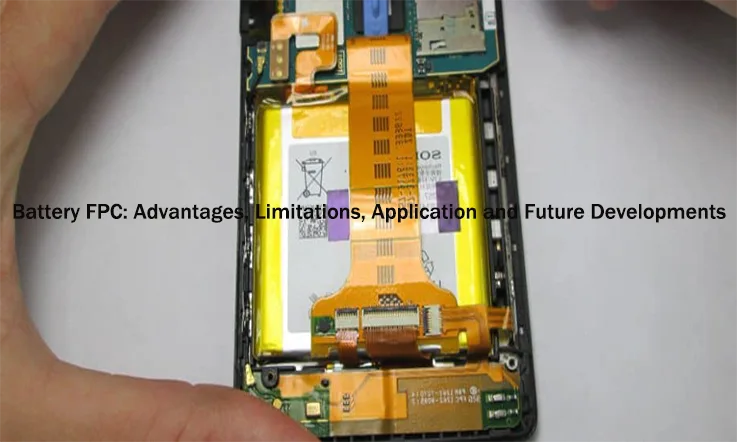
1.Dielectric Materials: The materials used for insulation must have high dielectric strength to prevent current leakage and breakdown. Common choices include ceramic and PTFE, which offer excellent electrical properties under stress.
2.Trace Width: The trace width determines the amount of current a trace can safely handle. It needs to be calculated carefully to avoid overheating and ensure adequate power distribution.
3.Power Distribution: High voltage PCBs often require careful power distribution management to avoid overloading certain areas of the board. Designing with power planes and multi-layer constructions ensures that the power is spread evenly across the circuit.
Component Type
Power Requirement (W)
Required Trace Width (mm)
Power Transistor
50
1.5
Capacitor
20
0.8
Voltage Regulator
10
1.0
4.Electrical Isolation: Ensuring proper electrical isolation between high voltage and low voltage sections of the PCB is essential. The design must make sure that power traces remain separated from sensitive signal traces to avoid interference.
Thermal Management in High Voltage PCB Design
Managing heat is an integral part of designing high voltage PCBs, especially when the board is subjected to high currents and high power levels. Therefore, poor thermal management can result in overheating and failure, so it’s necessary to design boards that effectively dissipate heat.
1.Thermal Properties: The materials used in high voltage PCB construction must have good thermal conductivity to transfer heat away from sensitive components. Copper, ceramic, and aluminum-based substrates are some of the best options for high heat dissipation.
2.Heat Dissipation: Thermal vias and heat sinks are commonly used to manage the heat generated by high power levels. Heat dissipation ensures that the PCB operates within safe temperature ranges, preventing thermal failure.
Material Type
Thermal Conductivity (W/m·K)
Recommended Use
Copper
400
Power traces, heat sinks
Ceramic
10
High voltage insulation
Aluminum
205
Power distribution layers
3.PCB Materials for Heat Management: Different materials offer varying degrees of thermal resistance. Ceramic substrates, for instance, not only provide excellent electrical isolation but also possess superior thermal conductivity, making them reliable for high power designs.
Manufacturing and Assembly of High Voltage PCBs
When it comes to high voltage PCBs, the manufacturing and assembly process requires precision and attention to detail. A simple oversight can lead to electrical breakdowns, safety hazards, or suboptimal performance. This section walks you through the high voltage PCB manufacturing process, the assembly challenges, and some of the advanced techniques used to meet the exacting demands of high voltage applications. Let’s break it down.
The Manufacturing Process for High Voltage PCBs
High Voltage PCB Manufacturing is a precise and multi-step process that involves selecting the right materials, designing with high voltage requirements in mind, and ensuring thorough electrical testing for performance and reliability. Here’s a look at what goes into the process:
1.PCB Fabrication: The first step involves creating the base structure for the PCB. This includes applying multiple layers of dielectric materials (like ceramic or PTFE) and copper traces. These materials are must to need in ensuring the PCB can handle the electrical and thermal stresses in high voltage environments. The fabrication process uses high precision to ensure the correct trace widths and spacing.
2.Dielectric Layers: High voltage PCBs rely on thick dielectric layers to separate conductive traces. Materials such as ceramic or high-temperature laminates are commonly used for these layers to ensure dielectric strength and prevent electrical breakdowns.
3.Electrical Testing: After the initial fabrication, the PCB undergoes rigorous electrical testing to ensure it meets the required breakdown voltage. Tests like high-voltage insulation tests and dielectric strength measurements are conducted to ensure that the PCB can handle its operating voltage without fail.
Test Type
Voltage Level (V)
Expected Result
Dielectric Strength Test
3000
No breakdown of insulation
High-Voltage Test
5000
No leakage or failure
Leakage Test
1000
Zero current leakage
Assembly Challenges in High Voltage PCB Manufacturing
While the fabrication process plays a large part in the overall design, the assembly of high voltage PCBs introduces its own set of challenges. From component placement to conformal coating, these PCBs require a tailored approach to ensure both electrical and mechanical dependability.
1.Component Placement: For high voltage PCBs, component placement is not as straightforward as in low voltage designs. High voltage parts need to be carefully positioned to prevent arcing and to allow for sufficient clearance between components. The placement is designed to ensure optimal insulation and protection from electrical faults.
2.Conformal Coating: High voltage circuits often require conformal coating to protect the PCB from environmental factors, such as moisture and contaminants. This protective layer is applied over the high-voltage traces to increase the PCB’s resistance to electrical breakdown and improve the board’s overall durability.
3.Voltage Tolerance: Ensuring that all components used in high voltage assemblies can handle the required voltage tolerance is necessary.. The assembly must be tested to make sure that all components can safely function at the expected operating voltages without breaking down.
Advanced Manufacturing Techniques for High Voltage PCBs
To meet the demands of modern high voltage applications, many manufacturers are adopting advanced techniques to ensure power distribution is as efficient and safe as possible. In this section, we explore custom PCB solutions, advanced manufacturing methods, and strategies to ensure high voltage tolerance.
1.Custom PCB Solutions: High voltage designs often require custom solutions, tailored to the specific needs of the project. Custom PCB layouts, power planes, and multi-layer constructions are frequently used to ensure that the power distribution across the board is efficient and safe. These solutions offer flexibility and durability while reducing the risk of electrical failure.
2.High Voltage Tolerance: To improve the voltage tolerance of a PCB, we can use advanced materials and techniques, such as high-temperature laminates and ceramic-filled substrates. These materials provide enhanced resistance to electrical breakdown and ensure that the board remains stable under high voltage conditions.
3.Power Distribution: Managing the flow of power across the PCB is one of the most complex aspects of high voltage design. Special attention is given to trace width, thermal vias, and multiple layers to ensure the power is evenly distributed and the PCB is capable of handling high current without overheating.
Industry Standards and Compliance for High Voltage PCBs
High voltage PCBs are an integral part of numerous electronic systems, ranging from industrial machinery to consumer electronics. To ensure that these boards function as expected while also adhering to the highest standards of safety and performance, we must comply with various international standards and certifications. In this section, we will explore the key global certification requirements, the compliance testing necessary for high voltage PCB design, and the specific safety standards that must be met in the industry.
Global Certification and Standards for High Voltage PCBs
When designing and manufacturing high voltage PCBs, following global standards is essential. Standards like UL Certification, IEC Standards, and IPC Standards ensure that the PCB meets safety and breakdown voltage requirements, offering assurance that the products are safe for use in demanding applications.
1.UL Certification: Underwriters Laboratories (UL) is one of the most respected organizations for testing and certification in the electronics industry. A UL Certified PCB means the product has undergone rigorous testing to ensure it meets specific electrical safety standards, including voltage tolerance and thermal performance. For high voltage applications, UL’s standards ensure that the PCB will function safely under extreme conditions, including both surge voltage and operating voltage.
2.IEC Standards: The International Electrotechnical Commission (IEC) sets global standards for electrical safety and voltage breakdown across various industries. IEC standards such as IEC 61010 and IEC 60204 provide detailed guidelines on the electrical performance and safety requirements for PCBs used in industrial settings. These standards dictate everything from component insulation to trace width and spacing.
3.IPC Standards: IPC is a global trade association that develops industry standards for PCB manufacturing and assembly. Their standards (like IPC-2221 for design and IPC-6012 for testing) ensure consistency in PCB quality, particularly in high voltage applications. These standards specify requirements for material properties, dielectric strength, and voltage endurance, ensuring that high voltage boards are reliable and safe.
Standard Organization
Certification Type
Relevant Standards
Application Area
UL
UL Certification
UL 94, UL 746C
Consumer electronics, power supplies
IEC
International Standard
IEC 61010, IEC 60204
Industrial equipment, machinery
IPC
Design & Testing Standards
IPC-2221, IPC-6012
PCB design, manufacturing
Compliance Testing and Regulations for High Voltage PCB Design
Compliance testing is a first step in high voltage PCB design. It’s a thorough process aimed at ensuring that every high voltage PCB meets the relevant electrical safety standards and performs reliably under real-world conditions. From breakdown voltage testing to electrical stress testing, these tests help ensure that the design will stand up to the demands of its specific application.
1.Compliance Testing: The primary goal of compliance testing is to check if the high voltage PCB meets safety regulations such as electrical insulation, breakdown voltage resistance, and thermal performance. Breakdown voltage tests, for example, measure the maximum voltage the PCB can safely handle before insulation failure occurs.
2.Electrical Safety Standards: There are strict guidelines that govern electrical safety for high voltage systems. Testing protocols assess the ability of the PCB material (such as FR4 or ceramic composites) to resist electrical breakdown under high voltage conditions. Test procedures like high-pot testing and hipot testing simulate real-world electrical stresses to verify the board’s safety under voltage surges.
3.Testing Regulations: High voltage PCB testing follows international standards like IEC 60364 (electrical installations in buildings) and UL 746 (standard for plastic materials). These regulations ensure that high voltage circuits and devices maintain electrical integrity and safety performance.
Testing Protocol
Test Description
Standard Applied
Voltage Rating
Breakdown Voltage Test
Measures insulation resistance and failure point
IEC 60364, UL 746
Up to 5000V
Hipot Testing
High-voltage dielectric strength testing
IEC 60204, UL 94
1000V to 8000V
High-pot Testing
Measures ability to withstand voltage without failure
UL 746, IPC-2221
3000V to 5000V
Key Factors to Consider for High Voltage PCB Safety
Designing for safety in high voltage PCBs is non-negotiable. The specific nature of high voltage circuits requires careful attention to factors such as electrical arcing, reliability of components, and strict adherence to safety standards to ensure that the PCB functions as expected without risk of failure.
1.High Voltage Circuit Design: Designing circuits for high voltage applications requires precision to avoid issues like electrical arcing. The layout should minimize trace length and ensure that traces are placed with adequate spacing to prevent unintended electrical contact. Thick copper traces are used to handle high current, while sufficient insulation between traces ensures that voltage breakdown does not occur.
2.Electrical Arcing: Electrical arcing is a potential hazard in high voltage PCBs, where voltage surges can cause a breakdown of air or insulation, leading to arcing between conductors. Proper component placement and adequate clearance between traces can reduce the risk of arcing.
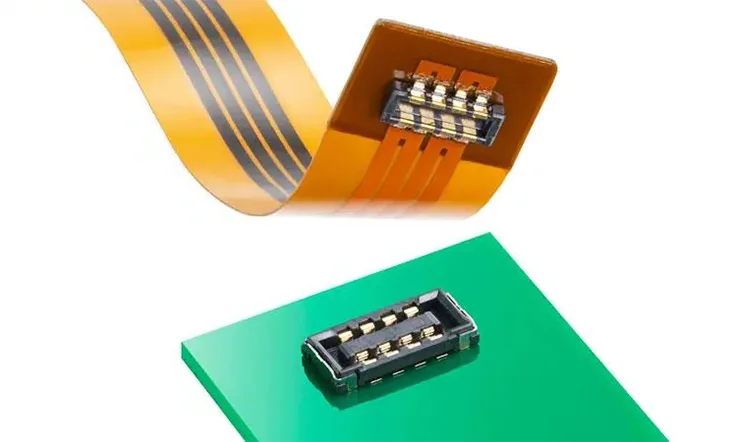
3.PCB Reliability and Safety Standards: Reliability is another factor in high voltage PCB design. Using materials with high dielectric strength and ensuring that all components are rated for the required voltages can significantly reduce the risk of failure. Adhering to standards such as IPC-2221 ensures that the design process integrates critical safety features, such as thermal dissipation and electrical isolation.
Design Factor
Description
Safety Standard
Target Measurement
Trace Spacing
Minimum spacing between high voltage traces to prevent arcing
IPC-2221, UL 746
0.5mm to 2mm
Dielectric Strength
Resistance of PCB materials to electrical breakdown
IEC 60364, UL 746
>20 kV/mm
Component Placement
Proper distance between high voltage components to prevent electrical arcing
IPC-2221
>1.5mm clearance
Testing and Reliability for High Voltage PCBs
In the design and manufacturing of high-voltage PCBs, testing and reliability are integral aspects. High-voltage PCBs must not only meet safety standards but also ensure long-term stability and durability in real-world applications. Various testing protocols, including high voltage testing, long-term reliability testing, and stress testing, help ensure that these PCBs perform consistently under demanding conditions. In this section, we’ll delve into the main aspects of high voltage testing, reliability testing, and stress testing to help you understand how to ensure the safety and stability of high-voltage PCBs.
High Voltage Testing Protocols for PCBs
When manufacturing and applying high voltage PCBs, following stringent testing protocols is a must. These include breakdown voltage testing and electrical testing, which help confirm the voltage tolerance and electrical insulation properties of the PCBs. These tests ensure the boards can function reliably in real-world applications, reducing the risk of electrical failure and damage.
1.High Voltage Testing: This initial test evaluates the safety and electrical performance of high-voltage PCBs under high voltage conditions. The test typically involves applying a voltage higher than the PCB’s operational voltage to ensure its electrical insulation is intact. During this process, the PCB must withstand the applied voltage without electrical breakdown, ensuring it can handle real-world electrical stress.
2.Breakdown Voltage Testing: This specific test simulates extreme operating conditions, ensuring the PCB material’s dielectric strength can withstand high-voltage stress. The PCB undergoes a voltage surge to confirm that the insulation does not fail and cause electrical shorts or failures in the circuit.
3.Electrical Testing Protocols: Several standards, such as IEC 60204, UL 746, and IPC-2221, are followed during electrical testing. These protocols ensure that the PCB’s electrical properties meet international safety and stability standards, confirming that the design can be safely used in high-voltage applications.
Test Type
Test Description
Relevant Standard
Target Voltage Range
Breakdown Voltage Test
Measures the maximum voltage the PCB can withstand before breakdown
IEC 60204, UL 746
Up to 5000V
Dielectric Strength Test
Tests the PCB’s insulation strength against voltage surges
IEC 60364, UL 94
1000V to 8000V
Electrical Testing
General electrical performance tests for the PCB
IPC-2221, IEC 60204
3000V to 10000V
Long-Term Reliability Testing for High Voltage PCBs
It’s not enough for high voltage PCBs to pass initial tests—they must also undergo long-term reliability testing to ensure that they continue to function properly over time. These tests help identify potential issues such as material degradation or thermal failure, enabling us to address these concerns before they result in catastrophic failure.
1.Thermal Cycling Test: High-voltage PCBs experience repeated thermal expansion and contraction during operation. Thermal cycling tests simulate extreme temperature changes, ensuring that the PCB can maintain its electrical stability and physical integrity over time. These tests help assess whether the PCB can withstand the stress of heating and cooling cycles that may occur in real-world use.
2.Humidity Testing: High humidity can lead to electrical breakdown or corrosion, impacting PCB performance. Testing PCBs in various humidity conditions ensures they maintain electrical insulation and avoid short circuits or failure. These tests help determine how well the PCB performs under challenging environmental factors.
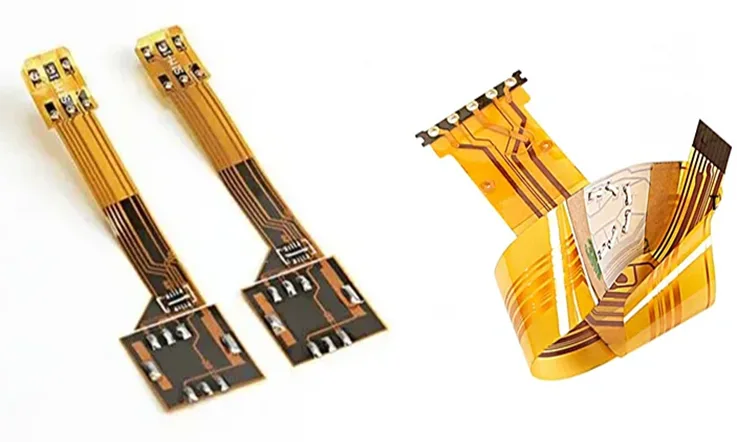
3.Insulation Resistance Testing: This test focuses on assessing the long-term performance of the PCB’s insulating materials. It checks whether the PCB’s insulation remains intact over time, even under prolonged exposure to environmental stressors. A significant part of this testing is to ensure that insulation resistance remains within safe limits, preventing breakdowns and failures.
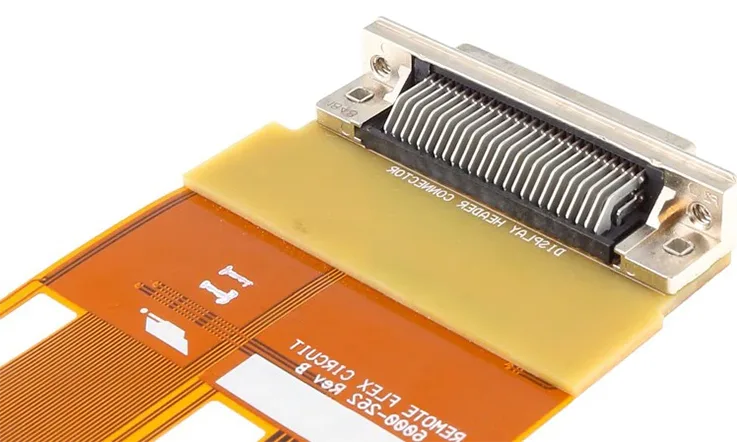

Test Type
Test Description
Standard Applied
Target Measurement
Thermal Cycling Test
Simulates temperature fluctuations and the resulting effects on PCB performance
IEC 60364, UL 746
-40°C to 150°C
Humidity Testing
Tests PCB performance in varying humidity levels
IEC 60204, IPC-2221
95% RH at 40°C
Insulation Resistance Test
Measures the long-term insulation stability of the PCB
IEC 60364, UL 746
>100 MΩ
Stress Testing for High Voltage PCB Durability
Stress testing assesses the durability of high-voltage PCBs under extreme conditions. By simulating electrical overloads and voltage surges, stress testing helps evaluate the performance of the PCB under these high-stress scenarios. These tests not only provide valuable insight into the PCB’s ability to withstand stress but also help us identify potential failure modes and ensure the PCB’s long-term stability.
1.Stress Testing: The goal of stress testing is to simulate the electrical stress that the PCB might face in high-voltage environments. These tests help determine how well the PCB handles voltage spikes and other irregular electrical conditions that can occur during its use in actual devices.
2.PCB Durability Testing: This type of test evaluates how the PCB performs after extended periods of stress. It aims to uncover failure points that might not be immediately obvious, such as solder joint fatigue or material degradation. By subjecting the PCB to high-voltage stress and environmental factors, we can ensure that the PCB remains functional and reliable over time.
3.Failure Mode Testing: In failure mode testing, we can simulate various faults, such as electrical short circuits or burnouts, to understand how the PCB reacts under these extreme conditions. The insights gained during these tests provide crucial feedback that helps refine designs and improve the durability of the PCB in future iterations.
Test Type
Test Description
Test Standard
Target Condition
Stress Testing
Simulates extreme electrical stress on the PCB
IPC-2221
Overvoltage, Surge
PCB Durability Test
Evaluates long-term durability of PCB materials under high voltage
UL 746, IEC 60204
>1000V for 5000 hours
Failure Mode Testing
Simulates various PCB failure scenarios
IPC-2221
Overload, Short Circuits
Emerging Technologies in High Voltage PCB Design
High voltage PCB design is undergoing a significant transformation as new technologies gain traction in the industry. Several innovations are improving the efficiency and performance of high voltage systems. Let’s dive into the core technologies that are setting the stage for the future of high voltage PCBs.
1.Integrated Power Modules: The trend of consolidating multiple power components into a single unit is becoming more common in high voltage applications. These integrated power modules make it easier to design compact systems that still deliver the required power and functionality. These modules are finding their place in industries like automotive, energy, and electronics, where space constraints are a constant challenge.
2.Flexible PCBs: As industries like automotive and consumer electronics push design limits, the need for flexible high voltage PCBs is growing. These PCBs are designed to flex and adapt without compromising their electrical performance. Flexible PCB technology has caught attention due to its ability to fit into high voltage systems where both form factor and flexibility are necessary.
3.3D PCB Designs: Additive manufacturing has made its way into PCB fabrication, allowing for the design of 3D PCBs. By using 3D design techniques, we can optimize the placement of components in a three-dimensional space, improving power distribution and heat dissipation. This innovation is particularly valuable in industries like aerospace and automotive, where every inch of space matters.
These new technologies are pushing the boundaries of what high voltage PCBs can achieve, making designs more efficient, compact, and adaptable to evolving industry needs.
Material innovations play a significant role in improving the reliability and efficiency of high voltage PCBs. With the constant demand for higher performance, the materials used in these PCBs need to handle higher power levels and stress factors. Let’s explore some of the cutting-edge materials that are reshaping the way we approach high voltage PCB design.
1.Advanced Dielectric Materials: When designing for high voltage applications, materials with high dielectric strength are necessary to prevent electrical breakdown. Ceramic and polyimide-based materials are commonly used for their ability to withstand high voltage stresses while maintaining durability. These materials help ensure that insulation remains intact under tough conditions, contributing to the overall reliability of the board.
2.Thermal Management Materials: Thermal conductivity has become a main factor in the design of high voltage PCBs. To prevent damage from heat, we can use materials such as copper composites and aluminum PCBs that can conduct heat efficiently. This thermal management ensures that the PCB can handle power levels without overheating, which is a common concern in high voltage systems.
3.Solder Mask Innovations: Solder masks are used to protect PCB traces and components. New solder mask materials are designed to withstand high voltage conditions, offering better chemical resistance, UV stability, and dielectric strength. These improvements help protect high voltage PCBs from environmental factors that can lead to premature failure.
These material innovations are allowing high voltage PCBs to perform better, last longer, and operate more efficiently in demanding applications.
Material Type
Key Characteristics
Common Applications
Advanced Dielectrics
High dielectric strength and breakdown resistance
Power Electronics, Automotive
Thermal Management Materials
High thermal conductivity, effective heat dissipation
Industrial Electronics, Power Systems
Solder Mask Innovations
Resistance to chemicals and UV, high dielectric strength
Automotive, Consumer Electronics
FAQ & High Voltage PCBs
1. What is the maximum voltage a High Voltage PCB can handle?
High Voltage PCBs are designed to handle voltages ranging from 1kV to several kV, depending on the material and construction of the board.
2. Can High Voltage PCBs be used for power supply applications?
Yes, High Voltage PCBs are commonly used in power supply circuits, especially those designed for industrial, automotive, and renewable energy applications.
3.Can High Voltage PCBs be used in medical devices?
Yes, High Voltage PCBs are often used in medical devices, especially in imaging systems and equipment where high-voltage signals are needed for operation.
4. What is the recommended PCB thickness for high voltage applications?
The recommended PCB thickness depends on the voltage requirements, but typically it ranges from 0.8 mm to 2.0 mm, with adjustments made for specific voltage ratings.
5. Can High Voltage PCBs be used in both AC and DC circuits?
Yes, High Voltage PCBs can be designed for both AC and DC circuits, but the design considerations, such as trace spacing and insulation, may vary between the two.
With the increasing need for high-performance electronics, selecting the appropriate PCB material plays a core role in optimizing both functionality and cost. Shengyi SI10US PCB Material is gaining attention for its ability to handle high-frequency applications such as 5G infrastructure, automotive electronics, and microwave communications. With its low dielectric loss, thermal stability, and mechanical resilience, it offers strong performance across a range of demanding applications.
This article examines the characteristics of Shengyi SI10US, highlighting its cost advantages, environmental considerations, designing, fabrication and its potential in advanced technologies like wireless communications and autonomous systems. For professionals in PCB design, electronics manufacturing, and the communications industry, this material offers valuable insights for future innovations.
Introduction to Shengyi SI10US PCB Material
When it comes to designing and manufacturing high-performance PCBs, Shengyi SI10US PCB Material has earned its reputation as a go-to material for cutting-edge applications. The combination of low dielectric loss, high-frequency stability, and thermal efficiency makes it a powerful material choice for industries that rely on reliable signal transmission. So, if you’re designing 5G infrastructure, automotive radar systems, or aerospace electronics, Shengyi SI10US has what it takes to perform consistently under pressure.
But what exactly makes this material stand out in the crowded field of high-frequency PCB materials? Let’s dive deeper.
What is Shengyi SI10US PCB Material and Why is it Special?
Shengyi SI10US PCB Material is a high-performance laminate designed for applications requiring precise signal transmission, thermal stability, and mechanical strength. Made from advanced resin systems, it features a low dielectric constant (Dk) and low dissipation factor (Df), which are better for high-speed electronic applications. This makes it particularly suited for use in 5G communications, automotive electronics, military systems, and other high-tech industries where consistent, reliable performance is non-negotiable.
What really sets Shengyi SI10US apart from other PCB materials is its ability to maintain electrical stability even at high frequencies. The material helps ensure that signals travel with minimal degradation, a crucial factor when designing high-speed, low-latency circuits. In short, Shengyi SI10US is built to handle the heavy demands of modern electronic devices that rely on precise timing and low signal loss.
Key Advantages of Shengyi SI10US PCB Material in Electronics
So, what does Shengyi SI10US bring to the table when you’re building high-performance PCBs? Let’s break it down:
1.Low Dielectric Loss: The material’s low dissipation factor ensures that energy isn’t lost in the form of heat, which can affect both the efficiency and reliability of your circuits. This means that Shengyi SI10US is ideal for applications where signal integrity and power conservation are top priorities, such as in telecommunications networks and data centers.
2.High-Frequency Performance: With its low dielectric constant (Dk), Shengyi SI10US facilitates faster signal transmission, reducing delays that are often seen in conventional PCB materials. This feature is especially beneficial for high-speed applications like 5G, where fast data transfer and low latency are necessary for smooth, uninterrupted communication.
3.Superior Thermal Management: The material’s thermal conductivity is another major benefit. In devices where heat management is essential—such as power amplifiers, autonomous vehicle electronics, and aerospace sensors—Shengyi SI10US provides an effective solution by helping dissipate heat effectively, preventing overheating and extending the lifespan of components.
4.Mechanical Strength and Durability: Whether you are designing flexible PCBs or rigid boards, Shengyi SI10US is engineered for durability. It resists mechanical stress and environmental factors such as vibration and temperature fluctuations, making it good for automotive, military, and aerospace applications where boards must endure harsh conditions.
5.Environmental Compatibility: As industries increasingly focus on sustainable solutions, Shengyi SI10US aligns with RoHS standards, ensuring it’s free from harmful substances like lead, mercury, and other restricted materials. This helps companies meet regulatory requirements while minimizing the environmental impact of their electronic devices.
How Shengyi SI10US PCB Material Supports the Future of PCB Design?
Shengyi SI10US is well-positioned to support the continued evolution of next-generation wireless communications and Internet of Things (IoT) devices. As these technologies advance, the demand for faster, more reliable electronic components grows, and Shengyi SI10US is designed to meet these needs.
●5G Networks: The rollout of 5G networks marks a major shift in wireless technology. With its low dielectric loss and ability to handle high frequencies, Shengyi SI10US is becoming a popular choice for 5G base stations, high-speed data transmission, and antenna systems. The material supports reliable signal propagation, helping to reduce interference in demanding environments, ensuring better overall performance in these advanced applications.
●Internet of Things (IoT): As more devices become connected, IoT applications require PCB materials that can handle complex, high-speed communication with low power consumption. The low signal loss and thermal stability of Shengyi SI10US make it a reliable choice for these devices, whether it’s smart sensors, wearable technology, or smart home systems.
●Autonomous Vehicles: With autonomous driving technologies pushing the boundaries of electronics, Shengyi SI10US supports sensor fusion systems, which rely on fast, accurate data transmission for real-time decision-making. The material’s thermal conductivity and mechanical strength help ensure that autonomous vehicle PCBs operate safely and reliably, even in the most demanding environments.
Key Properties of Shengyi SI10US PCB Material
The performance of Shengyi SI10US PCB Material in advanced designs hinges on its exceptional properties. These attributes have made it a popular choice in industries that demand high precision, such as telecommunications, automotive, and aerospace applications. By examining its electrical, thermal, and mechanical properties, we can gain a clearer understanding of how Shengyi SI10US ensures reliable, efficient operation across a range of high-performance applications.
Electrical Properties of Shengyi SI10US PCB Material
When designing high-frequency PCBs, signal integrity and minimal energy loss are core factors in achieving optimal performance. Shengyi SI10US excels in these areas due to its low loss tangent and stable dielectric constant. These features directly impact how well the material handles high-speed data and signal transmission, especially in fields like 5G, IoT, and telecommunications.
●Low Loss Tangent: The loss tangent is a measurement of how much energy is lost as heat during signal transmission. A lower loss tangent indicates that the material retains more of the signal’s power and results in less attenuation.
●Dielectric Constant (Dk): The dielectric constant (Dk) influences how signals travel through a material. A stable Dk allows signals to pass through consistently, which is especially necessary when working with high-frequency signals that require precision.
Here’s a table summarizing the electrical properties of Shengyi SI10US:
Property
Value
Impact
Loss Tangent
0.002
Minimal signal loss during high-frequency transmission, ensuring clarity.
Dielectric Constant (Dk)
10
Consistent signal velocity, reducing impedance mismatch.
Frequency Range
1 GHz to 10 GHz
Supports a wide range of high-speed applications, from Wi-Fi to 5G.
The combination of low loss tangent and a stable dielectric constant is what makes Shengyi SI10US best for demanding high-frequency applications.
Thermal and Mechanical Properties of Shengyi SI10US PCB Material
Beyond its electrical characteristics, thermal and mechanical stability ensure that Shengyi SI10US PCB operates reliably in different stress and temperature conditions. The material’s thermal conductivity and mechanical durability provide the necessary support for consistent performance in demanding environments over time.
●Thermal Conductivity: Effective heat management is a main factor when designing systems with high power consumption. Materials with improved thermal conductivity help dissipate heat more effectively, ensuring that sensitive components are safeguarded from temperature-related damage.
●Mechanical Strength: The material’s ability to withstand mechanical stress—such as vibrations, shocks, and temperature fluctuations—ensures durability and prevents deformation over time.
Here’s a table summarizing the thermal and mechanical properties of Shengyi SI10US:
Property
Value
Impact
Thermal Conductivity
0.3 W/m·K
Prevents overheating in high-power applications, keeping components safe.
Glass Transition Temp (Tg)
180°C
Maintains structural integrity at high temperatures, ideal for automotive and industrial applications.
Mechanical Strength (Flexural Modulus)
18 GPa
Provides resistance to deformation in high-stress environments.
Durability and Long-Term Performance of Shengyi SI10US PCB Material
When assessing the long-term reliability of a PCB, its ability to resist environmental factors such as moisture and extreme temperatures is considered. Shengyi SI10US is designed to perform consistently over extended periods, even under harsh conditions, helping to reduce the need for frequent replacements and supporting the durability of devices.
●Temperature Resistance: Shengyi SI10US has a high glass transition temperature (Tg), which ensures that the material remains stable and maintains its electrical properties even when exposed to fluctuating temperatures in applications such as military electronics and aerospace.
●Moisture Resistance: The material’s resistance to moisture absorption helps prevent performance degradation over time, particularly in applications exposed to humid or fluctuating environmental conditions.
Here’s a table summarizing the durability and long-term performance features of Shengyi SI10US:
Property
Value
Impact
Glass Transition Temp (Tg)
180°C
Ensures stability at high temperatures, extending the life of PCBs in extreme conditions.
Moisture Absorption
0.10%
Prevents degradation from humidity exposure, maintaining long-term performance.
Shelf Life (in sealed packaging)
6 months
Ensures stability during storage, reducing material degradation before production.
Design Optimization with Shengyi SI10US PCB Material
When designing high-frequency PCBs, achieving optimal performance requires precise material selection, effective layout strategies, and careful attention to signal integrity, impedance control, and thermal management. Shengyi SI10US PCB Material is a reliable choice for these types of designs due to its low-loss characteristics, stable dielectric properties, and ability to manage high-power applications. Let’s explore the techniques that can be applied when working with Shengyi SI10US to improve performance in demanding designs.
How to Optimize High-Frequency PCB Designs with Shengyi SI10US?
To enhance the performance of high-frequency PCBs, we many engineers must employ specific techniques focused on signal integrity, impedance control, and low-loss transmission. Shengyi SI10US is well-suited for these tasks due to its favorable electrical properties.
●Signal Integrity: With Shengyi SI10US, signal paths maintain clarity over long distances due to the material’s low loss tangent. This reduces the likelihood of signal degradation, even in high-frequency applications, such as 5G base stations or satellite communication systems.
●Impedance Control: Achieving accurate impedance matching is fundamental for minimizing reflections and maintaining signal quality. The stable dielectric constant (Dk) of Shengyi SI10US ensures that impedance remains consistent across the board, even at high frequencies.
●Low-Loss Transmission: To ensure that signals travel effectively with minimal attenuation, Shengyi SI10US provides an excellent low-loss environment, especially for designs that transmit high-frequency signals over longer distances, like those in RF (Radio Frequency) circuits.
Let’s look at a practical example: in 5G base station designs, signal attenuation due to material loss can significantly affect performance. By using Shengyi SI10US, we can ensure that data transmission rates remain consistent without signal degradation over long distances.
Minimizing Signal Loss and Crosstalk in Shengyi SI10US PCBs
In multilayer PCB designs, signal loss and crosstalk are two common issues that can degrade performance. With Shengyi SI10US, these challenges can be significantly reduced through effective design practices.
●Signal Loss: Signal degradation is often caused by high material losses and impedance mismatches. Thanks to Shengyi SI10US’s low loss tangent, signal attenuation is minimized, which improves the overall quality of signal transmission across high-frequency circuits.
●Crosstalk Prevention: In densely packed designs, crosstalk can occur when signals from one trace interfere with adjacent traces. The superior dielectric properties of Shengyi SI10US help prevent such interference, ensuring that signals travel with minimal cross-channel noise.
For instance, in IoT devices, where compact designs with high-density traces are essential, Shengyi SI10US helps ensure signal purity by reducing the likelihood of crosstalk between traces.
Below is a table summarizing how Shengyi SI10US addresses signal loss and crosstalk:
Design Factor
Impact on Performance
Benefits of Shengyi SI10US
Loss Tangent
Reduces signal attenuation
Maintains clarity and accuracy in high-frequency signals
Dielectric Constant (Dk)
Stabilizes signal propagation
Ensures consistent impedance, reducing signal reflections
Impedance Control
Prevents signal degradation and distortion
Ensures smooth signal transmission in complex layouts
Through these improvements, Shengyi SI10US provides us with the tools necessary to enhance signal clarity and maintain optimal transmission quality.
Best Practices for Designing with Shengyi SI10US PCB Material
When working with Shengyi SI10US, there are several best practices that can be applied to ensure the PCB design meets the high standards required for high-frequency applications.
●Layout Optimization: Start by minimizing the length of signal paths and ensuring uniform trace widths. A well-organized layout reduces the likelihood of unnecessary resistance, ensuring signals remain strong and clear.
●Trace Width Calculation: Accurate trace width calculation is necessary to maintain controlled impedance in the design. By accounting for Shengyi SI10US’s stable dielectric constant, designers can calculate trace widths with precision to support optimal signal integrity. This approach helps ensure that performance is consistent, even in high-frequency applications, where small variations could lead to signal disruptions.
●Thermal Management: For high-power designs, effective heat dissipation is a must. Shengyi SI10US boasts high thermal conductivity, allowing it to efficiently dissipate heat from power-hungry components, reducing the risk of thermal buildup and improving overall system reliability.
An example would be the design of automotive PCBs used in electric vehicles, where the thermal properties of Shengyi SI10US ensure that critical components stay within safe operating temperatures, avoiding overheating and potential failure.
Here’s a table summarizing the best practices for designing with Shengyi SI10US:
Best Practice
Recommended Approach
Impact on Design
Layout Optimization
Shorten signal paths, ensure consistent spacing
Reduces resistance and minimizes signal interference
Trace Width Calculation
Use Dk to precisely calculate trace widths
Maintains stable impedance and optimal signal transmission
Thermal Management
Use copper pours, vias, and heat sinks as needed
Efficient heat dissipation ensures system longevity and reliability
By applying these techniques, we can ensure that their designs using Shengyi SI10US meet the required performance benchmarks.
Challenge and Technology of Using Shengyi SI10US Laminate Materials in PCB Manufacturing
In PCB manufacturing, integrating Shengyi SI10US laminate materials presents specific challenges that require advanced processing techniques, precision in assembly, and innovative testing methodologies. Shengyi SI10US is recognized for its low dielectric loss and high-frequency stability, but working with it in production settings demands a careful approach to soldering, surface mount technology (SMT), and other critical fabrication processes. This section will delve into the challenges that engineers face when working with Shengyi SI10US in PCB production.
Fabrication Challenges for High-Frequency PCBs with Shengyi SI10US
Working with Shengyi SI10US laminate materials involves adapting fabrication techniques to account for its unique properties, especially when compared to more common PCB materials like FR4. The primary challenge comes from maintaining the material’s electrical properties while handling the physical demands of the fabrication process.
●Soldering and Material Behavior: Unlike conventional materials, Shengyi SI10US has a lower coefficient of thermal expansion (CTE), which affects how it responds to temperature during processes such as soldering. Soldering profiles need to be optimized to avoid damaging the low loss characteristics. Inappropriate temperatures or rapid thermal cycling could compromise the electrical performance of the material.
●SMT Assembly and Thermal Management: Surface mount technology (SMT) is a standard approach in PCB assembly, but with Shengyi SI10US, careful management of heat during the reflow soldering process is essential. The material has different thermal properties, so controlling the heat to avoid material deformation is necessary for maintaining the integrity of the design.
Factor
Impact
Recommended Approach
Soldering Profile
Ensures proper bonding without material degradation
Slow ramp-up and gradual cooling during reflow soldering
CTE Compatibility
Affects thermal expansion and solder joint reliability
Optimize solder paste and flux composition to accommodate CTE
Heat Resistance
Material distortion can affect performance
Control peak temperatures and cooling rates during soldering
By fine-tuning these processes, we can ensure Shengyi SI10US performs as expected, contributing to stable high-frequency operations in end-products.
Precision and Automation in Manufacturing Shengyi SI10US PCBs
The complexity of high-frequency PCB designs using Shengyi SI10US demands precision and automation in the manufacturing process. These technologies enhance consistency and efficiency, ensuring high-quality outputs across large production volumes.
●Automated Assembly: With Shengyi SI10US, automated systems play a central role in ensuring precise component placement and alignment. This helps maintain consistent impedance control and trace width throughout the design process. By minimizing manual errors, automation streamlines everything from assembly to testing, improving overall efficiency and reducing the chance of costly mistakes.
●Inspection and Quality Control: To ensure that every PCB meets design specifications, automated optical inspection (AOI) and X-ray inspection are used to detect defects like misalignments, solder bridges, or trace inconsistencies. These inspection techniques enable manufacturers to identify issues early in the production cycle, improving yield rates.
●Real-Time Monitoring: Manufacturing processes depend on real-time monitoring systems to track deviations and ensure design specifications are met on schedule. For high-frequency materials like Shengyi SI10US, this step helps prevent any material or process variations that could impact performance.
Automation Aspect
Benefit
Technology Applied
Automated Assembly
Ensures precision and minimizes human error
High-speed pick-and-place machines for component placement
Automated Optical Inspection
Detects defects early, reducing wastage
Optical scanners for real-time surface inspection
X-ray Inspection
Ensures no internal defects such as solder bridges
X-ray machines for checking multi-layer PCBs and via integrity
Advanced Prototyping Techniques for Shengyi SI10US PCBs
During the prototyping stage, advanced techniques are employed to validate the electrical, thermal, and mechanical performance of designs made with Shengyi SI10US. These techniques help identify potential issues early, ensuring that the final product meets performance expectations.
●Rapid Prototyping: With high-frequency materials like Shengyi SI10US, rapid prototyping is a useful method to quickly verify design integrity. Advanced techniques like laser direct imaging (LDI) and high-precision etching allow for the creation of test boards that simulate real-world operating conditions.
●Thermal Simulation and Testing: Thermal simulations are used to model how Shengyi SI10US will perform under varying temperatures. This process allows us to adjust component placement and PCB layout to optimize heat dissipation, ensuring long-term reliability in high-power applications.
●Signal Integrity Testing: we can use signal integrity tests like Time Domain Reflectometry (TDR) or Vector Network Analyzers (VNA) to confirm that Shengyi SI10US can handle high-speed signals without significant loss or degradation.
Prototyping Technique
Purpose
Impact on Design Validation
Laser Direct Imaging (LDI)
Create high-precision prototypes quickly
Shortens time-to-market for new designs
Thermal Simulation
Model thermal performance under stress
Helps adjust layout for better heat dissipation
Signal Integrity Testing
Validate electrical performance in high-speed circuits
Ensures that signal quality is maintained at high frequencies
These prototyping techniques ensure that the Shengyi SI10US material performs as expected under real-world conditions, offering us a reliable way to test designs before scaling up production.
Comparing Shengyi SI10US PCB Material with Other Materials
When selecting PCB materials, the right choice can impact both performance and cost, as well as the overall lifespan of the final product. Shengyi SI10US stands out with its distinct features, but how does it compare to other commonly used materials in high-frequency applications? Let’s explore how Shengyi SI10US holds up against some of the popular choices in the industry.
SI10US vs Rogers PCB: Performance in High-Frequency Designs
Rogers materials, such as Rogers 4003 and Rogers 4350, have long been used in high-frequency PCB designs. However, Shengyi SI10US offers competitive performance in several aspects:
Property
Rogers 4003
Rogers 4350
Shengyi SI10US
Dielectric Constant
3.38± 0.05
3.48± 0.05
3.5
Loss Tangent (at 10 GHz)
0.0027
0.0037
0.0029
Thermal Conductivity (W/m·K)
0.71
0.69
0.7
Cost (USD/sqm)
250-300
200-250
150-180
●Dielectric Constant: Rogers materials provide excellent control, but SI10US offers similar stability at high frequencies, particularly for wireless applications.
●Loss Tangent: SI10US shows a lower loss tangent, meaning less signal attenuation in high-frequency applications.
●Thermal Conductivity: SI10US offers better heat dissipation, making it a strong option for high-power PCB designs.
●Cost: SI10US is more affordable than Rogers, offering cost savings without compromising on performance.
All in all, Shengyi SI10US stands as a cost-effective alternative to Rogers materials, especially for designs that prioritize signal integrity and thermal stability.
SI10US vs Taconic PCB: Signal Integrity and Thermal Performance
Taconic PCB materials, such as Taconic TLY and Taconic RF-35, are well-regarded for low loss and high-speed performance. However, Shengyi SI10US presents advantages in several areas:
Property
Taconic TLY
Taconic RF-35
Shengyi SI10US
Dielectric Constant
2.2
3.38
3.5
Loss Tangent (at 10 GHz)
0.0028
0.0018
0.0029
Thermal Conductivity (W/m·K)
0.22
0.24
0.7
Moisture Absorption (%)
0.10
0.12
0.08
●Signal Integrity: Both materials perform well in reducing signal loss, but SI10US has a slight edge in signal retention at higher frequencies.
●Thermal Management: SI10US has better thermal conductivity, offering superior heat dissipation and making it suitable for applications that require high thermal management.
●Moisture Resistance: SI10US performs better than Taconic when it comes to moisture resistance, making it a more reliable choice in environments with fluctuating humidity levels. This feature ensures the material maintains its integrity and performs consistently, even in conditions where moisture could potentially disrupt functionality.
SI10US offers better thermal performance and lower moisture absorption, making it a reliable choice in challenging environments like telecommunications and automotive systems.
SI10US vs Teflon PCB: Mechanical and Thermal Performance
Teflon-based PCBs, often used in microwave and RF applications, are known for their low dielectric loss. However, Shengyi SI10US presents certain advantages, particularly in terms of mechanical strength and thermal conductivity:
Property
Teflon PCB
Shengyi SI10US
Dielectric Constant
2.2
3.5
Loss Tangent (at 10 GHz)
0.0025
0.0029
Thermal Conductivity (W/m·K)
0.25
0.7
Mechanical Strength (MPa)
30
60
●Thermal Conductivity: Teflon’s thermal performance lags behind SI10US, which provides significantly better heat dissipation. This makes SI10US more suitable for high-power applications.
●Mechanical Strength: Teflon is brittle under mechanical stress, whereas SI10US provides enhanced durability, ensuring reliability in demanding environments.
●Dielectric Constant: While Teflon offers a lower dielectric constant, which can be desirable for certain high-frequency applications, SI10US delivers excellent performance at a higher frequency range.
While Teflon remains a popular choice for microwave applications, Shengyi SI10US offers better thermal stability and mechanical strength, which can be beneficial for applications requiring long-term reliability.
SI10US vs Nanya PCB: Signal Loss and Impedance Control
Nanya PCB materials, such as Nanya N-TEK and Nanya Green, are commonly used in various PCB applications. However, SI10US has some advantages in terms of signal integrity and impedance control:
Property
Nanya N-TEK
Nanya Green
Shengyi SI10US
Dielectric Constant
3.0
3.2
3.5
Loss Tangent (at 10 GHz)
0.003
0.004
0.0029
Signal Loss (dB/cm at 10 GHz)
0.4
0.45
0.35
Impedance Control (Ohms)
±5%
±5%
±3%
●Signal Loss: SI10US has lower signal loss, ensuring better signal transmission at higher frequencies.
●Impedance Control: SI10US offers more precise impedance control, leading to improved signal integrity in complex PCB designs.
When compared to other materials, Shengyi SI10US shows better signal loss management and more consistent impedance control. This makes it a reliable choice for high-speed digital designs, particularly in applications like 5G infrastructure, where precise signal integrity is needed.
SI10US vs Isola PCB: Performance in Data-Intensive Applications
Isola PCB materials, such as Isola IS620 and Isola FR408HR, are known for high-frequency performance and signal fidelity. However, Shengyi SI10US provides a reliable alternative:
Property
Isola IS620
Isola FR408HR
Shengyi SI10US
Dielectric Constant
3.45
3.65
3.5
Loss Tangent (at 10 GHz)
0.0035
0.0095
0.0029
Thermal Conductivity (W/m·K)
0.38-0.53
0.4
0.7
Moisture Absorption (%)
0.10
0.15
0.08
●Signal Fidelity: While Isola materials maintain excellent performance for high-frequency data transmission, SI10US offers lower signal attenuation and greater long-term stability in extreme conditions.
●Thermal Performance: SI10US provides superior thermal management, especially for high-density PCBs in telecommunications and data centers.
Therefore, Shengyi SI10US offers strong competition to Isola materials, especially in designs requiring high-frequency stability and reliable thermal dissipation.
Cost-Effectiveness of Shengyi SI10US PCB Material
Selecting the right PCB material often requires balancing performance and costs. In industries such as telecommunications, automotive, and 5G infrastructure, where reliable signal transmission and consistent performance are necessary, Shengyi SI10US has proven itself to be an effective solution. Over the lifespan of high-performance applications, SI10US helps to reduce long-term operational costs, thanks to its durability, stable signal integrity, and thermal management.
Evaluating the ROI of Shengyi SI10US in High-Performance Applications
When considering the return on investment (ROI) of Shengyi SI10US, it’s clear that although the initial cost may be higher than that of standard materials, the benefits it offers in performance and longevity make it a practical choice for industries requiring high reliability.
In telecommunications and 5G networks, SI10US helps maintain signal quality over longer distances and through more complex designs. The material’s low loss reduces the need for frequent maintenance or repairs, delivering consistent performance over time, which minimizes long-term operational expenses.
In automotive applications, where uninterrupted communication is a must for systems like ADAS (Advanced Driver Assistance Systems), the long lifecycle of Shengyi SI10US helps minimize downtime and lowers the frequency of component swaps. This, in turn, leads to noticeable savings over the product’s life.
Cost vs. Performance: Why Shengyi SI10US is a Smart Choice
The cost of Shengyi SI10US may be higher than traditional materials like FR4, but the material offers measurable improvements in signal integrity and thermal conductivity. In high-frequency designs, where signal degradation can lead to costly errors and performance issues, SI10US helps to maintain a steady and consistent flow of information, which lowers the likelihood of signal-related failures.
In microwave communication and 5G infrastructure, where signal loss is a core concern, Shengyi SI10US provides a more stable performance profile than conventional materials, allowing for better data throughput and reduced signal degradation over long distances. This results in a more dependable network, fewer signal-related issues, and less need for troubleshooting, all of which contribute to a more economical operation.
Sustainability and Eco-Friendly Aspects of Shengyi SI10US PCB Material
With environmental concerns rising across industries, Shengyi SI10US stands out for its eco-friendly attributes. The material complies with RoHS standards, ensuring it is free from harmful substances like lead and halogens. These properties not only meet the required industry regulations but also help reduce the environmental impact of electronics manufacturing.
By choosing SI10US, we can contribute to more sustainable production processes, aligning their operations with both environmental standards and long-term sustainability goals. This shift towards eco-conscious materials also helps in maintaining compliance with global regulatory frameworks, providing businesses with both performance and compliance benefits over the long term.
Future Trends and Developments in Shengyi SI10US PCB Technology
The use of advanced PCB materials like Shengyi SI10US is expanding as the demands for higher performance in electronics continue to grow. From 5G infrastructure to autonomous systems, SI10US is being adapted to meet the evolving needs of these high-frequency applications. As these technologies advance, Shengyi SI10US is positioned to meet the increasing demands for signal integrity, low-loss transmission, and thermal stability.
The Evolution of High-Frequency PCB Materials
With the development of 5G, IoT, and other advanced technologies, high-frequency materials like Shengyi SI10US must handle increasingly complex performance requirements. These demands go beyond just high-speed data handling—they require consistent signal integrity and the ability to manage thermal and mechanical stress across a wide range of applications.
Innovation in PCB Materials for 5G and IoT-
As 5G and IoT technologies are deployed globally, Shengyi SI10US is adapting to meet the higher-frequency requirements of telecommunications infrastructure. This material supports low-loss transmission, helping to minimize signal degradation even at high frequencies. It also provides the necessary thermal conductivity to manage the increased power demands seen in these high-performance systems.
Property
SI10US
5G Target Range
Dielectric Constant
3.5
3.5 – 3.7
Loss Tangent
0.0029
≤ 0.003
Thermal Conductivity
0.7 W/m·K
≥ 0.5 W/m·K
●Signal Integrity: SI10US minimizes signal loss even in fast data-transmission scenarios.
The development of autonomous vehicles and AI-driven electronics is pushing the boundaries of high-frequency applications. For these systems, the ability to handle signal integrity under high speeds and extreme conditions is a necessity. Shengyi SI10US is being used in PCBs for such systems, supporting precision and ensuring consistent performance.
Property
SI10US
Autonomous Target Range
Mechanical Strength
60 MPa
≥ 50 MPa
Loss Tangent
0.0029
≤ 0.003
Dielectric Constant
3.5
3.4 – 3.6
●Mechanical Reliability: Provides the necessary strength for high-vibration applications like autonomous systems.
●Signal Transmission: Keeps signal attenuation low even in high-speed, high-precision designs.
Anticipated Changes in PCB Manufacturing
With the growing use of advanced materials such as Shengyi SI10US, PCB manufacturing techniques must also evolve. As the adoption of advanced materials like Shengyi SI10US rises, PCB manufacturing processes must adapt. Techniques such as laser drilling, precision etching, and automated assembly are stepping up to meet the demands of creating low-loss PCBs with high accuracy.
Advanced Fabrication Techniques for Low-Loss Materials-
The demand for low-loss materials like Shengyi SI10US is shaping the future of PCB fabrication. As more sophisticated components emerge, advanced manufacturing methods are being used to meet the unique requirements of these materials. Techniques like laser drilling and precision etching help to ensure that signal loss is minimized and that high-density designs can be achieved.
●Laser Drilling: Helps ensure precise, high-frequency vias with minimal signal interference.
●Precision Etching: Ensures smooth signal paths for reliable high-speed transmission.
As PCB manufacturing adapts to the needs of advanced materials like SI10US, new techniques are emerging to support high-density designs and minimize signal loss. These methods will become even more necessary as industries like 5G and autonomous vehicles keep pushing the limits of technology.
FAQ: Shengyi SI10US PCB Material
1.Can Shengyi SI10US PCB material be used for multilayer PCBs?
Yes, Shengyi SI10US is compatible with multilayer PCB designs, offering low loss and stability across multiple layers.
2.How does Shengyi SI10US compare to FR4 in terms of signal integrity?
Shengyi SI10US outperforms FR4 in high-frequency applications by providing lower signal loss and better signal integrity over a wider frequency range.
3.What is the temperature range of Shengyi SI10US PCB material?
Shengyi SI10US can withstand temperatures from -40°C to 140°C, making it suitable for a variety of harsh operating conditions.
4.What is the dielectric constant of Shengyi SI10US?
The dielectric constant of Shengyi SI10US is typically around 3.2, which is ideal for high-frequency signal transmission and ensures stable performance.
5.How does Shengyi SI10US handle thermal dissipation?
Shengyi SI10US offers good thermal conductivity, helping to dissipate heat efficiently in high-power applications, preventing thermal build-up.